Some of the shops we link to are partners who may pay us when you buy through them. This doesn't change which pieces we recommend. How this works.
Quick answer: for hot pot and everyday simmering, the TIKUSAN Banko-yaki Donabe is made in Japan and priced from about $56. For a dedicated rice pot with a nicer finish, the COTONOHA Banko-yaki Donabe is an Amazon’s Choice pick at around $128. Neither works on an induction cooktop, and that’s true of essentially every traditional donabe, not just these two.
Comparison at a Glance
| TIKUSAN Donabe | COTONOHA Donabe | |
|---|---|---|
| Clay region | Banko-yaki (Yokkaichi, Mie) | Banko-yaki (Yokkaichi, Mie) |
| Capacity range | 0.9–3.4 quarts (multiple sizes) | 71 fl oz (3–5 people) |
| Price | ~$56–$93 depending on size | ~$128 |
| Rating | 4.7★ (30 ratings) | 4.8★ (22 ratings) |
| Induction compatible | No, gas stovetop only | No |
| Best for | Everyday hot pot, soup, simmering | Rice, and as a nicer table centerpiece |
Checked against current Amazon.com listings on August 29, 2026.
What Actually Makes a Donabe a Donabe
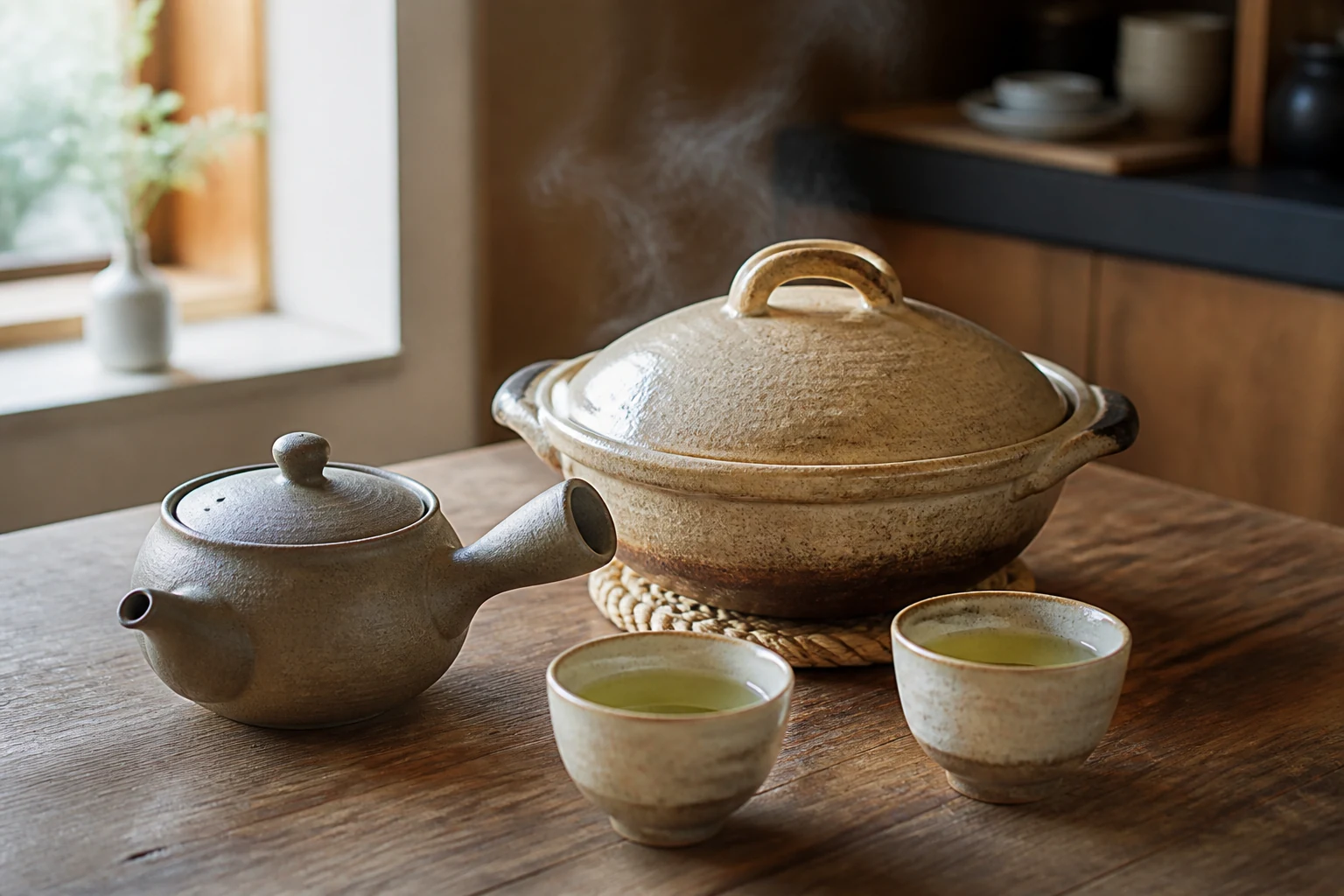
Donabe is unglazed or partly glazed earthenware, traditionally from clay-rich regions of Japan, most notably Iga (Mie Prefecture, the historical bed of ancient Lake Biwa) and the neighboring Banko-yaki tradition centered in Yokkaichi. The clay’s mineral composition and the way it’s fired give it high heat retention and, according to Iga-yaki specialists, a porous structure that lets the pot “breathe” during cooking, an attribute Japanese cooks have historically credited with producing fluffier rice and more evenly cooked stews. Both TIKUSAN and COTONOHA are Banko-yaki pots made in Yokkaichi, and both list “Made in Japan” directly on their Amazon product pages, not just in marketing copy.
That regional specificity matters because “Japanese-style clay pot” listings on Amazon include plenty of generic earthenware with no stated origin at all, alongside Korean stone-bowl (dolsot) pots and other clay cookware that serve a similar function but aren’t donabe. None of that makes the other pots bad at their own job. It just means a listing that never names a Japanese clay region or production area isn’t actually claiming to be donabe, whatever the title says.
The Induction Question, Answered Honestly
A real question buyers search for is whether a donabe works on an induction cooktop, and the honest answer is almost always no. Induction heating requires a magnetic metal layer in the base of the cookware, and unglazed Iga and Banko clay has no metal in it at all, so an induction coil simply can’t couple with the pot and generate heat. This isn’t a manufacturing shortcut that a better donabe fixes; it’s a property of the clay itself. Some makers, including Nagatani-en (the best-known Iga-yaki donabe maker), sell separate electric or induction-hybrid appliances built around a donabe insert, but that’s a different product category from a traditional stovetop donabe. If your kitchen is induction-only, a traditional donabe like either pick above needs a portable gas burner to be usable at the table, and neither TIKUSAN nor COTONOHA advertises induction compatibility on their listings.
TIKUSAN Donabe (Banko Ware)
TIKUSAN’s Banko-yaki Donabe comes in six sizes on Amazon, from a single-serving 0.9-quart pot ($56) up to a 3.4-quart pot for a small group ($93), all made in Japan and rated 4.7 stars across 30 reviews. It’s built for the classic Japanese nabe (hot pot) use case: tabletop simmering of broth, vegetables, and protein.
Pros:
- Made in Japan, with size options for solo cooking up through a small group
- Wide capacity range means one brand covers most households
- Confirmed in stock across multiple sizes as of this writing
Cons:
- Gas stovetop only, not induction compatible
- One buyer reported a mismatched lid and base color on delivery; check photos on arrival
- Like all donabe, needs a slow first “seasoning” simmer before regular use
Bottom line: the pick if you want an actual hot pot for tabletop cooking, not primarily a rice cooker.

TIKUSAN Donabe (Banko Ware)
Six sizes available, made in Japan. 4.7★ (30 ratings).
COTONOHA Donabe (Banko Ware)
The COTONOHA Banko-yaki Donabe is made in Yokkaichi with a jet-black glaze and a cherry blossom relief pattern, sized for 3 to 5 people at 71 fluid ounces. It carries a 4.8-star rating across 22 reviews and Amazon’s Choice status, at a higher price than TIKUSAN’s comparable size.
Pros:
- Made in Japan, same Banko-yaki region as TIKUSAN
- Higher-rated on Amazon, with a more finished decorative glaze
- Amazon’s Choice badge, in stock as of this writing
Cons:
- Only one size and color option, versus TIKUSAN’s full range
- More expensive than TIKUSAN’s equivalent capacity
- Same seasoning step and gas-only limitation as any other donabe
Bottom line: the pick if you want a single well-reviewed donabe for the table, rather than the widest size range.

COTONOHA Donabe (Banko Ware)
Cherry blossom relief pattern, 71 fl oz, made in Japan. 4.8★ (23 ratings).
Where Iga-yaki Fits
Iga-yaki, the older and more collector-oriented cousin of Banko-yaki, comes from clay dug in the Iga region and is associated with makers like Nagatani-en, whose Kamado-san rice pots are widely cited by donabe cookbooks and specialty retailers as the standard for donabe-cooked rice specifically. Availability on Amazon.com for genuine Nagatani-en pieces is inconsistent (several listings were out of stock or restricted at the time of writing), so if you want one specifically, checking a specialty Japanese kitchenware retailer directly is a more reliable route than searching Amazon. That inconsistency is itself a useful signal: a donabe priced well below what Iga-yaki commands, while still claiming the name, is worth a second look at its actual stated clay origin.
Chinese Clay Pot vs. Donabe
Chinese clay cooking pots (often called sha guo, or sand pots) serve a comparable role, tabletop simmering in an unglazed or partly glazed earthenware vessel, but they come from different clay sources and are typically sold at a noticeably lower price point with thinner walls. Neither is a knockoff of the other; they’re parallel culinary traditions. The distinction worth knowing before you buy is that “Asian clay pot” listings on Amazon sometimes blur the two together, so if a Japanese donabe specifically is what you want, check that the listing names a Japanese region (Iga, Banko-yaki, Shigaraki) rather than just “Asian-style” or “Oriental.”
FAQ
Can I use a donabe on an induction cooktop? No, not a traditional one. Unglazed Iga and Banko clay has no metal content, so induction coils can’t heat it. A handful of makers sell separate electric appliances built around a donabe-style insert, but that’s a different product from a stovetop donabe.
Does a donabe come with a steamer? Some do, sold as a specific “with steamer” variant, but it’s not standard across all donabe. Check the individual listing rather than assuming; a plain rice or hot pot donabe usually doesn’t include one.
How is a donabe different from a Chinese clay pot? Both are unglazed or partly glazed earthenware for tabletop cooking, but they come from different regional clay sources. Japanese donabe specifically comes from named regions like Iga or Banko-yaki (Yokkaichi); if a listing doesn’t name a Japanese region, it likely isn’t donabe even if it looks similar.
Do I need to season a new donabe before using it? Yes. The standard first step across Japanese and Banko-yaki makers’ instructions is to simmer rice-rinse water or vegetable scraps in the new pot for about 10 minutes, which is said to fill the clay’s pores and reduce the risk of cracking on later use.
Is a donabe dishwasher-safe? Generally no, and several listings state this directly. Hand wash, and dry it thoroughly (ideally upside down) before storing, since the clay is porous enough to hold moisture if it’s put away wet.
Final Thoughts
The two things worth checking before buying any “Japanese donabe pot” listing: does it actually name a Japanese clay region, and are you set up to use it (gas stovetop, not induction). Past that, TIKUSAN covers the widest range of sizes for hot pot, and COTONOHA is the better-reviewed single option if rice or a nicer table presentation is the priority. For more on how this site separates real regional Japanese ceramics from generic “Japanese-style” listings, see our buyer’s checklist for real vs. knockoff Japanese craft.