Some of the shops we link to are partners who may pay us when you buy through them. This doesn't change which pieces we recommend. How this works.
Get the Takasaki Daruma Doll, Handmade in Japan for the most-reviewed option with the city named directly, or the Japanese Daruma Doll, Takasaki Handmade, 4.7 inch for a larger size from the same production city. Both name Takasaki, Gunma Prefecture, the city that makes roughly 80% of Japan's daruma dolls, directly in the listing. A lot of "daruma doll" listings on Amazon never say where the doll was actually made.
One City Makes Most of Japan’s Daruma Dolls, and That’s the Tell
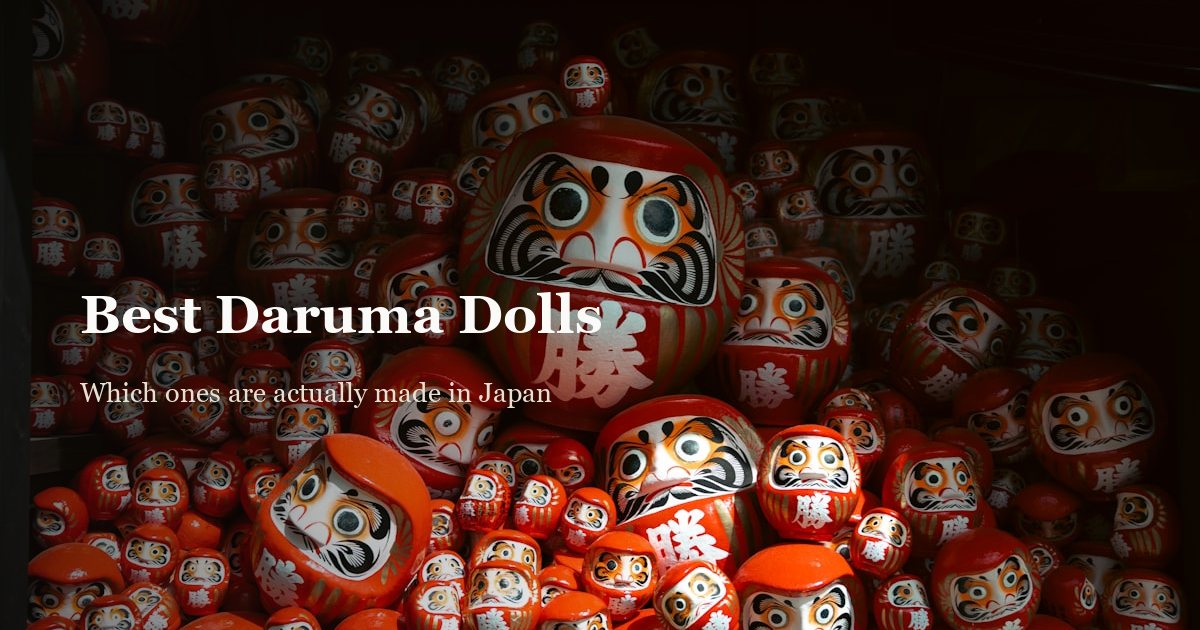
Daruma are round, hollow papier-mache dolls modeled on Bodhidharma, the monk credited with founding Zen Buddhism, sold without pupils painted in; the tradition is to paint in one eye when setting a goal and the second when it’s achieved. Unlike some of the crafts on this site, daruma production is unusually concentrated: Takasaki, in Gunma Prefecture, is documented as producing roughly 80% of all daruma dolls made in Japan, a level of regional concentration closer to Tsubame-Sanjo’s dominance in Japanese cutlery than to more geographically spread-out crafts like ceramics.
That concentration makes the authenticity check simpler than usual. A listing that names Takasaki directly is making a specific, checkable claim about where the doll actually comes from. A listing that only says “daruma doll” or “Japanese good luck doll” without naming a production region isn’t necessarily fake, but it also isn’t telling you anything you can verify.
Comparison at a Glance
Checked against current Amazon.com listings on September 9, 2026. Prices vary by retailer and change often.
1. Takasaki Daruma Doll, Handmade in Japan (3.5”)
This listing states its production city directly: “Handmade in Japan,” Takasaki, using the traditional hariko (papier-mache) method built up in layers over a mold. It’s the most-reviewed daruma doll in this comparison, at 4.5 stars across 98 ratings, a large enough sample to trust the pattern of feedback rather than a handful of reviews.
Pros:
- Production city (Takasaki) stated directly, not just “Japan” generically
- Largest review base of the daruma dolls checked for this guide
- Traditional hariko papier-mache construction, not a molded plastic substitute
Cons:
- At 3.5 inches, it’s a smaller desk piece rather than a prominent display item
- Papier-mache is durable but not indestructible; handle it the way you would any layered-paper craft object
- Color and face-painting style vary slightly by batch, typical of a handmade item rather than a machine-molded one
Bottom line: the pick with the deepest review history and a clearly stated production city.

Takasaki Daruma Doll, Handmade in Japan, 3.5"
Traditional hariko papier-mache, Takasaki, Gunma. 4.5★ (98 ratings).
2. Japanese Daruma Doll, Takasaki Handmade (4.7”)
A larger version from the same production city, built for goal-setting and display rather than a small desk accent. At 4.9 stars across 52 ratings, it carries the strongest rating of the two picks here, with a smaller but still meaningful review sample.
Pros:
- Same documented Takasaki production city
- Larger size, more suited to a prominent display spot
- Highest rating of the daruma dolls compared for this guide
Cons:
- Fewer total ratings than the 3.5-inch pick, though still a reasonable sample size
- Larger size means more shelf or desk space needed
- Same handmade-material caveats as any papier-mache daruma: handle with care
Bottom line: the pick if you want a larger, more prominent piece from the same verified production city.

Japanese Daruma Doll, Takasaki Handmade, 4.7"
Larger hariko papier-mache daruma, Takasaki, Gunma. 4.9★ (52 ratings).
Where “Daruma Doll” Listings Get Murky
Search “daruma doll” broadly and a share of the results are multicolor sets of six or seven small figurines, priced under $30, sold under seller names with no documented connection to Takasaki or any other production city. These aren’t necessarily dishonest either; a multi-pack marketed as a “fortune figurine set” was never specifically claiming to be a single handmade Takasaki daruma. But if the listing doesn’t name a production city, a maker, or even confirm the material is papier-mache rather than a molded substitute, there’s nothing in the listing itself to check.
The pattern to look for: “Takasaki” or another named Japanese production city stated directly, “hariko” or “papier-mache” as the stated material, and a review history long enough to trust. A listing missing all three isn’t automatically a knockoff, but it’s also not making a claim you can verify the way the two picks above do.
Which One Should You Buy?
- For the deepest review history and a clearly named production city, get the Takasaki Daruma Doll, Handmade in Japan (3.5”).
- For a larger display piece from the same city, get the Japanese Daruma Doll, Takasaki Handmade (4.7”).
- If a listing doesn’t name a Japanese production city or confirm papier-mache construction, treat it as a generic “good luck figurine,” not a traditional Takasaki daruma.
FAQ
Why is Takasaki specifically important for daruma dolls? Takasaki, in Gunma Prefecture, is documented as producing roughly 80% of Japan’s daruma dolls, making it the closest thing this craft has to a single verifiable production center. A listing naming Takasaki directly is making a specific, checkable claim in a way a generic “Made in Japan” label isn’t.
How do you actually use a daruma doll? Tradition holds that you paint in one eye (often the left, as you face the doll) when setting a goal, and paint in the second eye once that goal is achieved. Some daruma are sold with the eyes already blank specifically for this purpose.
Are daruma dolls fragile? They’re made from layered papier-mache (hariko) over a mold, which is durable for normal handling and display but not as impact-resistant as ceramic or resin. Treat it the way you would any paper-based craft object.
Is a cheap multicolor daruma set automatically fake? Not automatically. It may simply be a different, lower-cost product than a single handmade Takasaki daruma. Check whether the listing names a production city and confirms papier-mache construction before assuming it’s the traditional craft item.
Final Thoughts
Takasaki’s roughly 80% share of Japan’s daruma production makes this one of the more straightforward “real vs. generic” checks on this site: a listing either names that city directly, backed by a real review history, or it doesn’t say where the doll actually came from. Both picks above do. For the underlying method behind picks like these, applied across every category on this site, see our buyer’s checklist for real vs. knockoff Japanese craft.