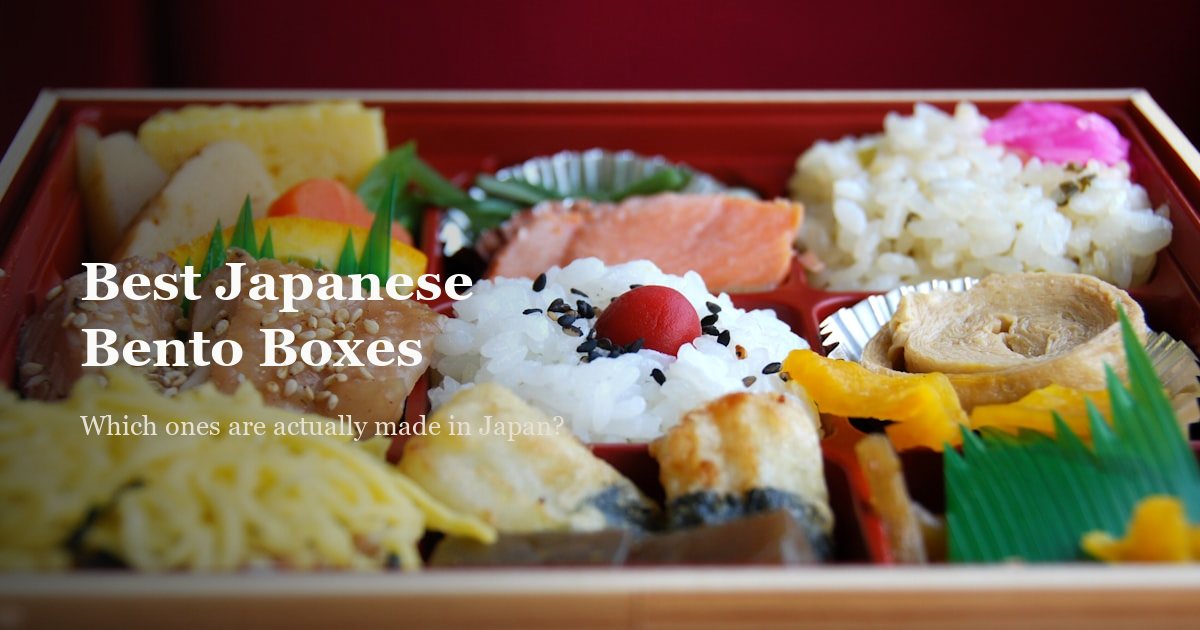
Search Amazon for “japanese bento box” and the best-selling result by a wide margin is a brand called Umami: over 20,000 ratings, “400+ bought in past month,” and nothing in its listing claiming Japanese manufacture at all. That’s not unusual. “Bento” has become a generic English word for a compartmentalized lunch box, and most of the top sellers using it are American housewares brands with no connection to Japan beyond the borrowed word. A handful of listings on the same search page do make a real, checkable claim: an actual Japanese brand name, or “Made in Japan” printed directly in the title.
Some of the shops we link to are partners who may pay us when you buy through them. This doesn't change which pieces we recommend. How this works.
The Word “Bento” Doesn’t Tell You Where It Was Made
“Bento” (弁当) just means a boxed meal in Japanese, and the compartmentalized lunch-box format is genuinely Japanese in origin. But the word has been generic in English housewares marketing for years now, describing a container shape rather than a country of manufacture. A listing titled “Bento Box for Adults” tells you what shape and function to expect; it tells you nothing about where the box was made unless the listing separately names a country or a real Japanese company.
Five Picks: What Each One Actually Claims
- OSK Japanese Traditional Rabbit Moon Bento Box Set: around $15. OSK is an actual Japanese housewares manufacturer, and this microwave- and dishwasher-safe set includes chopsticks and a matching bento bag.

OSK Rabbit Moon Bento Box Set
Microwave- and dishwasher-safe, includes chopsticks and bento bag. 4.6★ (3,319 ratings).
- Zojirushi SL-JBE14BZ Mr. Bento Stainless Lunch Jar: around $54. Zojirushi is a well-known major Japanese appliance manufacturer (also behind widely sold rice cookers and thermoses), and this insulated stacking lunch jar is one of their long-running product lines, not a one-off licensed design.

Zojirushi SL-JBE14BZ Mr. Bento
Insulated stacking lunch jar, 41oz. 4.3★ (3,003 ratings).
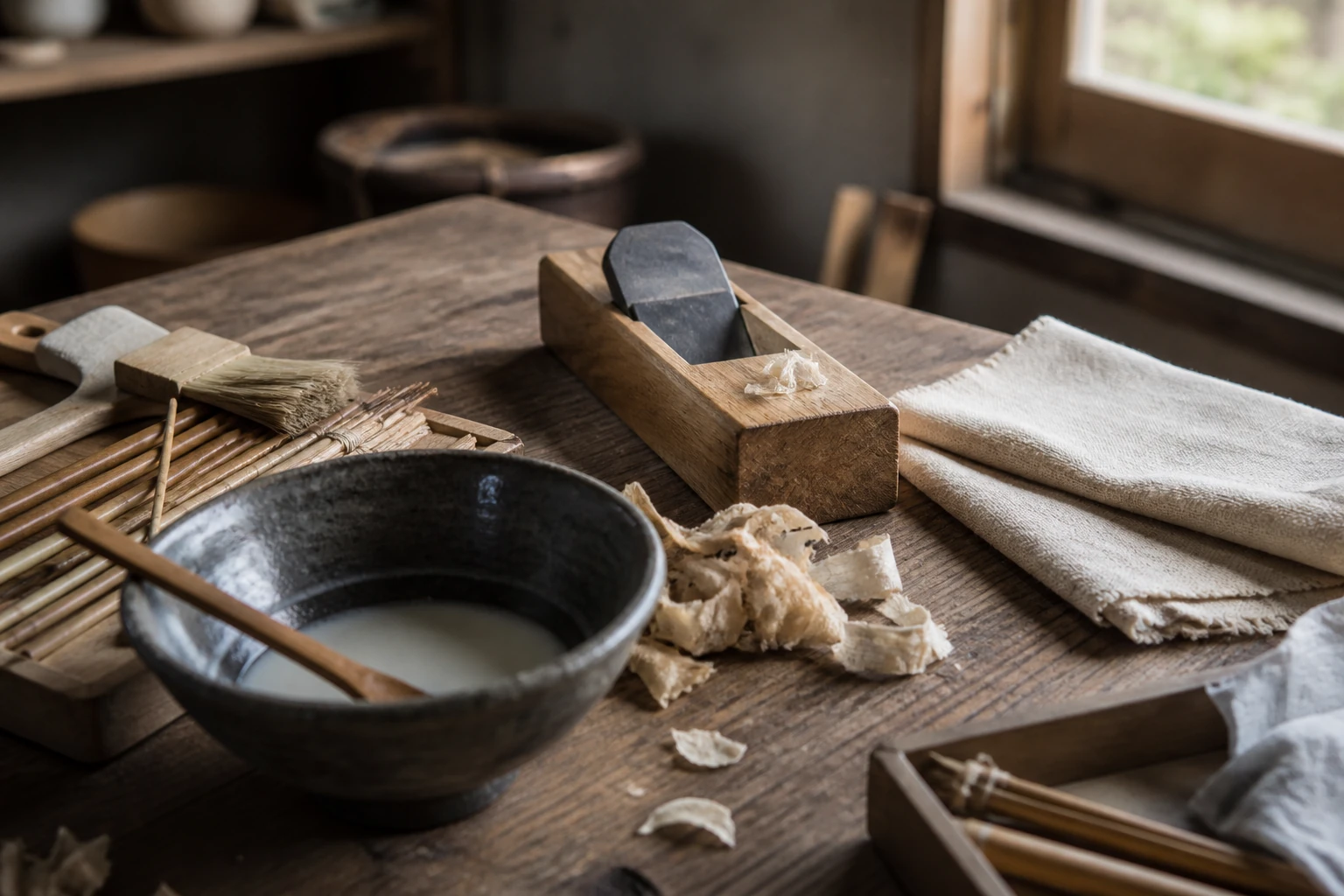
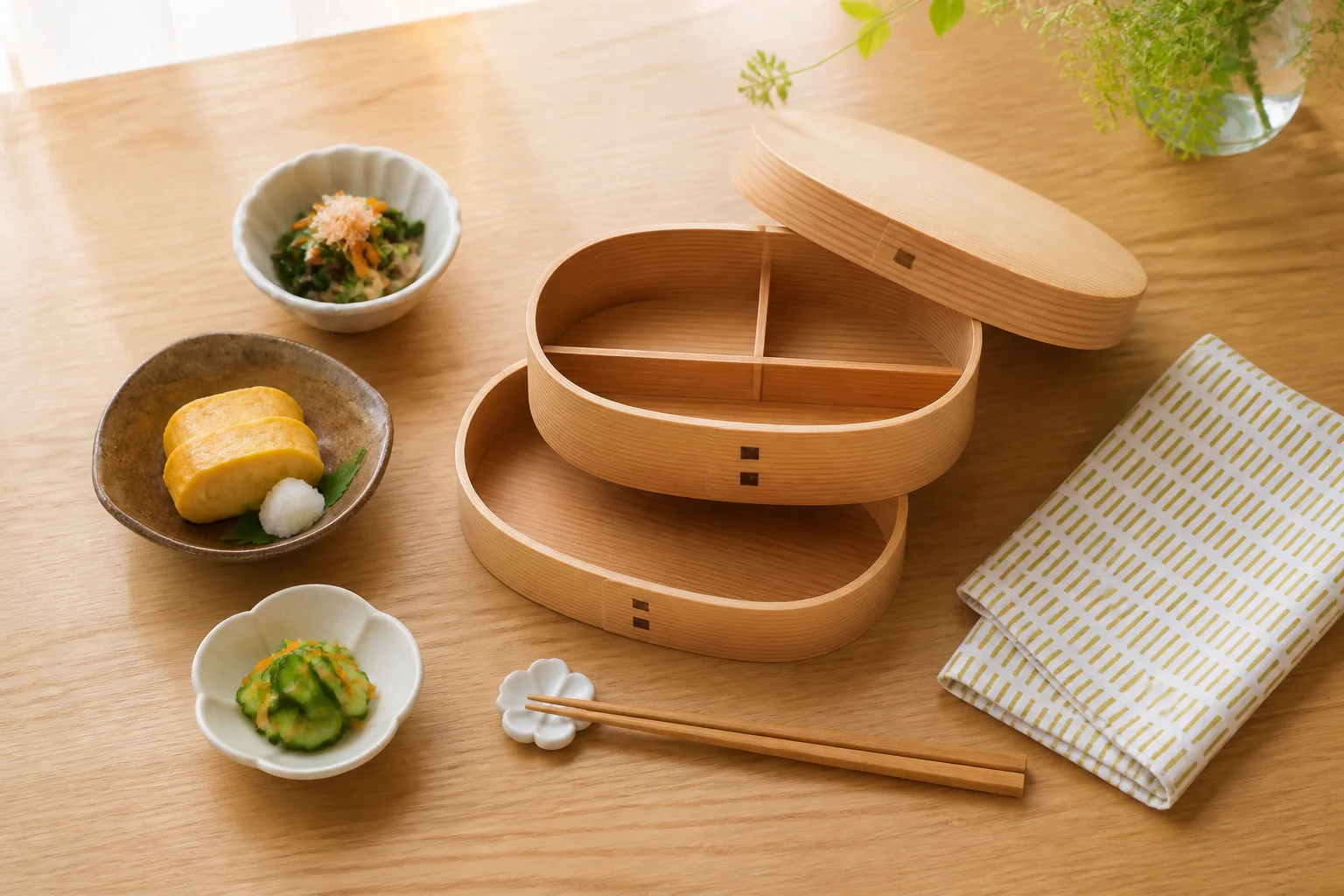
- Akita Cedar 2540 Magewappa Bento Box: around $74. Magewappa is a genuine traditional Japanese bentwood craft, made by steam-bending thin sheets of cedar or cypress; this one is made from Akita cedar and its listing states Made in Japan directly. It’s the closest thing on this list to an actual craft object rather than a mass-produced container.

Akita Cedar 2540 Magewappa Bento Box
Steam-bent cedar bentwood, made in Japan. 4.6★ (651 ratings).
- JapanBargain 1950 Three-Tier Lacquered Bento Box: around $25. Despite the generic-sounding brand name, this listing’s own title states “Made in Japan,” and it’s styled after traditional lacquered multi-tier boxes with a cherry blossom pattern.

JapanBargain 1950 Three-Tier Lacquered Bento Box
"Made in Japan" stated in the listing title, cherry blossom pattern. 4.1★ (234 ratings).
- Umami Bento Box, Stackable Adult Lunch Box: around $24. Amazon’s best-selling result for this search by a wide margin (over 20,000 ratings), and a genuinely well-reviewed, functional container. Its own listing makes no claim about being made in Japan; “bento” here describes the compartmentalized shape, not the origin.

Umami Stackable Bento Box
No Japan-origin claim; a functional stackable container. 4.5★ (21,018 ratings).
All five re-checked on Amazon.com on September 5, 2026.
Why the Best-Seller Isn’t the Most “Japanese” Option
There’s no contradiction in Umami being both the top seller and the one with no origin claim: it’s solving a different problem than the other four. Its 20,000+ ratings reflect a genuinely useful, inexpensive stackable container that a lot of people are happy with for daily lunch use, and there’s nothing dishonest about its listing. It simply isn’t making a claim about Japanese manufacture, so it shouldn’t be read as one. If the reason you’re searching “Japanese bento box” is that you specifically want a Japan-made object, its popularity isn’t evidence of that; only a stated brand name or origin claim is.
- Who should NOT worry about origin: anyone who mainly wants a reliable, inexpensive lunch container and likes the compartmentalized bento format. The best-sellers with no origin claim are functionally excellent for that.
- Who it’s worth checking for: anyone buying a bento box specifically as a Japan-made object, whether for personal use, a gift, or to pair with other genuinely Japanese tableware.
FAQ
Does “bento box” mean the product is made in Japan? No. “Bento” describes the compartmentalized lunch-box format, which originated in Japan, but the word itself has become generic in English product listings. Only a stated brand name (like OSK or Zojirushi) or an explicit “Made in Japan” claim tells you where the object was actually manufactured.
What is magewappa, and why does it cost more? Magewappa is a traditional Japanese bentwood technique: thin sheets of cedar or cypress are steamed and bent into round or oval shapes, then fixed with cherry bark. It’s slower and more labor-intensive to produce than molded plastic or stamped metal, which is reflected in the price of a genuine piece like the Akita Cedar box above.
Is Zojirushi a real Japanese company, or just a Japanese-sounding brand name? Zojirushi is a real, major Japanese manufacturer, also well known for rice cookers and vacuum-insulated thermoses sold worldwide. It isn’t a case of a Western company borrowing a Japanese-sounding name.
Do these make good gifts? Yes, especially the Akita Cedar magewappa or the OSK set, both of which read as genuinely Japanese objects rather than generic lunch containers. See our Japanese housewarming gifts guide for more picks chosen specifically for gifting.
Bottom Line
- Want the genuine article at an everyday price: the OSK Rabbit Moon set.
- Want a well-known major Japanese brand: Zojirushi’s Mr. Bento.
- Want an actual piece of Japanese craft, not just a container: the Akita Cedar magewappa.
- Don’t care about origin, just want a reliable daily lunch box: Umami’s stackable set, the best-selling option here.
- Building out a fuller Japanese table setting: see our buyer’s guide to spotting Japanese-style knockoffs before you buy anything larger, and our Japanese chopstick rests guide for a matching accessory.