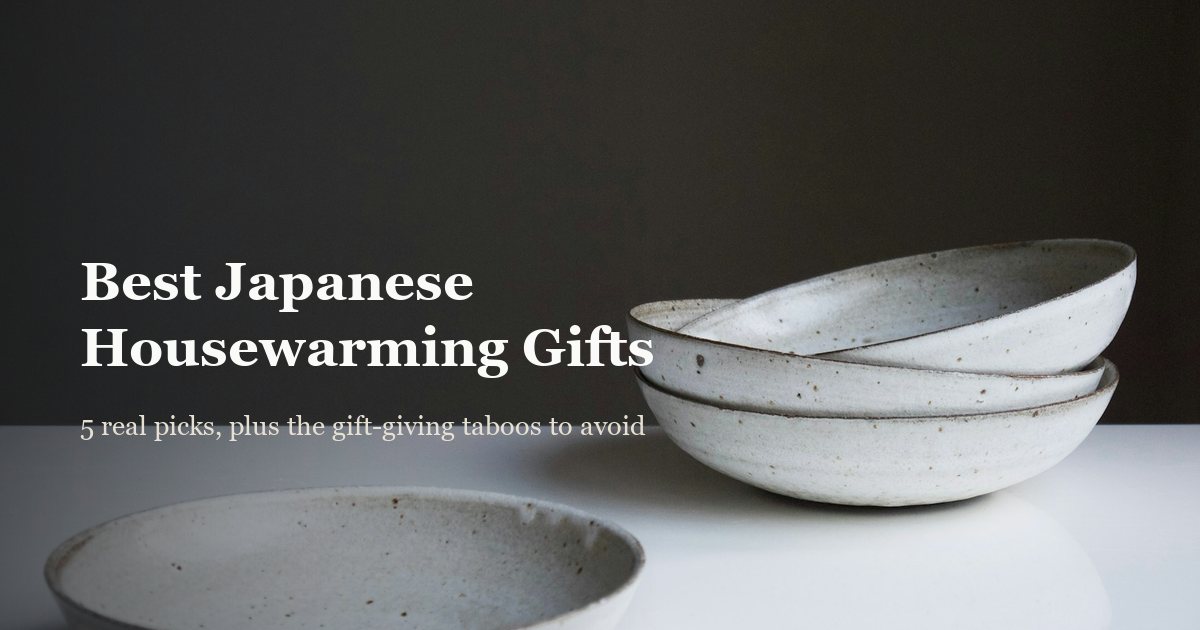
Quick answer: if you want one safe, genuinely Japanese pick that works for almost anyone, get the MUJI Hasami Ware Rice Bowl (£9.95) — real Hasami-yaki porcelain, made in Japan, and neither red nor fire-adjacent, which turns out to matter more than most gift guides mention. Full picks below, plus the etiquette rules worth knowing before you buy anything.
Some of the shops we link to are partners who may pay us when you buy through them. This doesn't change which pieces we recommend. How this works.
Why This List Looks Different From Other “Japanese Gift” Roundups
Most housewarming gift guides — including ones aimed at Japan — just list nice-looking items. Searching for this topic turns up mostly small specialty retailers (Sakuraco, Bokksu, JTB USA’s gift shop, a handful of import boutiques) selling the same handful of category items, with no real etiquette guidance attached. What’s missing is the part that actually matters if you’re trying to get this right: Japanese housewarming gift-giving has specific, well-documented taboos, and several of the items competing gift guides recommend violate them. We checked two independent Japanese etiquette sources before writing this, and we’ll flag the conflicts as we go.
What NOT to Bring to a Japanese Housewarming
This is the part most English-language gift guides skip. According to Japanese gift-etiquette guidance (cross-checked across Harmonick and Gifuta, two independent Japanese gift-retail etiquette resources), five categories are considered bad luck for a shinchiku iwai (新築祝い, housewarming gift) or a new-home gift generally:
- Anything fire-related. Candles, lighters, ashtrays, stoves, toasters — the shared logic is that fire evokes a house burning down, which is about as bad an omen as a housewarming gift can carry.
- Red-colored items, even without a direct fire connection. Both sources call this out specifically: red is treated as evoking flame by color alone, independent of what the object actually is.
- Knives and scissors, traditionally. Sharp, cutting tools are read as symbolically “cutting ties” — the same root superstition behind our guide to gifting Japanese knives. Worth knowing: that same tradition has a well-documented positive reframing (“cutting open a path to the future”) and a 5-yen-coin workaround specifically used for occasions like this one — so a knife isn’t automatically off the table if you’re set on one, but it does need the context and the coin to land right, not just a plain gift-wrapped box.
- Green tea and handkerchiefs. Both are strongly associated with funerals and farewells in Japan (green tea is a standard condolence-gift item; a handkerchief’s kanji, 手巾, reads close to “cutting hands,” i.e. a parting).
- Slippers, shoes, and doormats — especially as a gift to someone senior to you. The “stepping on” implication reads as disrespectful in a hierarchical gift-giving context.
The good news for a site about ceramics and lacquerware: tableware is explicitly called out as a good housewarming gift in this same etiquette tradition. The logic, per Gifuta: a house is metaphorically a container, so items that “hold” things — cups, glasses, plates, bowls — are considered an auspicious match for the occasion. Pots and kettles get a similar pass for the opposite reason (fire-resistant, and the word for kettle, yakan, puns on “not burning the house down”). In other words, the category this site covers is one of the safer ones to shop from — you just need to watch the color.
The practical takeaway when you’re shopping: skip red-dominant pieces (several genuinely nice Kutani and lacquerware items on this site’s other roundups come in red colorways — pick a different one for a housewarming specifically), and don’t add a knife to the gift without reading up on the coin custom first — see the link above.
The 5 Picks
| Gift | Price | Craft | Why It Works |
|---|---|---|---|
| MUJI Hasami Ware Rice Bowl | £9.95 (~$13) | Hasami-yaki porcelain | Budget-friendly, neutral color, genuinely Japan-made |
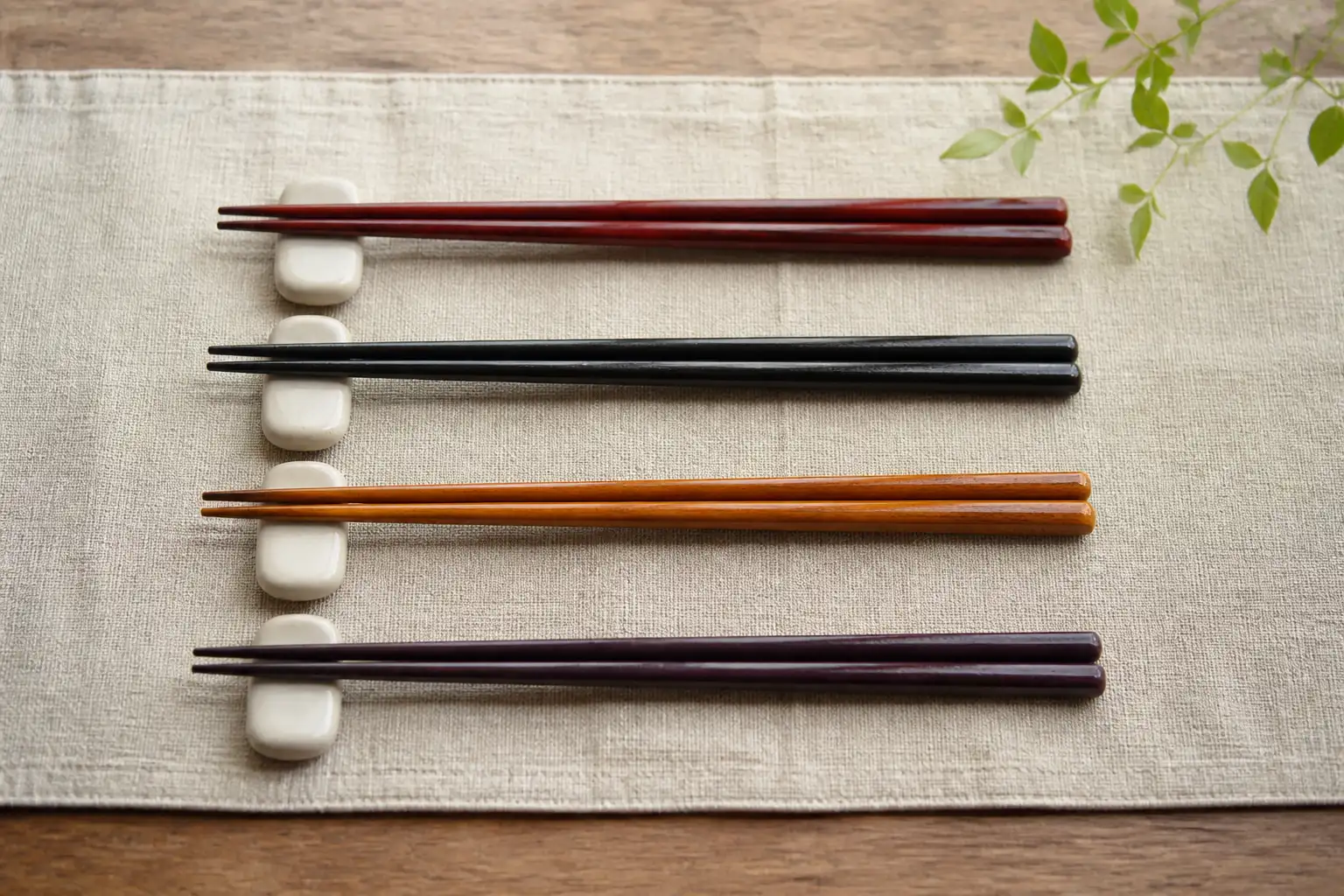
| Kotobuki Wakasa Lacquer Chopsticks | ~$25 | Wakasa-nuri lacquerware | Practical daily-use pair, not fire- or knife-adjacent |
| KUTANI Matcha Bowl (Rabbit) | ~$55 | Kutani ware | Doubles as a tea-ceremony starter piece |
| Cat Shaped Dinner Plate | $50 | Kutani ware | A genuinely usable everyday plate — pick Blue or Green, not Red |
| Sakura Petals Chopstick Pair Set | $87 | Wakasa-nuri lacquerware | Complete gift-ready set with rests, for a bigger gesture |
1. MUJI Hasami Ware Rice Bowl, Fan Stripe — Best Budget
At £9.95, this is the lowest-commitment pick on this list, and it clears the authenticity bar we hold every product on this site to — the same six-point checklist we run every pick through: it’s genuine Hasami-yaki porcelain, made in Japan, not a generic import borrowing the name. We covered the full spec-sheet check in our MUJI Hasami ware review — short version: MUJI’s own product page names the material (porcelain), the country of origin (Japan), and the Kurawanka shape the bowl is based on. The Fan Stripe pattern here is a neutral blue-and-white design, not red, so it’s a safe pick without needing to think about color at all.
Bottom line: the easiest pick if you want something genuinely Japanese without overthinking the etiquette. See it at MUJI UK.
2. Kotobuki Wakasa Lacquer Chopsticks — Best Practical Pair
A pair of bamboo chopsticks with multiple coats of Wakasa lacquer, around $25 for two pairs. This is a genuinely low-risk, useful gift: chopsticks don’t trip any of the taboos above (they’re not knives, not red, not fire-related), and they’re something a new household can actually use starting the first night. Hand wash only.
Bottom line: the safest “small, useful, actually Japanese” gift on this list.

Kotobuki Wakasa Lacquer Chopsticks
Two pairs, bamboo with multiple lacquer coats, hand wash only. 4.2★ (30 ratings).
3. KUTANI Japanese Matcha Bowl (Rabbit) — Best for a Tea Drinker
If the person you’re buying for already drinks tea or has shown interest in matcha, this is a genuine step up from a generic gift: real Kutani ware, explicitly labeled “Made in Japan, in Ishikawa” on the listing, at around $55. We cover this piece in more detail — along with four other chawan options — in our matcha bowl buying guide. The rabbit motif is a classic, non-seasonal design, and it isn’t a red-dominant piece.
Bottom line: the pick if you know the recipient actually drinks matcha at home.

KUTANI Japanese Matcha Bowl (Rabbit)
"Made in Japan, in Ishikawa" stated on the listing. 4.8★ (536 ratings).
4. Cat Shaped Dinner Plate — Best Everyday Statement Piece
Real Kutani ware from the Harekutani kiln, in a full 26cm dinner-plate size — genuinely usable as a daily main plate, not a novelty side piece, and dishwasher- and microwave-safe. We reviewed this one in detail in our Kutani ware dinnerware guide. One thing specific to buying this as a housewarming gift: it comes in three colorways (Blue/Green/Red) — pick Blue or Green for this occasion, since a red plate runs straight into the color taboo covered above, even though the plate itself is a fine housewarming category (tableware).
Bottom line: a full-size, genuinely usable piece, as long as you skip the red colorway for this specific occasion. See it at Musubi Kiln.
5. Sakura Petals Chopstick Pair Set with Rests — Best Complete Gift Set
If you want to give something with more presentation than a single item, this is a complete, gift-ready set: two pairs of Wakasa lacquerware chopsticks (23cm and 21cm, a “his and hers” pairing) plus two Hasami-porcelain rests, in a wooden box with a “sakura saku” inscription, for $87. Per the spec sheet, the coating is polyester urethane rather than traditional urushi — we cover that distinction in full in our lacquerware chopsticks guide — but for a gift that needs to look complete and generous out of the box, that’s a fair trade for the price.
Bottom line: the pick if you want to hand over one complete, presentation-ready gift rather than a single item. See it at Musubi Kiln.
Which One Should You Buy?
- If you want the safest, cheapest genuinely-Japanese option, get the MUJI Hasami Rice Bowl.
- If you want something small and immediately useful, get the Kotobuki chopsticks.
- If the recipient drinks matcha, get the KUTANI Rabbit bowl.
- If you want a full-size everyday plate, get the Cat Shaped Dinner Plate — in Blue or Green.
- If you want a bigger, more complete-looking gift, get the Sakura Petals set.
Thinking about a knife set instead? It’s a real tradition for new-home gifts, not just a taboo — but it’s the one category on this list that needs extra context to land right. Our full guide to the knife-gifting superstition covers the “cutting open a new path” reframing and the 5-yen-coin custom that makes it work.
Buying for a different occasion? Our Japanese tea set gift guide and meoto jawan 9th-anniversary rice bowl guide cover genuine Kutani picks for those specifically. And if you want to wrap whatever you buy the traditional way instead of using paper, see our guide to made-in-Japan furoshiki cloths.
FAQ
What is a traditional Japanese housewarming gift? Tableware — cups, plates, bowls, teapots — is the traditionally favored category, per the etiquette guidance cited above: a house is metaphorically a container, so gifts that “hold” things are considered an auspicious match for a new home. Pots and kettles get the same pass, since they’re fire-resistant rather than fire-adjacent. That’s why every pick on this list is ceramics or lacquerware rather than, say, home decor or textiles.
What is a Japanese housewarming gift called? Shinchiku iwai (新築祝い) — literally “new-construction celebration” — is the term used for a gift marking a new or newly-built home in Japan. It’s the specific occasion this article and its etiquette sources (Harmonick, Gifuta) are addressing, as distinct from more general gift-giving customs.
Is it true that you shouldn’t give red gifts in Japan? For housewarming specifically, yes — both etiquette sources we checked call out red as evoking fire, independent of what the item actually is. This is specific to new-home gifts; red isn’t a universal taboo across all Japanese gift-giving occasions.
Is ceramic or glass tableware considered bad luck because it can break? Not for housewarming gifts specifically — that “breakable = bad omen” association is a wedding-gift taboo in Japan (breaking symbolizes divorce), not a housewarming one. For housewarming, tableware is explicitly considered a good choice, since a house is metaphorically a container.
What about green tea as a housewarming gift? Skip it. Green tea is strongly associated with funeral and condolence gifts in Japan, which makes it an awkward choice for a celebratory occasion like a new home.
Are these etiquette rules followed by everyone in Japan today? Not universally — like most gift etiquette, adherence varies by generation and how formal the relationship is. But the rules are well-documented and still actively published by Japanese gift retailers as guidance, which is a reasonable signal they’re worth knowing before you buy, especially for a gift to someone older or more traditionally-minded.
Final Thoughts
If you take one thing from this list: the “what to avoid” section matters as much as the picks themselves. Tableware is a genuinely safe, well-regarded housewarming category in Japanese gift-giving custom — you’re not fighting the tradition by shopping this site’s ceramics and lacquerware guides for a housewarming gift. Just steer clear of red colorways, skip anything with a blade, and you’re on solid ground.
Keep Reading
- Scent for the new place? See Japanese incense brands that actually name their maker, and a koro incense burner from a named kiln region to go with it.
- Something for a doorway? Read our guide to made-in-Japan noren curtains.
- A summer gift for a porch or window? See how to tell a real hand-blown furin wind chime.
- For someone who arranges flowers, a Sanjo-forged kenzan flower frog makes a practical gift.
- A decorative piece for a shelf? Read which kokeshi dolls are actually made in Japan.