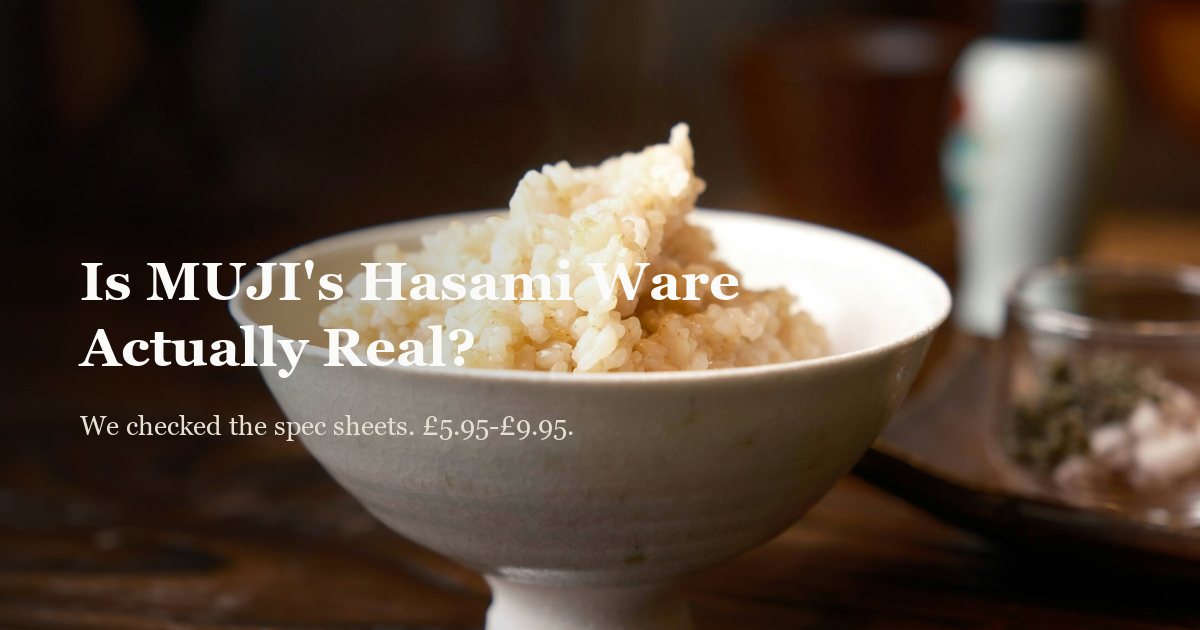
Quick answer: yes — MUJI’s Hasami Ware line is genuinely made in Japan from porcelain, and MUJI’s own product copy names the actual Hasami-yaki tradition rather than just borrowing the aesthetic. At £5.95–£9.95 a piece, it’s a legitimate, low-commitment way to own real Japanese pottery, though it’s mass-produced tableware, not hand-painted collector’s ware. Full breakdown below.
Some of the shops we link to are partners who may pay us when you buy through them. This doesn't change which pieces we recommend. How this works.
Why This Question Even Comes Up
Searching for “Hasami ware” mostly surfaces MUJI’s own product pages — there’s remarkably little independent coverage checking whether MUJI’s line actually holds up to the name. That gap matters, because “Hasami” is a real place (Hasami, Nagasaki Prefecture) with a real 400-year porcelain tradition, and it’s the kind of regional name that’s easy for a retailer to use loosely. So we checked MUJI’s own spec sheets rather than taking the marketing copy at face value.
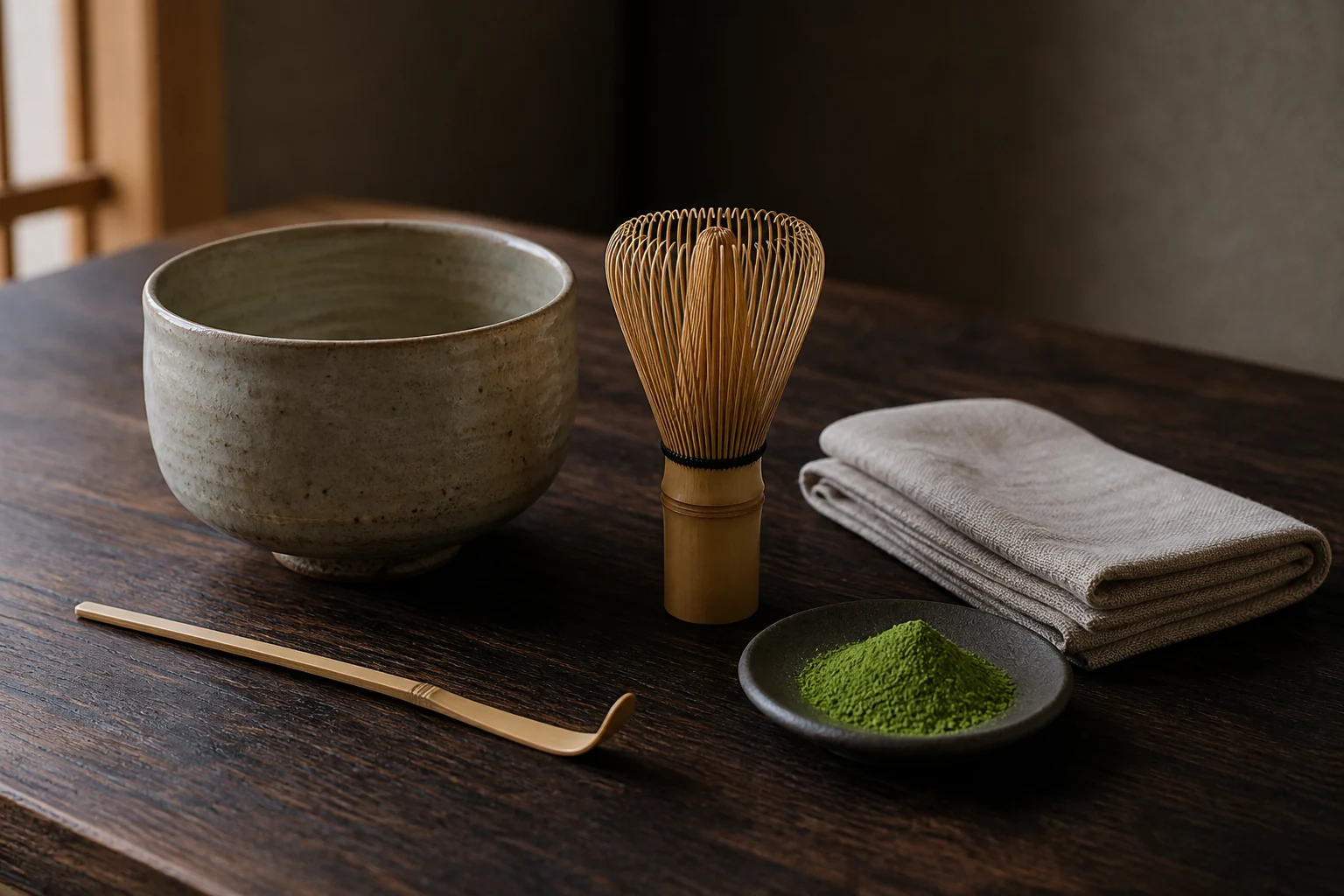
What We Found on MUJI’s Own Product Pages
We pulled the product details directly from MUJI’s UK storefront (the actual retailer this article links to) rather than relying on general descriptions. Here’s what’s consistent across the line:
- Material: Porcelain (confirmed as “Material: Porcelain” on MUJI’s own product detail table)
- Country or region of origin: Japan (stated explicitly on MUJI’s product detail table)
- Product copy, verbatim, on every SKU: “Hasami ware porcelain: traditional Japanese ceramic craft.”
- Shape story: the rice bowls and plates are described as Kurawanka-style — a shape MUJI’s copy traces to bowls used by merchants aboard ships in the Edo period. The sake cups are described as soba choko — a small multi-purpose cup traditionally used for dipping soba noodles, repurposed here as a sake cup.
That’s a materially different claim from a generic “Japanese-style” product. MUJI is naming a specific regional ware and a specific historical shape, on its own spec sheet — not just in ad copy.
One honest gap: MUJI’s product pages don’t state whether these pieces are dishwasher- or microwave-safe. A general web summary claimed both, but we couldn’t find that claim on MUJI’s own product page for any of the four pieces below — so we’re not repeating it as fact. If that matters for how you’ll use these, hand-wash to be safe until you’ve checked the physical packaging.
The 4 Picks
All four are in stock on MUJI’s UK store at the time of writing, and — like most everyday tableware — sold as open stock, meaning you can mix patterns and pieces rather than being locked into a matching set.
| Piece | Price | Pattern | Size |
|---|---|---|---|
| Hasami Ware Rice Bowl (Large) | £9.95 | Fan Stripe | Ø 12.5 cm |
| Hasami Ware Rice Bowl (Small) | £8.95 | Mesh | Ø 11 cm |
| Hasami Ware Plate | £5.95 | Arabesque | Ø 10 cm |
| Hasami Ware Sake Cup / Soba Choko | £6.95 | Fan Stripe | Ø 8.5 cm |
1. Hasami Ware Rice Bowl, Fan Stripe — Best Overall
The full-size rice bowl at Ø 12.5 cm, in the Kurawanka shape MUJI’s copy ties to Edo-period merchant ships. This is the one to start with if you want a single, genuinely useful everyday piece rather than a display item.
Bottom line: the most practical single piece to start with. See it at MUJI UK. It’s also the top pick in our Japanese housewarming gift guide — genuinely Japanese, budget-friendly, and neither red nor fire-adjacent, which turns out to matter for that occasion.
2. Hasami Ware Rice Bowl, Mesh Pattern (Small) — Best for a Second Bowl
The smaller Ø 11 cm version of the same Kurawanka shape, in a mesh pattern rather than stripes — a sensible way to mix patterns across a two-person table setting without buying a matched pair.
Bottom line: pairs naturally with the large bowl above without matching it exactly. See it at MUJI UK.
3. Hasami Ware Plate, Arabesque Pattern — Best Budget Entry
At £5.95, this is the cheapest way into the line — a Ø 10 cm plate sized for condiments, pickles, or a small side dish rather than a main course.
Bottom line: the lowest-cost way to try real Hasami ware before committing further. See it at MUJI UK.
4. Hasami Ware Sake Cup / Soba Choko, Fan Stripe — Best Multi-Purpose
Small (Ø 8.5 cm) and, per MUJI’s own copy, traditionally a soba-dipping cup rather than a dedicated sake cup — it works as either, plus a small side-dish cup, which is genuinely useful for a small kitchen.
Bottom line: the piece that does the most jobs for the least money. See it at MUJI UK.
MUJI Hasami Ware vs. Hand-Painted Kutani Ware
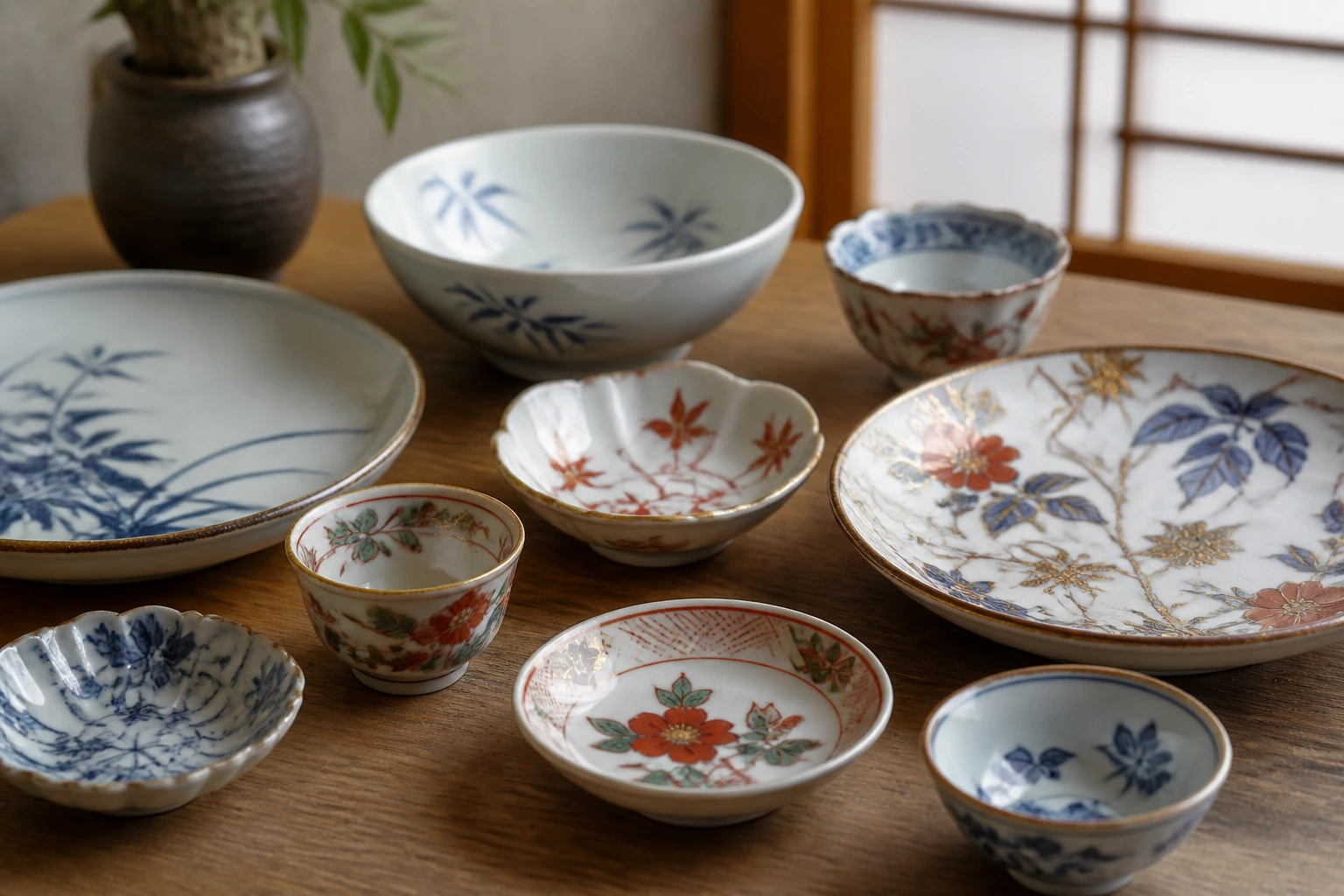
Worth being clear about what you’re actually buying. MUJI’s Hasami ware is genuine regional Japanese porcelain, but it’s mass-produced, single-color-glaze everyday tableware — not the hand-painted, multi-color decorative tradition you’ll find in our guide to Kutani ware plates and dinnerware. If you want bold, hand-decorated pieces for a statement table setting or a gift, that comparison is the one to read. If you want inexpensive, genuinely-Japanese everyday tableware to actually eat off, MUJI’s Hasami line is the more sensible starting point — the two aren’t really competing for the same use case.
FAQ
Is “Hasami ware” the same thing as the US lifestyle brand “Hasami Porcelain”? No, and this is a genuine naming collision worth knowing about. “Hasami Porcelain” (hasamiporcelain.com) is a Los Angeles-founded brand best known for its stackable mugs — a different company from MUJI, with its own separate product line. This article is specifically about MUJI’s Hasami Ware collection, made in Japan.
Is MUJI’s Hasami ware handmade? MUJI’s product copy doesn’t claim hand-painting or hand-throwing — it describes traditional Hasami ware porcelain and Edo-period-inspired shapes, consistent with mass-produced regional tableware rather than studio pottery. That’s a fair trade for the £5.95–£9.95 price point.
Is it dishwasher- or microwave-safe? MUJI’s own product pages don’t state this for the pieces in this roundup, so we’re not claiming it either way. Hand-wash until you’ve confirmed via the physical packaging or MUJI customer service.
What’s a soba choko? A small, traditionally shaped cup used for dipping cold soba noodles into sauce — MUJI’s sake cup in this line is explicitly described as this shape, repurposed as a multi-use small cup.
Final Thoughts
If you’ve been eyeing “Hasami ware” online and wondering whether MUJI’s version is the real thing or just a borrowed name, the spec sheets back it up: genuine porcelain, made in Japan, correctly naming both the regional ware and the historical shape. It won’t replace hand-painted Kutani for a statement piece, but as inexpensive, actually-Japanese daily tableware, it’s a legitimate pick.
MUJI passes because it names its region, material, and origin on the record — most listings that borrow a ware name don’t. Our guide to spotting Japanese craft knockoffs walks through the same checks for knives, teapots, and lacquerware, if you want to run them yourself on a listing that isn’t as forthcoming as MUJI’s.