Some of the shops we link to are partners who may pay us when you buy through them. This doesn't change which pieces we recommend. How this works.
Get the Usaburo Sosaku Kokeshi Doll, Fujiyama for a classic hand-painted design, or the Usaburo Kokeshi Doll, Akiko's Purple Kimono for a lower-priced option from the same maker. Usaburo is a documented kokeshi workshop operating in Gunma Prefecture, and its listings name the company directly. A lot of "kokeshi doll" sets sold next to them on Amazon are generic resin or PVC figurines that never name a maker at all.
A Folk Craft With a Real Regional Home, Sold Next to Generic Figurines
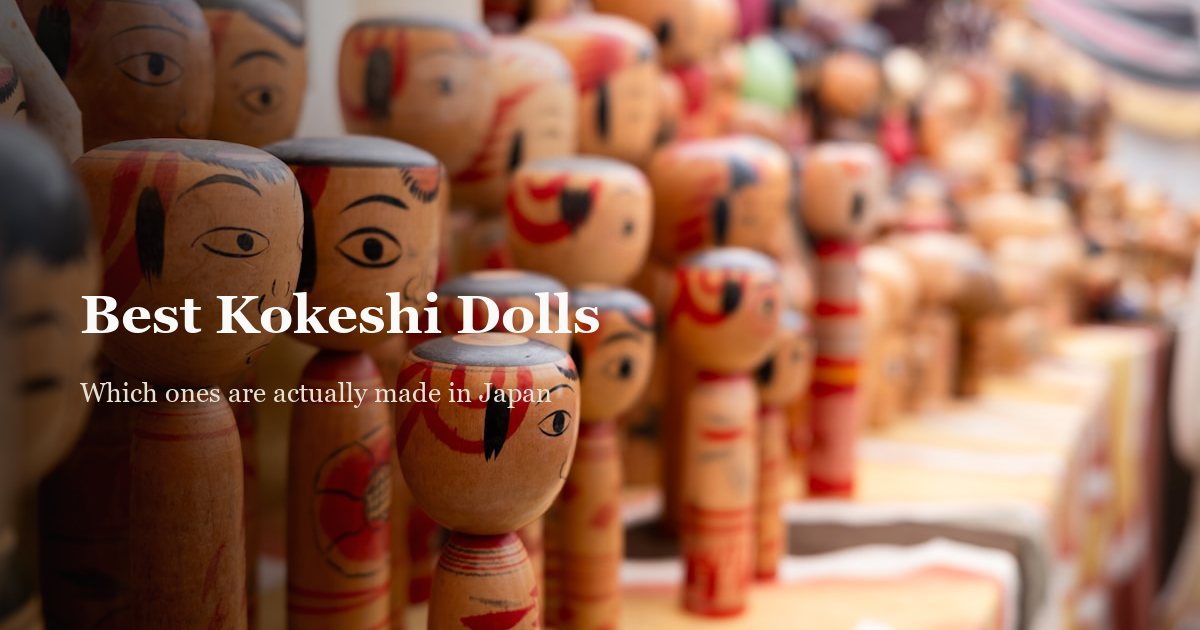
Kokeshi are traditional Japanese wooden dolls, originally made in the Tohoku region as souvenirs from hot-spring towns, with a simple cylindrical body and no arms or legs. That simplicity is exactly what makes them easy to imitate cheaply: a generic painted wooden or resin figurine in a similar shape can pass a quick glance as “kokeshi,” whether or not it was carved in Japan by anyone connected to the craft’s actual regional tradition.
Search “kokeshi doll” on Amazon and the results split the same way they do in every other category on this site: genuine Japanese workshops with a real, checkable history, sitting next to unnamed sellers offering multi-packs of PVC or resin figurines styled to look similar. Usaburo is the clearest example of the former. It’s a real kokeshi workshop that has operated in Gunma Prefecture since 1955, and its listings state that origin directly rather than leaning on the word “kokeshi” alone to imply it.
Comparison at a Glance
Checked against current Amazon.com listings on September 9, 2026. Prices vary by retailer and change often.
Usaburo: A Workshop With a Real, Checkable History
Usaburo isn’t a brand name attached after the fact to a generic supply chain. It’s a specific kokeshi workshop that traces back to 1955 in Gunma Prefecture, and it has built a large enough catalog on Amazon, dozens of distinct hand-painted designs, each carrying its own rating history, that the pattern is easy to verify: real reviews, consistent “Made in Japan” labeling across the catalog, and a maker name that shows up the same way on every listing rather than varying between sellers. That consistency across dozens of SKUs is a stronger signal than any single listing’s claim on its own.
1. Usaburo Sosaku Kokeshi Doll, Fujiyama
This design uses Mt. Fuji and a rising-sun motif, hand-painted onto the doll’s cylindrical wooden body in the sosaku (creative, non-traditional pattern) kokeshi style, as opposed to the older dentou (traditional, regionally standardized) style. At 4.9 stars across 74 ratings, it’s one of the better-reviewed pieces in Usaburo’s catalog.
Pros:
- Usaburo is a documented workshop with a traceable history, not just a name on a listing
- Hand-painted, not printed or decal-applied
- Strong, consistent rating across a real review sample
Cons:
- At $56.40, it’s pricier than the mass-produced resin figurine sets sold alongside it
- Sosaku-style kokeshi like this one departs from the older regional dentou patterns, worth knowing if you specifically want a traditional Tohoku-style design
- Limited stock at the time of checking; availability on a specific design can run low
Bottom line: the pick for a more detailed, scenic design from a documented maker.

Usaburo Sosaku Kokeshi Doll, Fujiyama
Hand-painted, Mt. Fuji motif. 4.9★ (74 ratings).
2. Usaburo Kokeshi Doll, Akiko’s Purple Kimono
A simpler, single-figure design in the same sosaku style, at a lower price point than the Fujiyama piece. It carries the widest review base of the two, 97 ratings at 4.7 stars, which makes it a reasonable lower-cost entry into the same documented maker’s catalog.
Pros:
- Same documented Usaburo workshop, at a lower price
- Widest review sample of the two picks here
- A simpler design if a scenic motif isn’t what you’re looking for
Cons:
- Less visually detailed than the Fujiyama piece
- Still a real cost above the unnamed multi-packs sold alongside it, the tradeoff for a documented maker
- Design is a single fixed pattern, not customizable
Bottom line: the pick if you want the same maker’s authenticity for less.

Usaburo Kokeshi Doll, Akiko's Purple Kimono
Hand-painted, single-figure design. 4.7★ (97 ratings).
Where “Kokeshi Doll” Listings Get Murky
Search “kokeshi doll” broadly and a large share of the results are multi-packs, six or twelve small figurines for $10-15, made from PVC or resin rather than turned wood, sold under seller names that don’t appear anywhere else with a documented history. That’s not automatically dishonest; a $12 pack of decorative figurines was never claiming to be a hand-turned, hand-painted wooden kokeshi in the first place. But the visual similarity, a cylindrical body with a painted face and kimono pattern, means a buyer specifically looking for the genuine wooden craft can end up with a plastic novelty item instead, if the listing itself doesn’t make the material and origin clear.
Check the material field directly: genuine kokeshi are turned wood, hand-painted, with the maker’s workshop named somewhere in the listing. If a listing only says “PVC” or doesn’t specify a material at all, or if the seller name doesn’t match any documented kokeshi workshop, it’s a decorative figurine in the kokeshi style rather than the craft item itself, whatever the listing title claims.
Which One Should You Buy?
- For the more detailed, scenic design, get the Usaburo Sosaku Kokeshi Doll, Fujiyama.
- For the same documented maker at a lower price, get the Usaburo Kokeshi Doll, Akiko’s Purple Kimono.
- If a “kokeshi” listing doesn’t specify turned wood as the material or name a workshop anywhere, treat it as a decorative figurine in the kokeshi style, not the traditional craft item.
FAQ
What’s the difference between dentou and sosaku kokeshi? Dentou (traditional) kokeshi follow regionally standardized shapes and patterns tied to specific towns in the Tohoku region, largely unchanged for generations. Sosaku (creative) kokeshi, like both picks above, use the same basic wood-turned body but allow the artist more freedom in painted design. Neither is more “real” than the other; they’re different categories within the same craft.
Is Usaburo a well-known kokeshi maker? Usaburo is a documented workshop operating in Gunma Prefecture since 1955, with a large catalog of distinct hand-painted designs on Amazon, each carrying its own independent review history rather than a single generic listing.
Are cheap multi-pack “kokeshi” dolls fake? Not necessarily dishonest, but usually a different product than what the word implies. Multi-packs of small PVC or resin figurines aren’t claiming to be hand-turned wooden kokeshi if the listing is upfront about the material; the risk is buying one without checking the material field and assuming it’s the wooden craft item.
What should I look for on the listing itself to confirm it’s real? A named workshop or maker, a stated wood material (not PVC or resin), and hand-painting rather than a printed pattern. Usaburo’s listings state all three directly.
Final Thoughts
Usaburo’s seven-decade-plus history in Gunma Prefecture is the kind of specific, checkable claim this site looks for in every category: a real workshop, a consistent name across dozens of listings, and a review history that backs it up. A lot of the “kokeshi” sharing shelf space with it on Amazon are PVC figurines in a similar shape, sold by sellers with no documented connection to the craft at all. For the underlying method behind picks like these, applied across every category on this site, see our buyer’s checklist for real vs. knockoff Japanese craft.