Some of the shops we link to are partners who may pay us when you buy through them. This doesn't change which pieces we recommend. How this works.
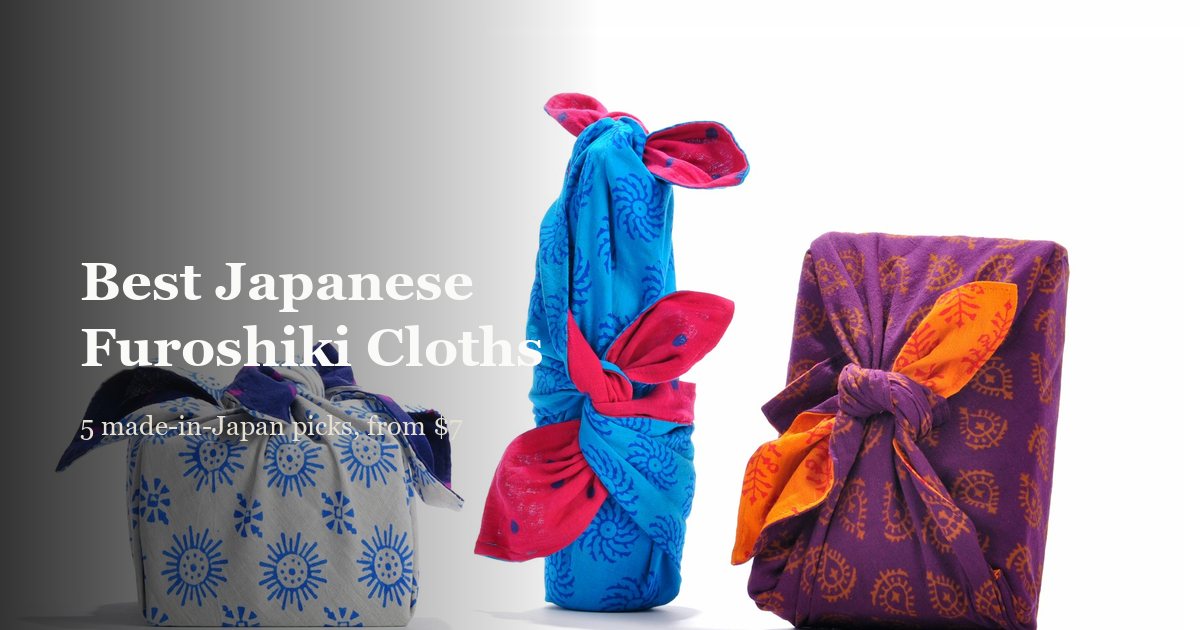
For an everyday, budget-friendly pick that's genuinely made in Japan, get the TAYU-TAFU Moon and Crane furoshiki (~$8, 100% cotton, 335 ratings at 4.8★). For a nicer gift-wrap piece, the Hokusai Wave Chirimen Yuzen Furoshiki (~$40) is a proper silk-crepe piece, not a printed cotton square. "Furoshiki" itself is just the Japanese word for a wrapping cloth. It isn't a protected term, so plenty of listings use it on fabric with no stated maker or country of origin at all.
The 5 Picks
| Furoshiki | Price | Material | Why It Works |
|---|---|---|---|
| TAYU-TAFU Moon and Crane | ~$8 | 100% cotton | Best budget, highest review count of any pick here |
| Maeda-senkou Moon Dancing Rabbit | ~$8 | 100% cotton | Named Kyoto dye workshop, same price tier |
| Sazara Pattern Purple (Musubi Kiln) | ~$7 | Water-resistant polyester | Wrinkle-resistant, honestly labeled as synthetic |
| Hokusai Wave Chirimen Yuzen (Musubi Kiln) | ~$40 | Silk-touch chirimen crepe | Best for actual gift-wrapping, iconic Hokusai design |
| Blue Whale Organic Cotton (Musubi Kiln) | ~$47 | 100% organic cotton | Largest size, named artist collaboration |
Checked against current Amazon.com and Musubi Kiln listings on August 30, 2026.
“Furoshiki” Isn’t a Protected Word, So the Name Alone Doesn’t Prove Anything
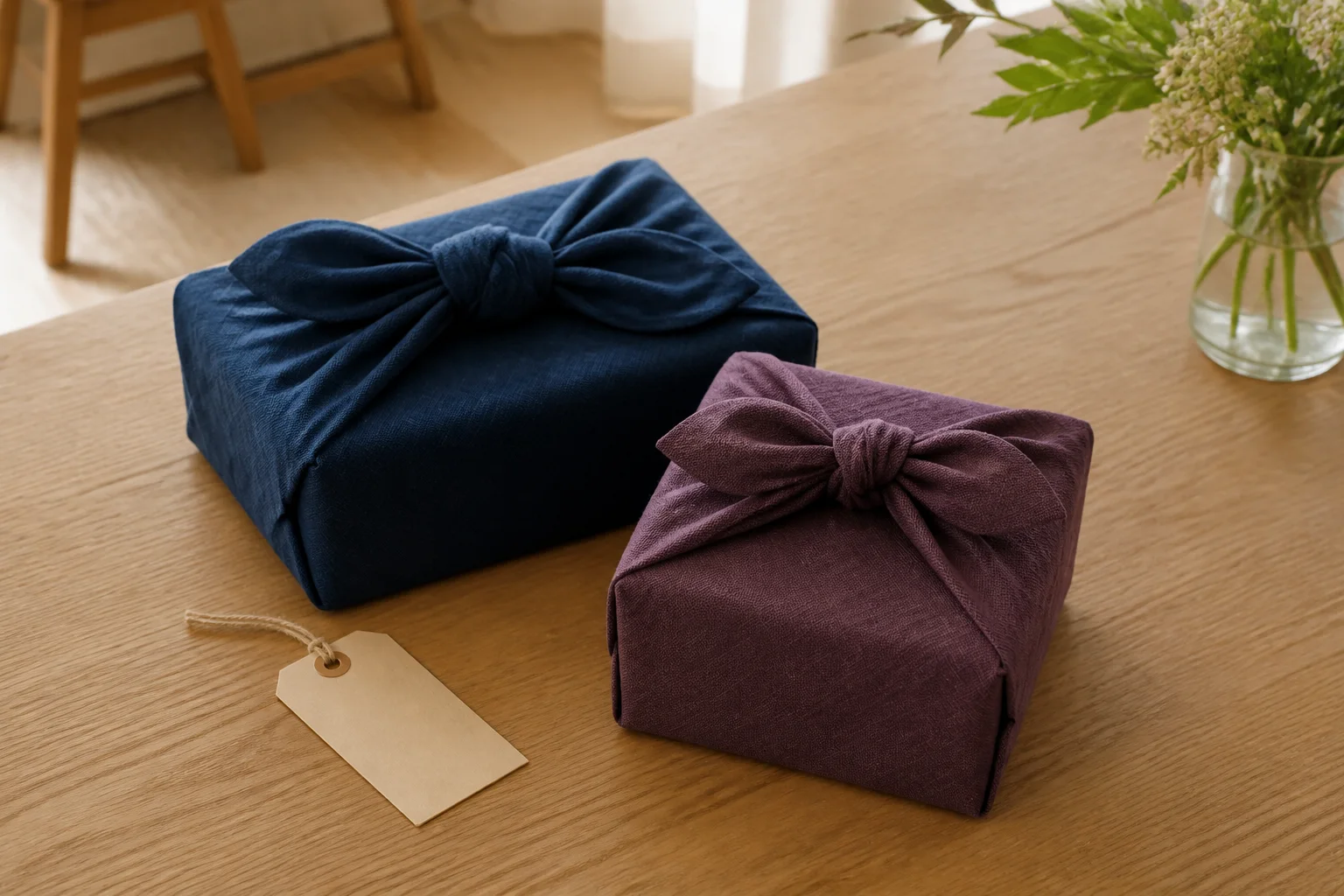
Furoshiki (風呂敷) just means “wrapping cloth” in Japanese. The practice traces back over 1,200 years to the Nara period, when temples used cloth called tsutsumi to wrap valuables; the specific word “furoshiki” is generally traced to roughly 600 years later, when nobles visiting a bathhouse built by shogun Ashikaga Yoshimitsu wrapped their clothes in crested cloth to avoid mix-ups (furo, bath, plus shiki, spread). Because it’s a functional description rather than a brand, a trademark, or a place-name craft designation, anyone can print a square of fabric with a wave pattern and call it a furoshiki, the same way anyone can call a cast-iron kettle a tetsubin whether or not it’s actually from Japan.
That means the checklist here looks a little different from this site’s usual “is the craft-region name real” question. For furoshiki, the more useful checks are: does the listing name an actual fabric or maker (not just “Japanese style”), does it state a material honestly (cotton, silk, or a specific synthetic, not just “fabric”), and does it claim Japan as the country of origin anywhere in the structured product details, not only in a title stuffed with keywords.
Picking the Right Size
Furoshiki are sold by size, and the size determines what the cloth is actually good for, which most Amazon listings don’t explain clearly:
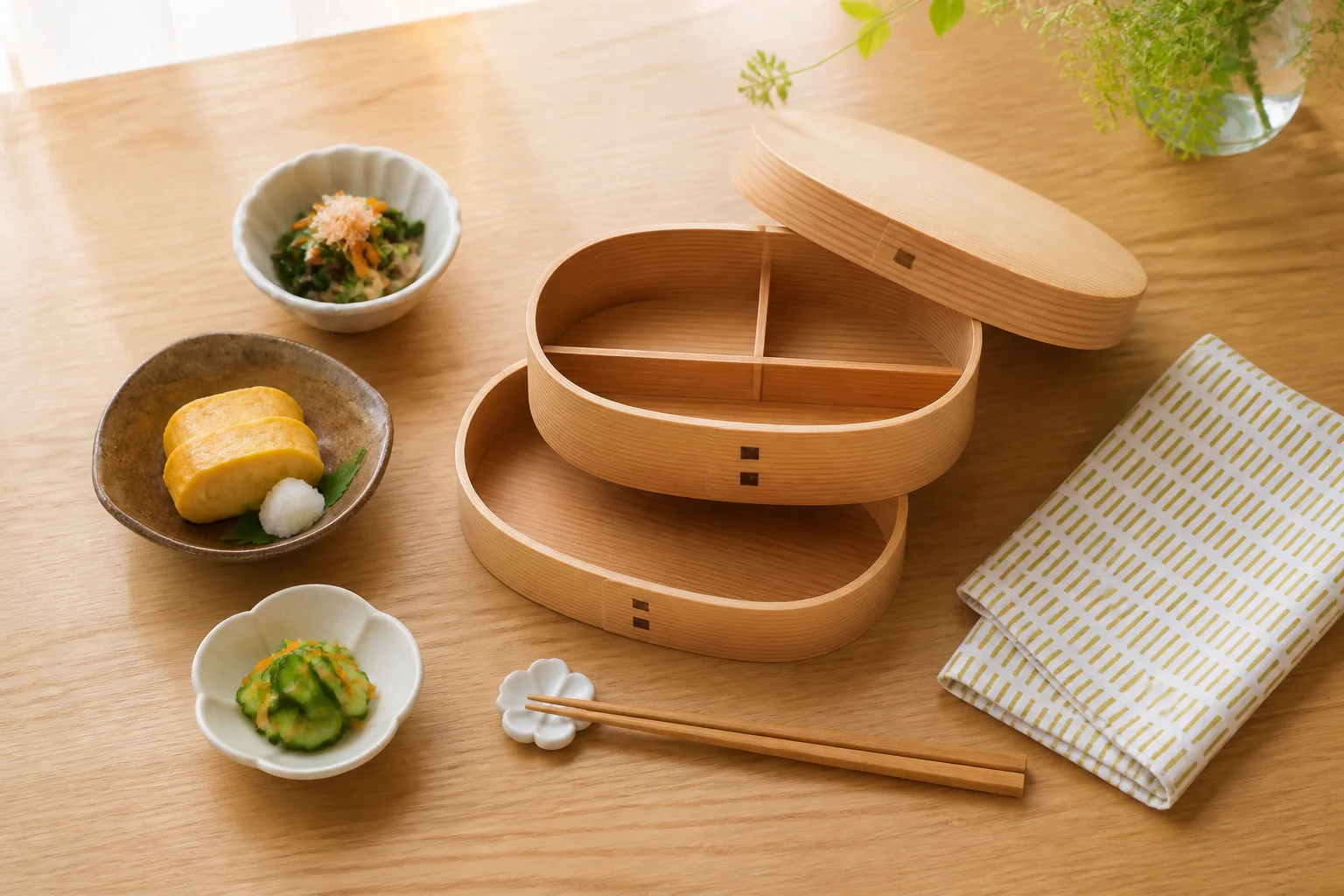
- Small, roughly 45–50cm (17–20in): wrapping a bento box, or as a formal fukusa cloth for presenting a gift or an envelope by hand.
- Medium, roughly 68–70cm (27in): the size for wrapping a gift box or a wine bottle, or folding into a small tote bag. This is the size most gift-wrap furoshiki are sold at.
- Large, roughly 90–120cm (35–47in): big enough to carry larger items as a furoshiki bag, or to use flat as a small tablecloth or a wall hanging.
If you’re buying one specifically to replace gift wrap, medium is almost always the right call. Small is better suited to bento and everyday use than to gifting.
TAYU-TAFU Moon and Crane
The たゆたふ / TAYU-TAFU Moon and Crane furoshiki is a 19x19in (50x50cm, small size) 100% cotton cloth that states “Made in Japan” directly in its Amazon product details, not just in the title. It’s an Amazon’s Choice pick with a 4.8-star rating across 335 reviews, by far the largest review sample of any pick on this list, at around $8.

TAYU-TAFU Moon and Crane Furoshiki
19.7"x19.7", 100% cotton, "Made in Japan" stated in listing. 4.8★ (335 ratings).
Pros:
- Made in Japan stated in the structured product details
- Highest review count here, which makes the rating easier to trust
- Cheapest genuinely Japanese pick on this list
Cons:
- Small size (50cm), best for bento or presenting a small gift, not for wrapping a box
- Single pattern per listing; you’re committing to the Moon and Crane design
- Printed cotton, not a woven or dyed traditional textile
Bottom line: the easiest, cheapest pick if you just want one genuinely made-in-Japan furoshiki without overthinking it.
Maeda-senkou Moon Dancing Rabbit
Maeda-senkou’s Moon Dancing Rabbit furoshiki is a 19x19in 100% cotton cloth from Maeda-senkou, a named Kyoto dye workshop rather than a generic Amazon storefront brand. Its listing also states “Made in Japan” directly, and it carries a 4.8-star rating across 157 reviews at around $8.

Maeda-senkou Moon Dancing Rabbit Furoshiki
19"x19", 100% cotton, "Made in Japan" stated in listing. 4.8★ (158 ratings).
Pros:
- Named workshop (Maeda-senkou), not a generic private-label brand
- Same price and material tier as the TAYU-TAFU pick, useful if you want a second design
- Made in Japan stated in the product details
Cons:
- Only 10 units left in stock at the time of checking; availability can be tight
- Same small (50cm) size limitation as the TAYU-TAFU pick
- Rabbit motif is seasonal-adjacent (associated with autumn/moon-viewing imagery), worth considering for the occasion
Bottom line: the pick if you want a second, differently-designed budget option from a named maker rather than a repeat of the same pattern.
Sazara Pattern Purple Furoshiki (Musubi Kiln)
The Sazara Pattern Purple Furoshiki from Musubi Kiln is worth including specifically because its spec sheet is honest about something a lot of “silk-look” furoshiki listings aren’t: it’s made from water-resistant polyester with a crepe texture, not cotton or silk, priced around $7 for the smaller (45cm) size. The traditional samekomon pattern (a fine, repeating dot motif originally used on samurai formal wear) is genuine, even though the fiber isn’t natural.
Pros:
- Material stated honestly as polyester, not vaguely as “fabric” or implied to be silk
- Wrinkle-resistant and easy to handle, a real practical advantage of synthetic fiber
- Cheapest pick on this list, with a traditional pattern
Cons:
- Not cotton or silk, which matters if natural fiber specifically is the point for you
- Musubi Kiln isn’t yet a partner shop for this site, so this is a plain (non-tracked) link for now
- Smaller size options are aimed more at everyday use than large gift-wrapping
Bottom line: proof that “not natural fiber” and “not honestly labeled” are two different problems. This one only has the first, and it’s priced accordingly.
Hokusai Wave Chirimen Yuzen Furoshiki (Musubi Kiln)
The Hokusai Wave Chirimen Yuzen Furoshiki is a 27in (68cm, medium/gift-wrap size) cloth depicting Katsushika Hokusai’s The Great Wave, made with chirimen (a crepe-textured silk-touch weave) and a yuzen dyeing technique, at around $40. This is the size and finish this site would actually recommend for wrapping a physical gift, rather than the smaller cotton picks above.
Pros:
- Medium (68cm) size, correctly sized for wrapping a gift box or bottle
- Chirimen crepe texture and yuzen dyeing are named, specific techniques, not just “traditional pattern”
- Recognizable, well-documented artwork (a public-domain 19th-century woodblock print), so there’s no licensing ambiguity
Cons:
- Meaningfully more expensive than the cotton picks above
- Plain (non-tracked) Musubi Kiln link, same pending-approval caveat as the Sazara pick
- Single design; if The Great Wave doesn’t suit the recipient, Musubi Kiln’s broader furoshiki catalog has other chirimen options at a similar price
Bottom line: the pick if you’re actually replacing wrapping paper for a real gift, not buying a decorative square.
Blue Whale Organic Cotton Furoshiki (Musubi Kiln)
The Blue Whale Organic Cotton Furoshiki is a 100cm (39.4in, large size) cloth made from 100% organic cotton, part of a named collaboration with kata kata, a stencil-dyeing artist unit, at around $47. At this size it works as a furoshiki bag, a small tablecloth, or wall decor, not just gift wrap.
Pros:
- Largest size on this list, genuinely useful as a bag or tablecloth, not just wrapping paper
- Organic cotton, and the artist collaboration is named specifically, not just “artisan-made”
- Machine-washable, per the product description
Cons:
- The most expensive pick here by a clear margin
- Same plain-link, pending-approval caveat as the other Musubi Kiln picks
- Large size is overkill if you only need to wrap a small gift box
Bottom line: the pick if you want a furoshiki that doubles as a reusable bag, not just a one-time wrap.
What a Generic Amazon Furoshiki Listing Looks Like
Search “furoshiki” on Amazon and a large share of the results are multi-packs from single-purpose storefront brands: no stated maker, no country of origin anywhere in the listing, and material described only as “fabric” or “polyester” without further detail. That’s not automatically a scam — a printed square of fabric is a genuinely useful, inexpensive way to wrap a gift, and some of these listings have thousands of reviews from happy buyers. The issue is specifically the ones that lean on Japanese-language pattern names or ukiyo-e artwork in the title while stating no origin, no maker, and no honest material description anywhere in the product details. If a listing can’t tell you where it’s made or what it’s actually made of, it’s a printed wrapping cloth with a Japanese-sounding name, not a furoshiki you can call authentically Japanese with a straight face.
Which One Should You Buy?
- You want the cheapest, easiest, verifiably made-in-Japan option: the TAYU-TAFU Moon and Crane.
- You want a second budget design from a named workshop: the Maeda-senkou Moon Dancing Rabbit.
- You want a wrinkle-resistant everyday cloth and don’t mind synthetic fiber: the Sazara Pattern Purple.
- You’re actually wrapping a physical gift and want it to look the part: the Hokusai Wave Chirimen Yuzen.
- You want something that doubles as a reusable bag or tablecloth: the Blue Whale Organic Cotton.
For more Japan-made gift ideas in the same price range, see our Japanese housewarming gifts guide and Japanese tea set gift guide. If you’ve also seen the similar-looking rectangular cotton towel called tenugui, see our tenugui vs furoshiki comparison for how the two actually differ. For another home textile with the same “unprotected name, check the spec sheet” problem, see our Japanese noren curtains guide.
FAQ
Is furoshiki a registered or protected Japanese craft, like Kutani ware or Wakasa-nuri lacquerware? No. Furoshiki is a generic Japanese word for a wrapping cloth, not a place-name craft designation or a protected term. That’s exactly why checking the actual maker, material, and stated country of origin matters more here than it does for a regionally-designated craft.
What size furoshiki do I need to wrap a wine bottle? A medium size, roughly 68–70cm (27in), is the standard size for wrapping a bottle or a gift box. Smaller (45–50cm) cloths are sized more for bento boxes or small envelopes.
Is polyester furoshiki “fake”? No. Polyester and other synthetic-fiber furoshiki are a normal, functional part of the product category, especially for everyday or budget use. The material choice isn’t the problem. What matters is whether the listing states the material honestly, rather than implying silk or cotton while staying vague.
Can I use a furoshiki instead of wrapping paper for a real gift? Yes, and it’s a genuinely common practice in Japan. Musubi Kiln and other Japanese retailers sell furoshiki specifically marketed for gift-wrapping. A medium (68–70cm) cloth in a cotton or chirimen material is the right size and finish for that use.
How do I actually tie a furoshiki? The most common basic technique is a simple overhand knot after folding the cloth diagonally around the item (sometimes called otsukai-zutsumi), though there are dozens of named wrapping styles for different item shapes, from bottles to boxes to irregular objects. That’s a big enough topic for its own how-to guide, not something we’re covering fully here.
Final Thoughts
Unlike most of what this site covers, furoshiki isn’t a regionally-designated craft with a legal or historical claim to the name, so the usual “does the craft name check out” question doesn’t apply the same way. What still applies is the same underlying habit: read the product details, not just the title. A furoshiki that names an actual maker or workshop, states its material honestly, and claims Japan as the country of origin in the structured listing data is a meaningfully different purchase from one that only borrows a Japanese word and a wave pattern. For more on how this site separates real Japanese craft from generic “Japanese-style” listings in general, see our buyer’s checklist for real vs. knockoff Japanese craft.
Keep Reading
- Want a cotton cloth for everyday use rather than wrapping? See made-in-Japan tenugui towels.
- Finishing a wrapped gift? Read which washi tape is actually made in Japan.
- Folding a crane to go with it? See what “washi” really means on origami paper.