Some of the shops we link to are partners who may pay us when you buy through them. This doesn't change which pieces we recommend. How this works.
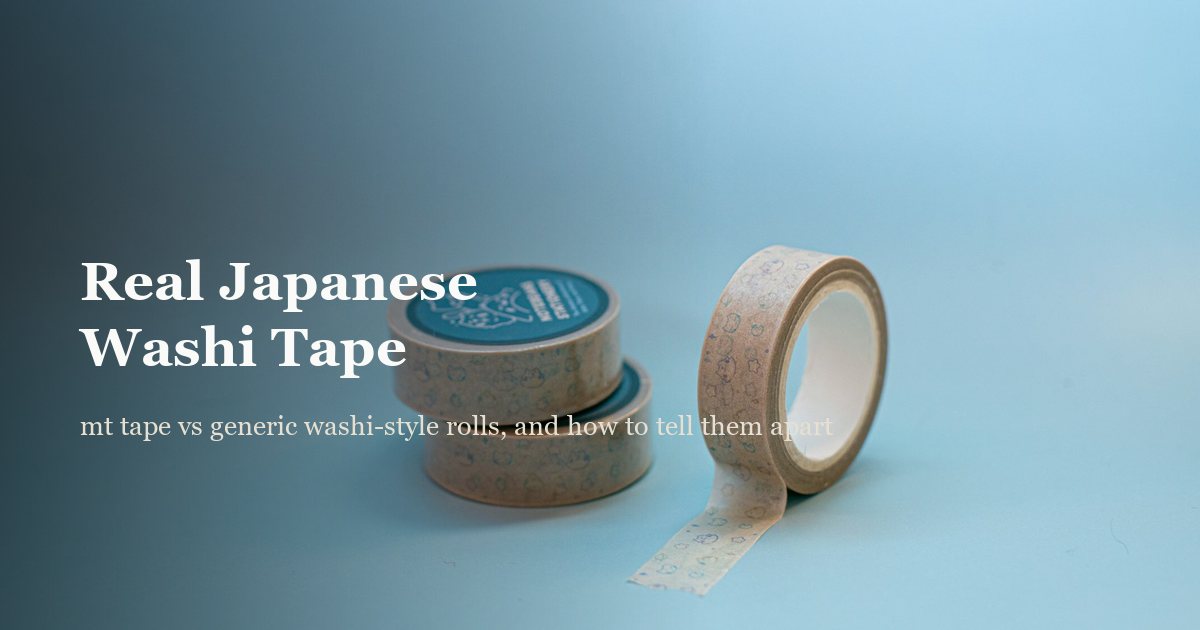
For the widest color range from a verified maker, get the mt Washi Masking Tapes, Set of 10 (~$20, brand listed as KAMOI, Japan Import, 4.8★ across 920 ratings). If you just want one roll to try, the mt Washi Masking Tape single roll (~$8 to $11, material listed as "Japanese rice paper") has the deepest review history of anything on this page, at 2,578 ratings. Both are made by Kamoi Kakoshi, a paper company that's been operating in Kurashiki, Japan since 1923. Most of the cheap multi-packs that dominate an Amazon "washi tape" search also list their material as "washi paper," with no manufacturer named at all, which means the material claim alone doesn't separate a real one from a decorative import.
The 2 Picks
| Washi Tape | Price | What You Get | Why It Works |
|---|---|---|---|
| mt Washi Masking Tapes, Set of 10 | ~$20 | 10 rolls, bright colors | Named manufacturer (Kamoi), widest color range, Amazon’s Choice |
| mt Washi Masking Tape (single roll) | ~$8-11 | 1 roll, various colors | Deepest review history of any pick here (2,578 ratings), lowest cost to try one |
Checked against current Amazon.com listings on September 9, 2026.
“Washi Tape” Is a Material Claim, Not a Brand, and Almost Everyone Makes It
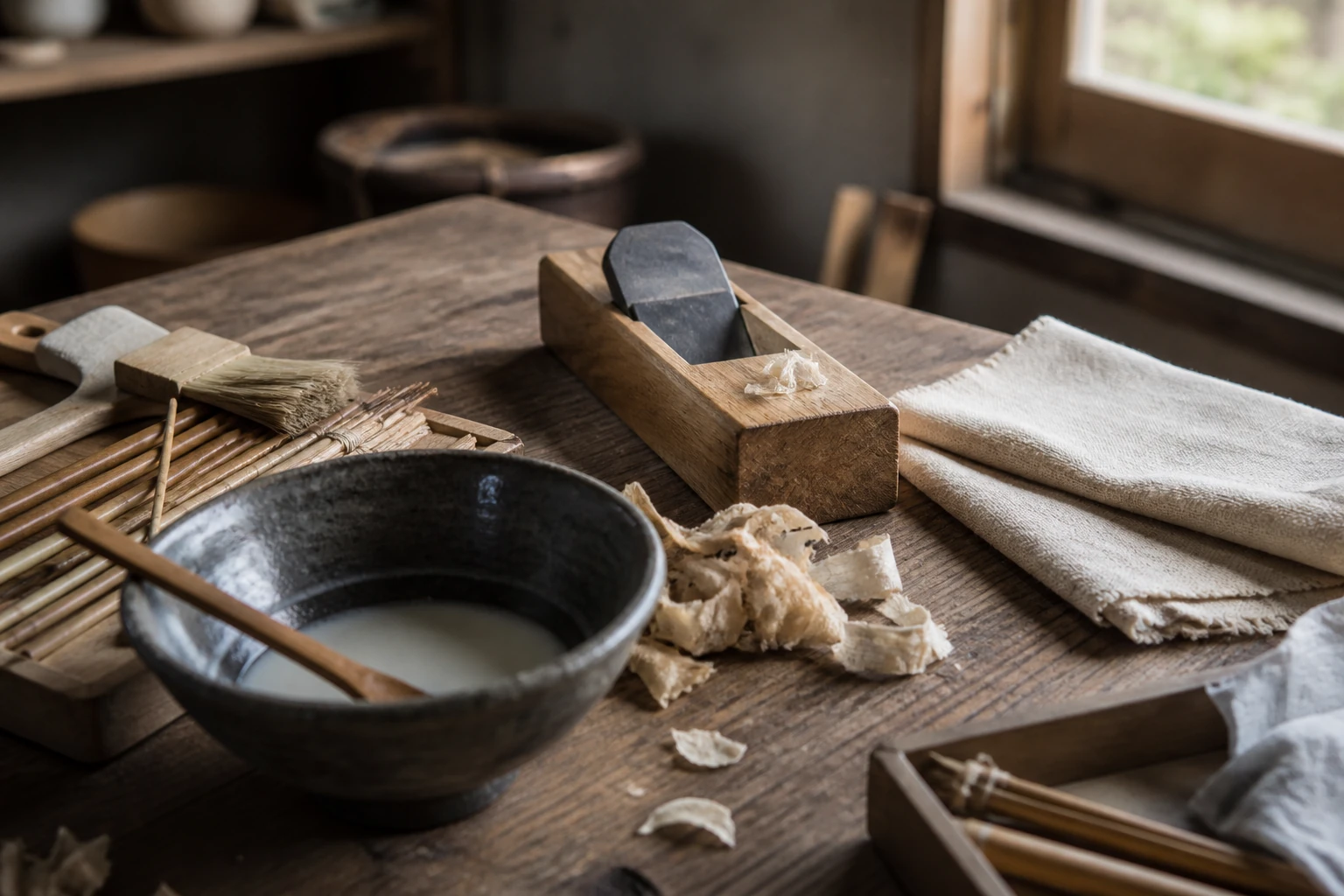
Washi (和紙) is the general term for traditional Japanese paper, made from the fibers of kozo (paper mulberry), and sometimes mitsumata or gampi, rather than the wood pulp used in most Western paper. It’s been made in Japan for over a thousand years, and in 2014 UNESCO added Japanese hand-papermaking to its Intangible Cultural Heritage list, specifically covering three regional techniques: sekishu-banshi (Shimane), hon-mino-shi (Gifu), and hosokawa-shi (Saitama). Those three are hand-made traditions, distinct from the machine-made washi paper used in mass-produced items like masking tape, worth knowing so you don’t assume every product labeled “washi” is the UNESCO-listed craft itself.
That distinction matters here because “washi tape” as a product category took off in the West largely through one specific company: Kamoi Kakoshi Co., Ltd., founded in 1923 in Kurashiki, Okayama Prefecture, originally as an industrial masking tape manufacturer. According to the company’s own account, Kamoi noticed craft hobbyists buying its plain industrial masking tape to use in scrapbooking and journaling, and in 2008 launched “mt” (short for “masking tape”), a consumer line in hundreds of colors and patterns, made from washi paper rather than the plastic film most masking tape is made from. mt is now widely credited as the brand that popularized washi tape internationally.
The problem for buyers: “washi tape” isn’t a protected term any more than “noren” or “furoshiki” are. Search Amazon and the term now covers everything from genuine Kamoi-made mt tape to sets from storefront brands with no stated manufacturer, no country of origin, and a material field that says “washi paper” with nothing backing it up. Both categories exist side by side in the same search results, often at wildly different per-roll prices.
mt Washi Masking Tapes, Set of 10
The mt Washi Masking Tapes, Set of 10, Bright Colors (MT10P003) is a boxed set of 10 rolls in an assortment of bright, solid colors, imported directly from Japan. Its Amazon listing states the brand as KAMOI and the material as Washi, both filled in as structured fields rather than left to the title. It carries a 4.8-star rating across 920 reviews and an Amazon’s Choice badge.

mt Washi Masking Tapes, Set of 10
10 rolls, bright colors, Brand: KAMOI, Material: Washi, Japan Import. 4.8★ (920 ratings).
Pros:
- Brand field states KAMOI (Kamoi Kakoshi) directly, not a generic storefront name
- Widest color range of anything on this page: 10 rolls in one box
- Highest star rating of the two picks here, on a large (920-review) sample
Cons:
- Costs roughly double, per roll, what the single-roll pick below costs
- Only 5 items were left in stock at the time of checking, so availability can be tight
- Bright, solid colors only in this particular set; other mt sets cover pastels or patterns instead
Bottom line: the pick if you want variety and are fairly confident you’ll use several colors, not just one.
mt Washi Masking Tape (Single Roll)
The mt Washi Masking Tape single roll is sold in dozens of individual colors, each a 15mm x 10m roll. Its listing states the brand as MT and the material as Japanese rice paper, and the product description specifically notes it’s reusable and easy to tear by hand, a real, checkable property of genuine washi tape, not just marketing language. It’s the most-reviewed pick on this page by a wide margin: 4.5 stars across 2,578 ratings.

mt Washi Masking Tape (Single Roll)
15mm x 10m, Brand: MT, Material: Japanese rice paper. 4.5★ (2,578 ratings).
Pros:
- By far the largest review sample of anything on this page, which makes the 4.5-star average easier to trust
- Cheapest way to try genuine mt tape without committing to a 10-roll set
- Material field specifically says “Japanese rice paper,” not just “washi paper” left vague
Cons:
- Price varies noticeably by color, from roughly $7.92 to $10.98 depending on the listing
- One roll, one color; you’ll need to order more if you want a range
- Slightly lower star rating than the boxed set, though on a much larger sample
Bottom line: the pick if you want to try genuine mt tape at the lowest possible cost, or need a specific single color rather than an assortment.
The Physical Test: Real Washi Tears Cleanly, Vinyl Doesn’t
Because so many Amazon listings claim “washi paper” as a material with no manufacturer to verify it against, it helps to know what genuine washi tape actually feels like once it’s in your hands. Craft and stationery retailers who carry authenticated washi tape describe a consistent set of properties: a matte, slightly textured finish rather than a glossy one; a semi-transparent look when held up to light; and, most usefully, the ability to tear cleanly by hand in a straight line, rather than stretching or leaving jagged, stringy edges. Vinyl or polyester tape sold under the same “washi tape” label tends to be smoother and glossier, grips harder, and tears raggedly instead of cleanly, because it’s a plastic film rather than a paper fiber.
None of that is something you can check before buying online, which is exactly why the listing’s own structured details matter as a first-pass filter. If a “washi tape” set doesn’t name a manufacturer beyond its own storefront brand, doesn’t state a country of origin, and describes the material only as “washi paper” with nothing else to back that up, treat the material claim as unverified rather than assuming it’s false. If you want a full refund-free way to check, tear a small piece off the roll once it arrives: a clean, straight tear supports the paper claim; a stretchy or jagged one contradicts it.
What a Generic Multi-Pack Listing Looks Like
Search “washi tape” on Amazon and the majority of results are 12-, 24-, or 32-roll sets from brands like PAGEMORE and Lychii, priced at $10 to $15 for the whole set, working out to well under a dollar per roll. Several of these also list their material as “Washi Paper” in the structured product details, with no manufacturer named beyond the storefront brand, and no country of origin stated anywhere. That’s not proof the tape isn’t paper-based at all (plenty of budget craft supplies are exactly what they claim to be), but it does mean there’s no way to verify the claim the way you can with mt tape’s explicit “KAMOI” brand field and a company history you can look up. These multi-packs are a reasonable, inexpensive choice if you mainly want color variety for scrapbooking or gift wrap and don’t need the tape itself to be a checkable, sourced product. They’re a different purchase from a roll you can trace back to a named, century-old manufacturer, at a price that reflects the difference.
Which One Should You Buy?
- You want a wide color range from a verified maker: the mt Washi Masking Tapes, Set of 10.
- You want the cheapest way to try genuine mt tape, or need one specific color: the mt Washi Masking Tape single roll.
- You mainly want a lot of colors for scrapbooking and don’t need a traceable manufacturer: a generic multi-pack set is a reasonable, cheaper alternative, with the caveat that its “washi paper” claim isn’t independently checkable.
For more on how this site separates a named, sourced maker from a generic listing across other categories, see our buyer’s checklist for real vs. knockoff Japanese craft and our Japanese calligraphy sets guide, the other stationery category we’ve covered on this site.
FAQ
Is “washi tape” the same as the washi paper on UNESCO’s Intangible Cultural Heritage list? Not exactly. UNESCO’s 2014 listing covers three specific hand-papermaking traditions (sekishu-banshi, hon-mino-shi, and hosokawa-shi). Washi tape, including genuine mt tape, uses machine-made washi paper for an adhesive-tape product, a related but distinct thing from the hand-made heritage paper itself.
Does “washi paper” in the material field guarantee a tape is genuinely Japanese? No. Several generic multi-pack sets with no named manufacturer and no stated country of origin also list “Washi Paper” as their material. The material claim alone isn’t verifiable without a named maker behind it; a brand field that says KAMOI or MT, backed by a real, checkable company history, is a stronger signal than the material field by itself.
Is mt tape more expensive because it’s better quality, or just because it’s a name brand? Both play a role. mt tape uses paper-fiber washi with a specific matte, hand-tearable feel that Kamoi has been refining as a masking-tape manufacturer since 1923, and the per-roll price (roughly $2 for the boxed set, $8 to $11 for a single premium roll) reflects a named, sourced product rather than an anonymous bulk import.
Can I use washi tape on walls without damaging paint? That’s a common selling point for genuine washi tape specifically, since Kamoi’s original product line was industrial masking tape designed to remove cleanly. It’s still worth testing on a small, hidden area first, since paint types and wall surfaces vary.
Final Thoughts
Washi tape follows the same pattern as noren and furoshiki on this site: the underlying material and craft are real and centuries old, but the modern product name isn’t protected, so a printed “washi paper” material field on a $10 multi-pack set means exactly as much, or as little, as the manufacturer behind it is willing to stand behind. mt tape’s advantage isn’t a fancier material claim (plenty of cheaper sets make the same one); it’s a named company, Kamoi Kakoshi, with a hundred-year paper-manufacturing history you can actually look up. That’s the check worth running before you buy, not just the word “washi” in the title.
Keep Reading
- Buying origami paper too? The same “washi” label problem shows up there: see what “washi” really means on origami paper.