Some of the shops we link to are partners who may pay us when you buy through them. This doesn't change which pieces we recommend. How this works.
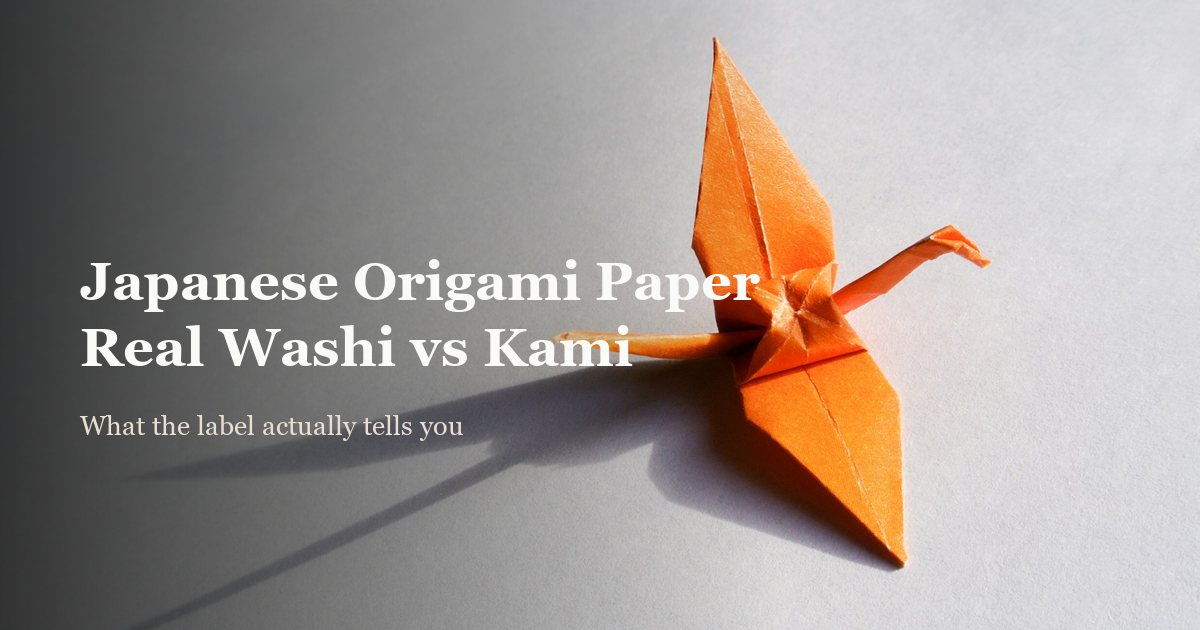
For plain folding paper from a named Japanese maker, get Toyo's Thousand Paper Cranes pack (~$11.69 for 1,000 small sheets, 4.7★ across 1,051 ratings). For standard 6-inch sheets, Taro's Origami Studio (~$13.42 for 300) is listed as made in Japan. For traditional printed patterns, JapanBargain's chiyogami pack (~$8.50 for 300 small sheets) is listed as made in Japan too. None of these is kozo-fiber washi, and almost nothing sold as "washi origami paper" on Amazon is: the word usually describes the printed pattern, not the paper.
The 3 Picks
| Origami Paper | Price | What You Get | Paper Type |
|---|---|---|---|
| Toyo Thousand Paper Cranes | ~$11.69 | 1,000 sheets, 7cm, 50 colors | Plain kami from a Japanese origami maker |
| Taro’s Origami Studio Standard | ~$13.42 | 300 sheets, 6 inch, 20 colors | One-sided kami, about 60 gsm (listing claim) |
| JapanBargain Chiyogami | ~$8.50 | 300 sheets, 3 inch, 10 patterns | Printed chiyogami in yuzen-style patterns |
Checked against current Amazon.com listings on September 30, 2026.
“Washi” on an Origami Pack Usually Means the Pattern, Not the Paper
There are two different papers behind the word “origami paper,” and most listings blur them.
Kami is standard origami paper: thin, machine-made, wood-pulp paper, colored on one side, that takes and holds a sharp crease. It’s what origami classes and books assume you’re using. Taro’s Origami Studio’s own listing calls its one-sided paper “KAMI” and describes it as the standard for folders.
Washi is traditional Japanese paper made from long plant fibers, mainly kozo (paper mulberry), and also mitsumata and gampi. In 2014 UNESCO added washi craftsmanship to its Intangible Cultural Heritage list, covering three hand-made papers: hon-minoshi from Gifu, sekishu-banshi from Shimane, and hosokawa-shi from Saitama. All three are made from kozo. Long-fiber washi is strong and durable, but it’s usually thicker and softer than kami, and some of it doesn’t hold a crisp fold. That’s why most folders use kami for practice and complex models.
Here’s where buyers get misled. Search Amazon for “washi origami paper” and the top results are mostly printed paper sold as “Japanese washi patterns” or “yuzen washi.” Yuzen and chiyogami refer to traditional Japanese printed designs. A pack can carry that pattern on ordinary paper, and the listing still calls it washi. The Tuttle Publishing pack titled Origami Paper 500 sheets Japanese Washi Patterns is a clear example: its own description says the sheets are “printed with colorful and traditional Japanese Washi Patterns,” and it lists no fiber and no country of manufacture. That’s a perfectly good folding paper. It just isn’t washi in the sense UNESCO means.
The three picks below are all listed as made in Japan, and each one is honest about what kind of paper it is.
Toyo Thousand Paper Cranes, 7cm
Toyo is a Japanese origami maker. According to the company’s own history, it began in 1940 as a shop founded to make and sell origami, launched its “Kyoiku Origami” (educational origami) line in 1954, and opened a factory in Tochigi Prefecture in 1971. Today it makes hundreds of origami products, including chiyogami and washi items.
This pack is built for senbazuru, the Japanese tradition of folding a thousand paper cranes: 1,000 small 7cm sheets in 50 colors. It holds 4.7 stars across 1,051 ratings, and it ships from a Japanese seller.

Toyo Thousand Paper Cranes, 7cm
1,000 sheets in 50 colors, sized for folding a thousand cranes. 4.7★ (1,051 ratings).
Pros:
- Made by a named Japanese origami manufacturer with a published history back to 1940
- The best-reviewed pack on this page
- The lowest cost per sheet here
Cons:
- 7cm sheets are small; fine for cranes, fiddly for beginners learning larger models
- Plain kami, not washi
Bottom line: the pick if you want to fold a thousand cranes, or just want a lot of good paper from a maker you can trace.
Taro’s Origami Studio Standard, 6 Inch
Taro’s Origami Studio is a Brooklyn, New York origami studio that sells its own curated paper. The listing says the paper is made in Japan, about 60 gsm, colored on one side, and machine cut, in 20 colors including gold and silver. Two recent reviews note that the 300-sheet pack contains only one gold and one silver sheet, so don’t buy it for the metallics. The brand doesn’t name the paper mill, so “made in Japan” here is the seller’s claim, which we couldn’t verify independently. It has 4.4 stars across 178 ratings.
Six inches (15cm) is the standard origami size used in most books and online tutorials, so this is the easiest of the three to learn on.

Taro's Origami Studio Standard, 6 Inch
300 one-sided sheets in 20 colors, listed as made in Japan. 4.4★ (178 ratings).
Pros:
- The standard 6-inch size that origami instructions assume
- The listing states paper weight (about 60 gsm) and is upfront that this is kami
Cons:
- The mill isn’t named, so the Japan origin rests on the seller’s word
- Fewer ratings than the Toyo pack
- Only one gold and one silver sheet per 300-sheet pack, according to reviews
Bottom line: the pick for a beginner who wants to follow books and tutorials at the size they’re written for.
JapanBargain Chiyogami, 3 Inch
This is the pick if what you want is the look: 300 small sheets in 10 traditional yuzen-style patterns, 30 of each. The listing says the paper is crafted in Japan and holds 4.6 stars across 354 ratings.
The title calls it “Japanese Washi Paper Chiyogami,” and like most chiyogami it’s sold on its printed designs. The listing doesn’t state the fiber, so treat it as patterned folding paper rather than kozo washi.

JapanBargain Chiyogami, 3 Inch
300 sheets in 10 yuzen-style patterns, listed as made in Japan. 4.6★ (354 ratings).
Pros:
- Traditional Japanese patterns at a low price
- Listed as made in Japan
- Good for small decorative models, cards, and gift wrapping touches
Cons:
- 3-inch sheets are too small for most beginner projects
- “Washi” in the title refers to the style; the fiber isn’t stated
Bottom line: the pick for patterned paper for cranes, small boxes, and decoration, not for learning.
Which One Should You Buy?
- Folding a thousand cranes, or want the most paper from a traceable maker: Toyo Thousand Paper Cranes.
- Learning origami from a book or video: Taro’s Origami Studio 6-inch.
- Want traditional Japanese patterns for small models and decoration: JapanBargain Chiyogami.
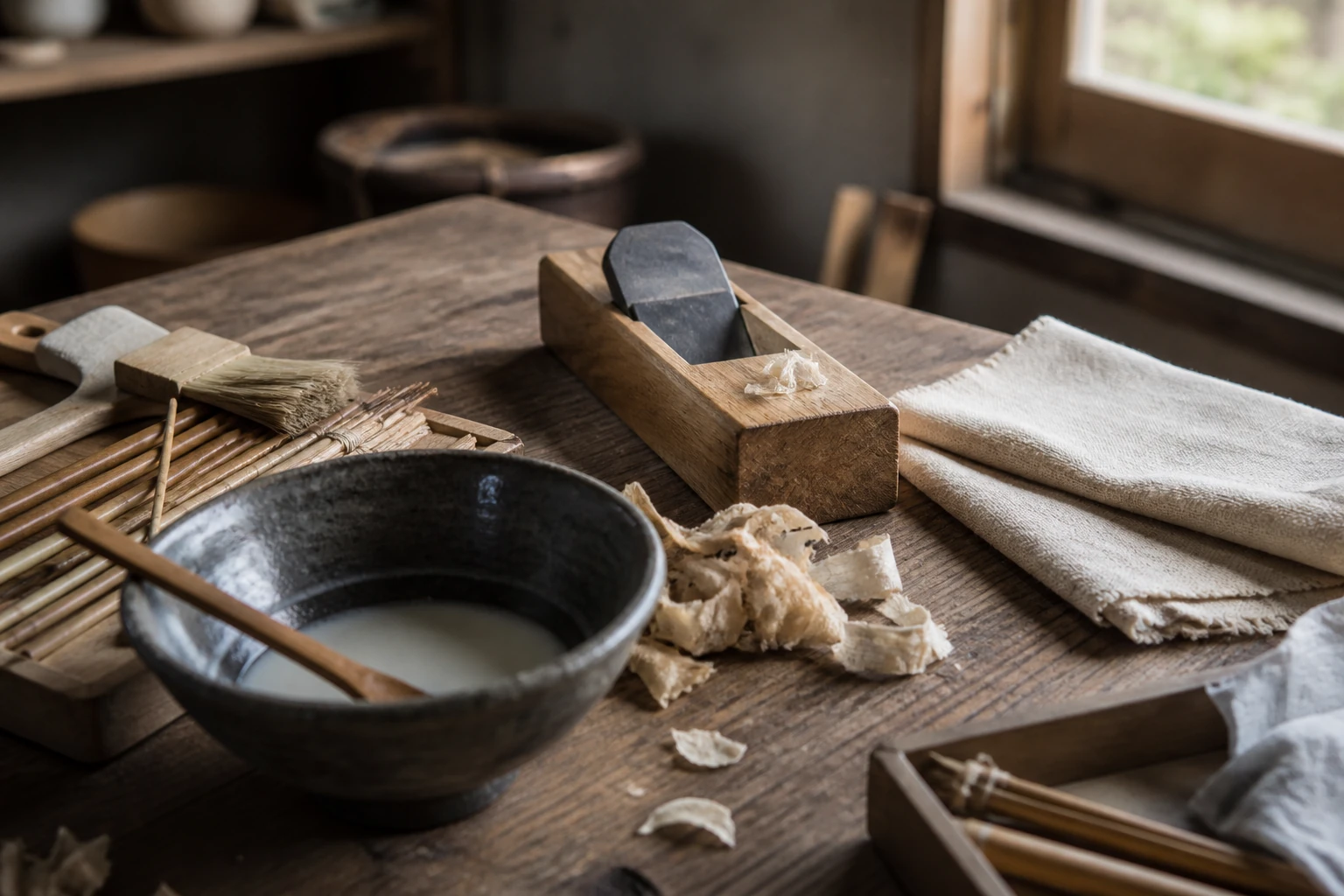
- Want real kozo washi: none of these. Look for a paper shop that names the fiber (kozo, mitsumata, or gampi) and the papermaking region, such as Mino in Gifu. If a listing says only “washi” or “washi pattern,” it’s describing the design.
For more on how a material name gets used as a marketing word, see our washi tape guide, and for other Japanese stationery, our calligraphy set guide.
FAQ
Is washi paper good for origami? It depends on the model. Long-fiber washi is strong but often thicker and softer than kami, so it doesn’t always hold a sharp crease. Most folders use kami for learning and complex models, and save washi for simple, decorative pieces.
What is the difference between chiyogami and washi? Chiyogami describes printed traditional patterns. Washi describes paper made from long plant fibers such as kozo. A sheet can be printed chiyogami without being fiber washi, which is the case for most patterned origami paper sold online.
What size origami paper should a beginner buy? 6 inches (15cm). It’s the size most books and tutorials use, and it’s large enough to fold accurately.
How many sheets do I need for senbazuru (a thousand cranes)? One thousand, one per crane. Packs sold for senbazuru, like Toyo’s, contain exactly that many small sheets.
Final Thoughts
On Amazon, the word “washi” on an origami pack almost always describes a printed pattern. That’s fine as long as you know it. If you want good folding paper from Japan, Toyo, Taro’s Origami Studio, and JapanBargain are all listed as made in Japan and are clear about what kind of paper you’re getting. If you want the fiber washi UNESCO recognizes, buy it from a specialist that names the kozo and the region.