Quick answer: for a Japanese tea set gift that’s genuinely hand-decorated (not a mass-produced “Japanese-style” import), start with the Sansui Japanese Tea Set (about $152) — real Kutani ware, a built-in tea strainer, and enough capacity for two. Two more picks below, up to $319.
Some of the shops we link to are partners who may pay us when you buy through them. This doesn't change which pieces we recommend. How this works.
Comparison at a Glance
| Set | Price (approx.) | Capacity | Stock (at time of writing) |
|---|---|---|---|
| Sansui Tea Set | $152 | 360ml / fits 2 cups | Only 3 units left |
| Renzan Tea Set | $167 | 2–3 cups | 10+ in stock |
| Yoshidaya Hydrangea Tea Set | $319 | 2 cups, lidded | Only 1 unit left |
Prices are USD conversions from Musubi Kiln’s JPY listing prices at the exchange rate on the day this was written.
1. Sansui Japanese Tea Set — Best Overall
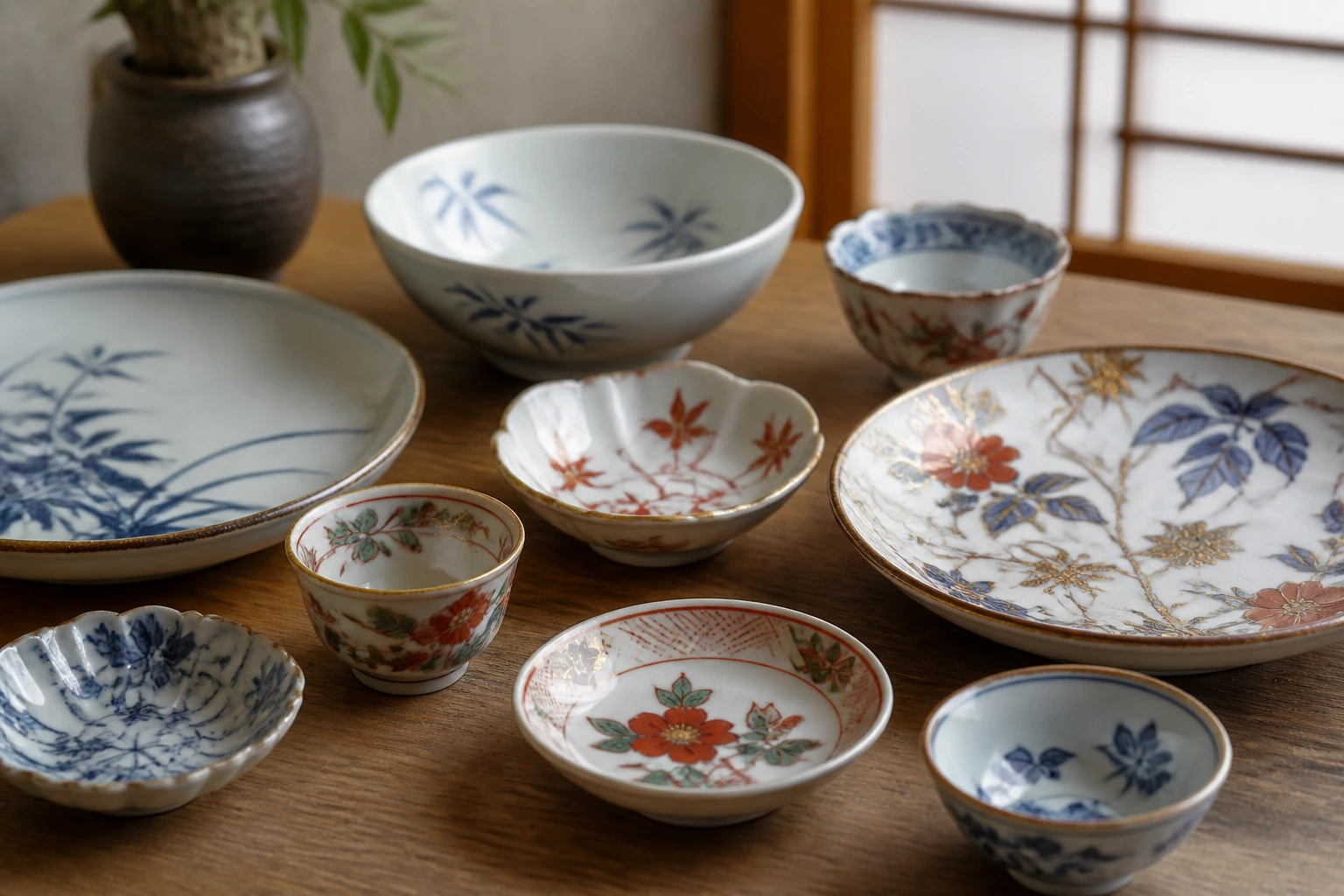
“Sansui” refers to natural mountain-and-river landscapes, and this set’s soft, gold-touched palette is meant to read like a hazy, distant view. It comes with a stainless steel tea strainer built into the teapot spout, and the simple spout shape is genuinely easier to clean than more ornate designs — a small but real practical detail, not just marketing copy.
Pros:
- Lowest price of the three picks here while still being genuine hand-decorated Kutani ware
- Built-in strainer, no separate infuser to lose or replace
- 360ml capacity comfortably fills two teacups
Cons:
- Only 3 units in stock at the time of writing
- The soft, hazy color palette is a specific aesthetic — check photos if you’d prefer bolder colors
Bottom line: the pick if you want a genuinely well-made Kutani tea set without paying collector prices. See it at Musubi Kiln.
2. Renzan Japanese Tea Set — Best for Two Different People
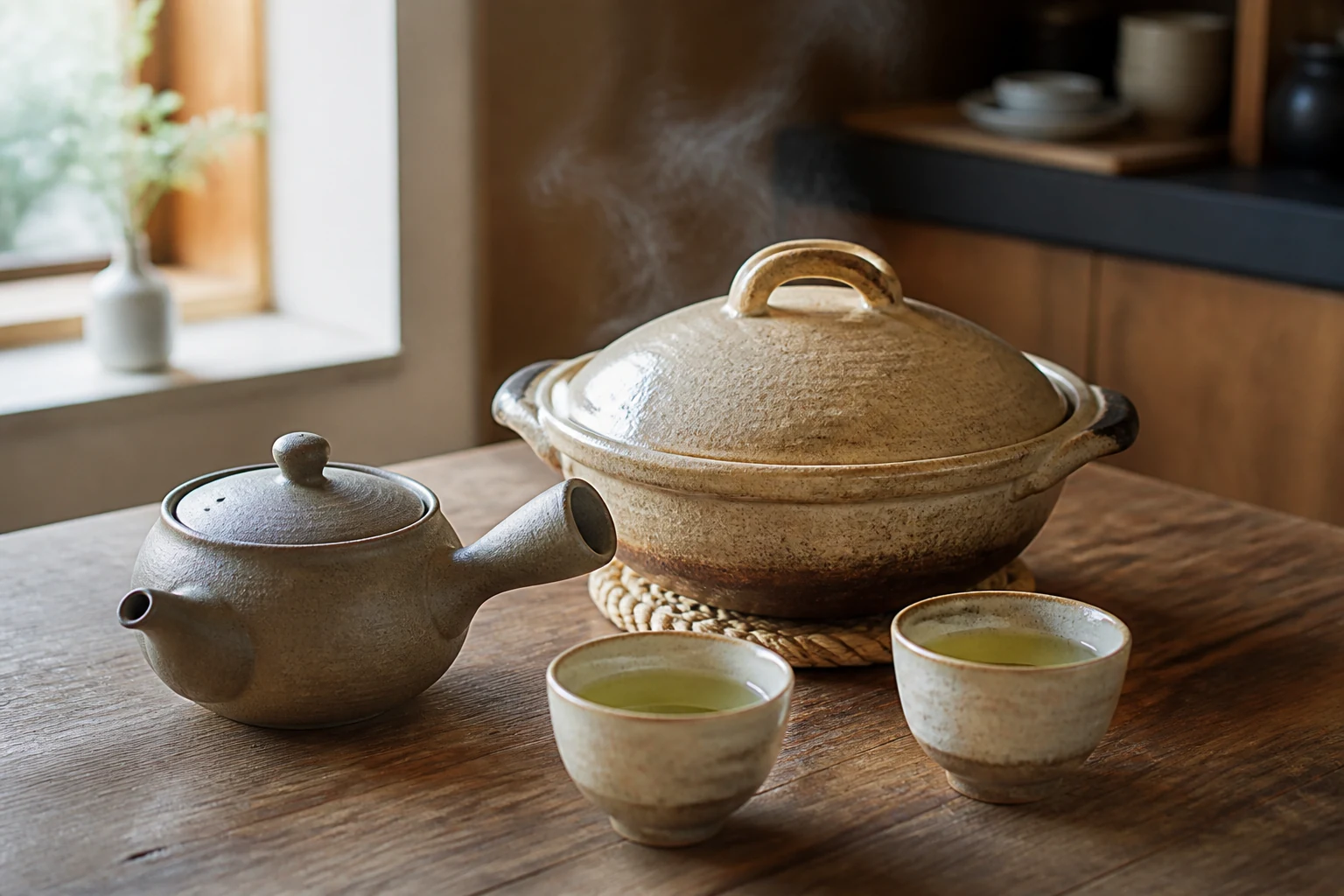
“Renzan” means “mountain range,” and this set does something the other two don’t: the teapot and larger teacup carry a green gradient, while the smaller teacup is finished in a contrasting warm red — two different color stories in one matched set, rather than a single repeated pattern. Sized for 2–3 cups, with the same built-in strainer as the Sansui set.
Pros:
- Genuinely different colorways within one set, not just size variation
- Good stock (10+ units) at the time of writing — the least urgent of the three picks
- Slightly larger capacity (2–3 cups) than the Sansui set
Cons:
- At $167, a modest step up from the Sansui set for a similar overall format
- The asymmetric coloring is a specific design choice — not for someone who wants a perfectly matched, single-color set
Bottom line: the pick if you like the idea of a set that isn’t just one pattern repeated across every piece, and you’re not in a rush to decide. See it at Musubi Kiln.
3. Yoshidaya Hydrangea Tea Set — Best Premium / Most Historical
This is the pick with a genuine craft history behind it. The Yoshidaya style was pioneered by Yoshidaya Denemon in 1824, reviving the earlier Ko-Kutani tradition with a deliberately restricted four-color palette — yellow, green, navy blue, and purple, with red intentionally excluded. The original Yoshidaya kiln closed after just seven years, but its output is regarded as among the finest Kutani ware of the late Edo period. This particular set decorates that palette with a hydrangea motif, uses a “sasame” strainer built directly into the teapot for better circulation of tea leaves, and — a genuinely nice detail for entertaining — the teacups have lids.
Pros:
- Real, documented historical style (Yoshidaya, 1824), not a marketing name
- Lidded teacups, a practical touch for formal guests
- Sasame strainer design specifically suited to higher-quality loose-leaf tea
Cons:
- Only 1 unit left in stock at the time of writing — this one may sell out before you finish reading
- At $319, more than double the Sansui set
Bottom line: if you want a tea set with real craft history behind the gift, this is it — but don’t wait if you want this specific one. See it at Musubi Kiln.
Which One Should You Buy?
- If you want genuine Kutani ware at the lowest price, get the Sansui Tea Set.
- If you want two-tone color variation within one matched set, get the Renzan Tea Set.
- If you want real craft history and don’t mind paying for it, get the Yoshidaya Hydrangea Tea Set — but move quickly, only 1 is left.
- If you’d rather explore Kutani ware beyond tea sets — plates, rice bowls, and a full range of prices — see our Kutani plates and dinnerware guide and our meoto jawan rice bowl pair guide for gift-specific picks.
- Shopping for a new home instead of a tea drinker? Our Japanese housewarming gift guide covers a different set of verified picks for that occasion, including the gift-giving taboos worth knowing before you buy.
FAQ
Are these tea sets dishwasher-safe? Musubi Kiln’s listings for all three sets don’t specify dishwasher or microwave safety — treat hand-decorated Kutani ware as hand-wash only, the same guidance we give for other Kutani pieces in our other guides.
What does “Yoshidaya style” actually mean? It’s a specific historical Kutani decorating style pioneered by Yoshidaya Denemon in 1824, using only yellow, green, navy blue, and purple — deliberately no red. The original kiln operated for only about seven years, but its work is highly regarded from the late Edo period. It’s a real, named historical style, not a generic “premium” label.
Why is there such a big price gap between the cheapest and most expensive set here? Design complexity and historical pedigree. The Sansui and Renzan sets use simpler, more contemporary decorative palettes; the Yoshidaya Hydrangea set uses a more historically specific technique and color restriction associated with a short-lived, highly regarded 19th-century kiln — that history is part of what you’re paying for.
Do these come as a full matching set, or just a teapot? Each of these three includes the teapot plus teacups (2 for Sansui and Yoshidaya Hydrangea, 2–3 for Renzan) — check each product page for the exact cup count before buying if that matters for your gift.
Final Thoughts
All three of these are genuinely hand-decorated Kutani ware, not the generic “Japanese-style” imports that fill most gift-guide searches — and two of the three are down to very limited stock (3 units for Sansui, 1 for Yoshidaya Hydrangea) as of when this was written. If either catches your eye, don’t wait too long to decide.
If you go looking beyond these three, our guide to telling real Japanese craft from knockoffs covers the checks — named region, named maker, explicit material — that separate a genuine hand-decorated set from one of those generic imports.