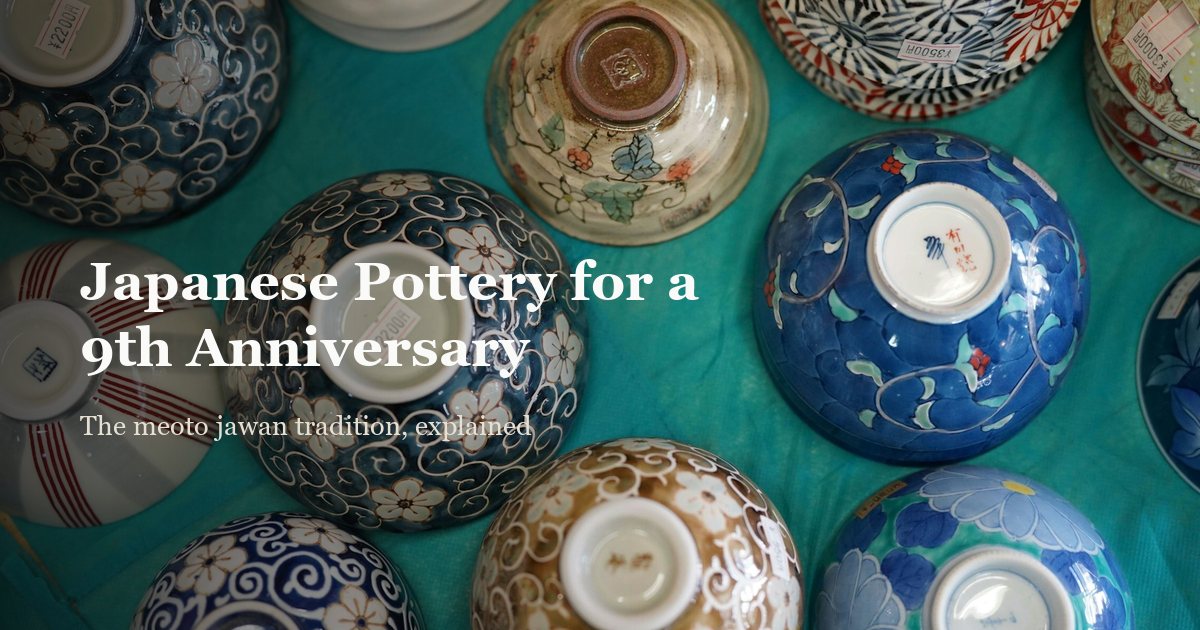
Quick answer: in the West, pottery is the traditional 9th wedding anniversary gift. In Japan, there’s a specific, centuries-old version of that same idea: meoto jawan (夫婦茶碗, “husband and wife bowls”) — a pair of rice bowls, matched in design but sized differently for each person, given to newlyweds or to mark an anniversary. Our top pick is the Sakura Japanese Rice Bowl Pair (about $207) from Musubi Kiln — genuine Kutani ware, hand-decorated, and explicitly sold as a couple’s gift. Full comparison below.
Some of the shops we link to are partners who may pay us when you buy through them. This doesn't change which pieces we recommend. How this works.
Why Pottery, and Why This Specific Japanese Version of It
The 9th-anniversary-is-pottery tradition itself is Western — it shows up in the standard US/UK anniversary gift lists, and the usual explanation is that pottery, like a nine-year marriage, is durable but was shaped and fired under pressure to get there. It’s a nice enough metaphor, but it’s generic: any pottery from anywhere satisfies it.
Meoto jawan is a more specific and more meaningful version of the same idea, and it’s actually Japanese. The custom: a matched pair of rice bowls — same glaze, same motif, same maker — but two different sizes, one for each person. The size difference isn’t decorative; it’s practical (portions differ by person) and symbolic at the same time — two people, matched but not identical, sharing a table for the long run. It’s a documented, named tradition (meoto = “married couple,” jawan = “rice bowl”), covered independently by Japanese tableware specialists like Tsukushi and UTSUWABI — not something we’re inferring from a single retailer’s product copy.
That’s the honest pitch for this article: if you’re going to buy pottery for a 9th anniversary anyway, a genuine meoto jawan pair does the same job as a generic ceramic vase, but it’s an actual matched cultural artifact with a real story behind it — one you’ll use at the dinner table, not just display.
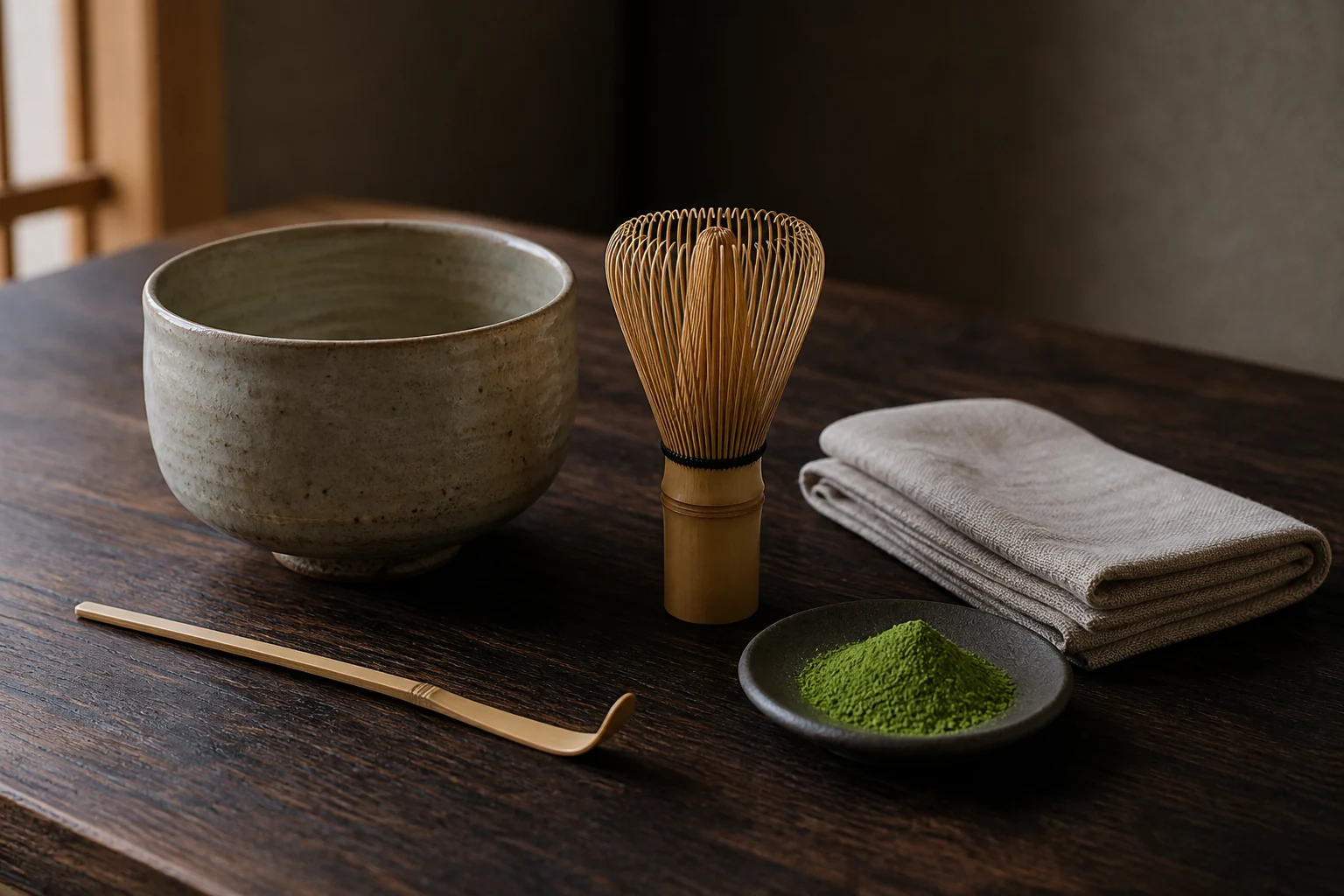
Comparison at a Glance
| Pick | Price (approx.) | Style | Stock (at time of writing) |
|---|---|---|---|
| Sakura Rice Bowl Pair | $207 | Hand-painted cherry blossoms | Only 2 units left |
| Ginsai Sasanqua Rice Bowl Pair | $125 | Silver-foil crackle glaze (kannyu) | Only 2 units left |
| Brilliant Colorful Flower Rice Bowl ×2 | ~$106 for two | Hand-brushed floral, 5 colorways | Good stock |
Prices are USD conversions from Musubi Kiln’s JPY listing prices at the exchange rate on the day this was written; expect them to shift slightly with the yen.
1. Sakura Japanese Rice Bowl Pair — Best Overall
A matched pair decorated with brush-painted cherry blossoms and falling petals in pale pink over white porcelain. The product listing itself states the meoto jawan custom directly: bowls “given as a gift to married couples to celebrate their marriage,” also suited to best friends, siblings, or parents and children. The two bowls are intentionally different sizes, exactly as the tradition calls for.
Pros:
- Directly sold and described as a married-couple’s gift, not relabeled from a generic bowl listing
- Cherry blossom motif reads as celebratory without being overly literal about “anniversary”
- Genuine hand-painted Kutani ware, not a transfer-printed reproduction
Cons:
- Only 2 units in stock at the time of writing — if you need this specific design, don’t wait
- At $207, the most expensive of the three picks here
Bottom line: the pick if you want the most directly on-theme option, and the one to move on quickly given the low stock. See it at Musubi Kiln.
2. Ginsai Sasanqua Japanese Rice Bowl Pair — Best for a Distinctive Technique
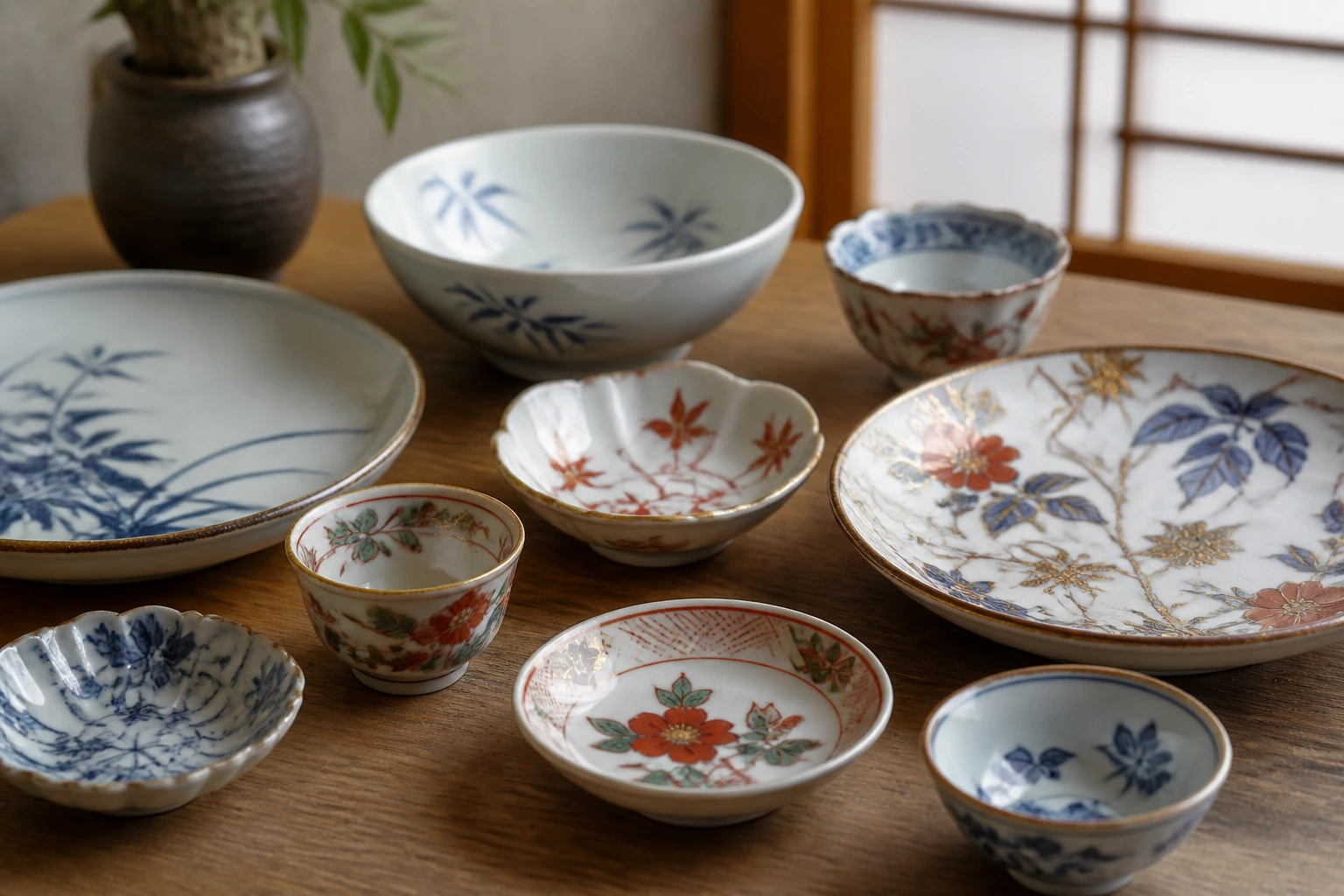
A pink-and-blue sasanqua (winter camellia) motif pair, made using ginsai — a Kutani technique where five-color glaze is applied over silver foil — and finished with kannyu, an intentional fine-crackle glaze effect. Same meoto jawan sizing as the Sakura pair, and the product copy states the same married-couple gift custom.
Pros:
- Two distinct decorative techniques (ginsai + kannyu) in one piece — a more technically involved craft than a simple hand-painted motif
- $125 is a meaningful step down from the Sakura pair while still being genuine hand-decorated Kutani ware
Cons:
- Only 2 units in stock at the time of writing, same urgency as the Sakura pick
- The crackle-glaze surface texture (kannyu) is a specific aesthetic — check the product photos before buying if you’d prefer a smooth glaze
Bottom line: the pick if you want a rice bowl pair with more visible craft technique for less money than the Sakura pair. See it at Musubi Kiln.
3. Brilliant Colorful Flower Rice Bowl (Buy Two) — Best Budget
This one isn’t sold as a pair — it’s a single hand-brushed floral rice bowl, available in five colorways, that we’ve also recommended in our full Kutani plates and bowls guide. Buying two in different colors (or the same color, if you’d rather match exactly) gets you the same “shared pair for the table” idea as the dedicated meoto jawan sets above, at roughly half the price.
Pros:
- By far the lowest cost per bowl of anything on this list
- Dishwasher- and microwave-safe (the dedicated meoto jawan pairs above are not) — a real practical advantage if this is meant for daily use, not display
- Five colorways means you can pick two that suit your taste rather than a fixed factory pairing
Cons:
- Not an intentionally-designed “pair” — you’re assembling the meoto jawan idea yourself rather than buying a set built for it
- Standard size only; doesn’t have the built-in size differentiation the dedicated pairs do
Bottom line: the practical choice if you want the tradition on a budget, and you’re fine with a bowl you can actually put in the dishwasher. See it at Musubi Kiln.
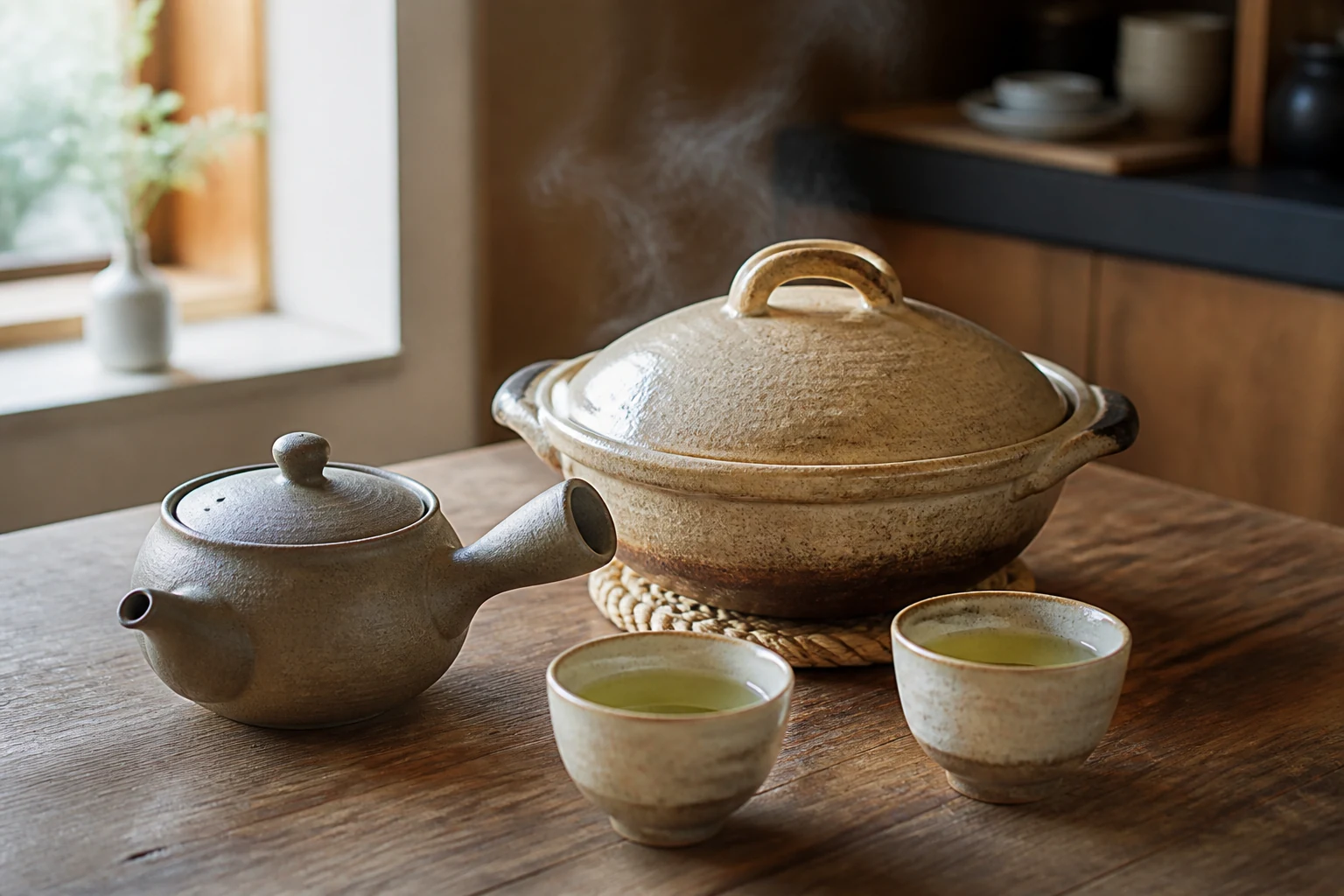
Which One Should You Buy?
- If you want the most directly on-theme meoto jawan gift and don’t mind the price, get the Sakura Rice Bowl Pair — but move quickly, only 2 are left.
- If you want more visible craft technique for less money, get the Ginsai Sasanqua Rice Bowl Pair — same low-stock caveat applies.
- If budget or dishwasher-safety matters more than an exact matched pair, buy two of the Brilliant Colorful Flower Rice Bowl.
- If you want to see the rest of what’s available in Kutani ware beyond rice bowls — plates, sets, and a genuine premium option — our Kutani plates and dinnerware guide covers five more pieces, including another rice bowl pair (Hanazume) in a different price bracket.
- Shopping for a different occasion instead of a 9th anniversary? Our Japanese tea set gift guide and Japanese housewarming gift guide cover genuine Kutani and other verified picks for those specifically.
FAQ
Is pottery actually the traditional 9th anniversary gift? Yes, in the standard Western anniversary gift list (US and UK versions both list it), pottery is the traditional 9th-year material, alongside willow in some versions of the list.
What is meoto jawan, exactly? A matched pair of Japanese rice bowls — same glaze and motif, two different sizes — traditionally given to newlyweds or married couples. “Meoto” means married couple, “jawan” means rice bowl. It’s a named, documented custom, not a marketing term invented for gift guides.
Are these bowls dishwasher-safe? The Sakura and Ginsai Sasanqua pairs are not specified as dishwasher- or microwave-safe on their listings — treat them as hand-wash, the same as most hand-decorated Kutani pieces. The Brilliant Colorful Flower Rice Bowl (our budget pick) is dishwasher- and microwave-safe, if that matters more to you than an intentionally-matched pair.
Do the two bowls in a pair actually look different, or are they identical? Same design and glaze, but genuinely different sizes — Musubi Kiln’s own product pages note the sizing is meant to match how much rice each person in the pair typically eats, not just for visual variety.
Final Thoughts
If you’re buying pottery for a 9th anniversary anyway, a real meoto jawan pair gets you a documented Japanese tradition instead of a generic ceramic gift — and at $125–$207 for genuine hand-decorated Kutani ware, it’s priced closer to a real anniversary gift than a token one. Move on the Sakura or Ginsai Sasanqua pairs soon if either catches your eye — both were down to their last two units at the time of writing.
If you end up shopping for a meoto jawan pair anywhere besides the retailer above, it’s worth running the listing through our checklist for spotting Japanese-style knockoffs first — an anniversary gift is exactly the kind of purchase where a vague “Japanese-style” listing costs you more than money.