Some of the shops we link to are partners who may pay us when you buy through them. This doesn't change which pieces we recommend. How this works.
Quick answer: furoshiki is a square wrapping cloth, typically hemmed at the edges, made for wrapping and carrying items. Tenugui is a thin, rectangular cotton towel, roughly 35 x 90cm, with raw (unhemmed) edges, made for drying hands, wiping sweat, or wrapping bento. They’re both traditional Japanese cloths and both work as gifts, but they’re built for different jobs, and mixing them up means buying the wrong shape for what you actually want to do with it.
The Core Differences
| Furoshiki | Tenugui | |
|---|---|---|
| Shape | Square | Rectangular (roughly 35 x 90cm) |
| Edges | Hemmed, to resist fraying under rougher use | Raw, unhemmed by design |
| Typical material | Cotton, silk, chirimen crepe, or synthetic | Thin, quick-drying cotton (often gauze-weave) |
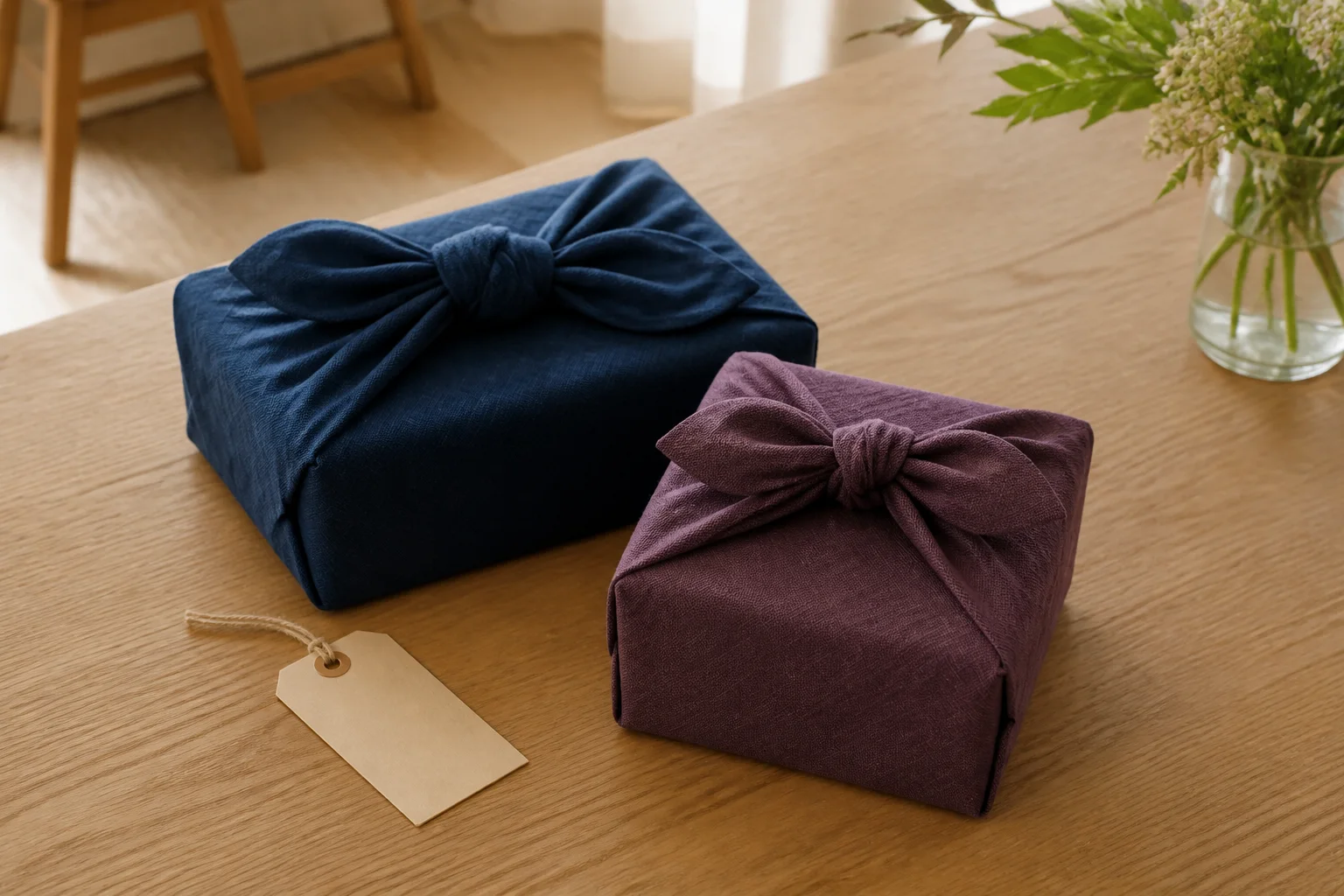
| Primary use | Wrapping gifts, carrying items, doubling as a bag | Hand towel, kitchen wipe, scarf, bento wrap |
| Sizes | Small (45–50cm) to large (90–120cm) squares | One standard long rectangle |
Sources: Setamono Japanese Homeware, Keiko Furoshiki — figures broadly consistent across both.
Why the Edges Are the Real Tell
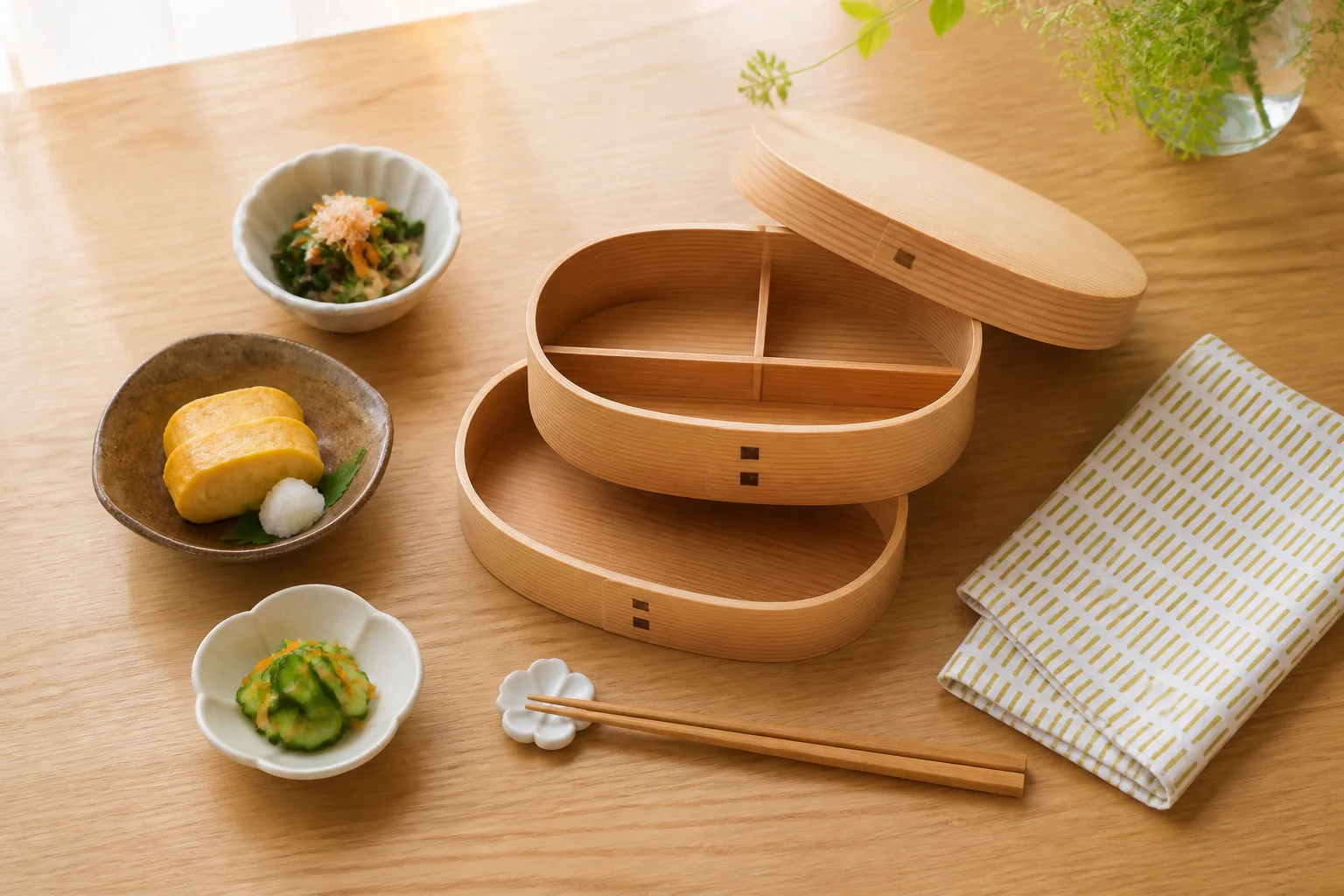
If you’re trying to identify which cloth you’re actually holding, the edges are the fastest check. Furoshiki is hemmed because it’s built to be knotted, tied, and reused as a bag or wrap, uses that put real stress on the fabric edge over time. Tenugui is left raw on purpose: the name literally combines te (hand) and nugu (to wipe), and an unhemmed edge dries faster and doesn’t build up the frayed, matted texture a hemmed edge can develop after repeated washing as a towel. Neither construction is a shortcut or a lower-quality choice; they’re built for their specific job.
Why the Shape Differs
A furoshiki’s square shape is what makes the wrapping techniques work at all: folding a square diagonally around a box or bottle and knotting the corners is a geometry problem that only works cleanly with equal sides. A tenugui’s long rectangle is closer to a Western hand towel’s proportions, sized to dry hands or wipe a surface in one motion, or to fold into a hachimaki (headband) or a small bento wrap when needed. You can improvise a tenugui as a small wrap in a pinch, but it won’t tie the same way a proper square furoshiki does, and a furoshiki makes an awkward hand towel.
Anbo Tenugui Hand Towel (Daruma Pattern)
Anbo is a tenugui specialty workshop based in Asakusa with a dyeing history going back to 1907, and its tenugui are hand-dyed one at a time using a traditional technique called chusen, rather than machine-printed. This listing names the maker directly and states 100% cotton construction.
Pros:
- Named workshop (Anbo) with a documented, independent history, not a generic Amazon storefront brand
- Hand-dyed chusen technique stated directly, not just “traditional pattern”
- Genuinely functional as a hand towel, kitchen wipe, or small wrap, not just a display piece
Cons:
- Small-batch production means stock on any individual pattern can run out quickly
- Single design per listing; Anbo’s own catalog runs to hundreds of patterns if this one sells out
- Raw edges will fray slightly with heavy use over time, which is expected, not a defect
Bottom line: the pick if you want a genuinely hand-dyed, named-workshop tenugui rather than a generic printed import.

Anbo Tenugui Hand Towel, Daruma Pattern
100% cotton, hand-dyed chusen technique, Asakusa workshop since 1907. 4.3★ (63 ratings).
Japanese Tenugui Towel, Checkered Pattern
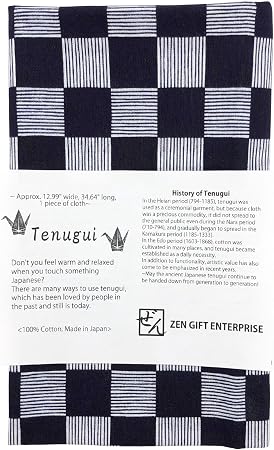
For an everyday, lower-cost tenugui without committing to a single small-batch design, this checkered-pattern towel states “Made in Japan” directly and uses a fray-prevention finish on the edges, a practical middle ground between fully raw and fully hemmed.
Pros:
- Fray-prevention finish extends the life of the edge without turning it into a full hem
- Everyday price point, easier to buy multiples for daily use
- “Made in Japan” stated directly in the listing, not just implied by the pattern
Cons:
- Less distinctive than a named-workshop, hand-dyed piece like the Anbo pick above
- Fray-prevention finish is a manufacturing compromise, not a traditional raw edge purists may want
- Single navy checkered pattern; no alternate colorways in this specific listing
Bottom line: the pick for everyday use where you want several on hand rather than one special piece.
Japanese Tenugui Towel, Checkered Pattern
100% cotton, Made in Japan, fray-prevention finish. 4.1★ (154 ratings).
Which One Should You Buy?
- You want to wrap a gift or replace wrapping paper: get a furoshiki, not a tenugui; see our Japanese furoshiki wrapping cloths guide for verified picks by size and material.
- You want a hand towel, kitchen wipe, or bento wrap: get a tenugui. The Anbo Daruma pick above is the named-workshop option; the checkered pattern is the everyday multi-pack-friendly one. For more verified picks by pattern and fabric weave, see our best Japanese tenugui towels guide.
- You want one cloth that does a bit of both: a medium furoshiki is the more versatile pick, since it can wrap gifts and fold into a bag, jobs a tenugui’s raw-edged rectangle isn’t shaped for.
FAQ
Can I use a tenugui as a furoshiki? In a pinch, yes, especially for a small item, but a tenugui’s rectangular shape doesn’t tie the same way a square furoshiki does, and its raw edges aren’t built for the repeated knotting a wrapping cloth gets. For actual gift-wrapping, a real furoshiki is the better tool.
Why are tenugui edges left raw instead of hemmed? Raw edges dry faster and don’t develop the frayed, matted texture a hemmed edge can get after repeated washing as a towel. It’s a functional choice tied to the tenugui’s job as a hand towel, not an unfinished or lower-quality construction.
Is one more traditional than the other? Both have long, independent histories in Japan, tenugui as a personal-use cotton towel and furoshiki as a wrapping and carrying cloth. Neither is a newer or lesser tradition than the other; they simply serve different daily purposes.
What size is a standard tenugui? Roughly 35 x 90cm (about 14 x 35 inches), a fixed long rectangle, unlike furoshiki, which are sold in multiple square sizes depending on what you’re wrapping.
Final Thoughts
Furoshiki and tenugui are both genuinely useful, distinctly Japanese cloths, but they’re not interchangeable despite showing up side by side in a lot of gift-shop displays. Buy square and hemmed for wrapping, buy rectangular and raw-edged for a towel. If you’re shopping for a wrapping cloth specifically, see our furoshiki buying guide for picks by size and material, and our buyer’s checklist for real vs. knockoff Japanese craft for how to spot an import with no stated maker or origin, whichever cloth you’re after.