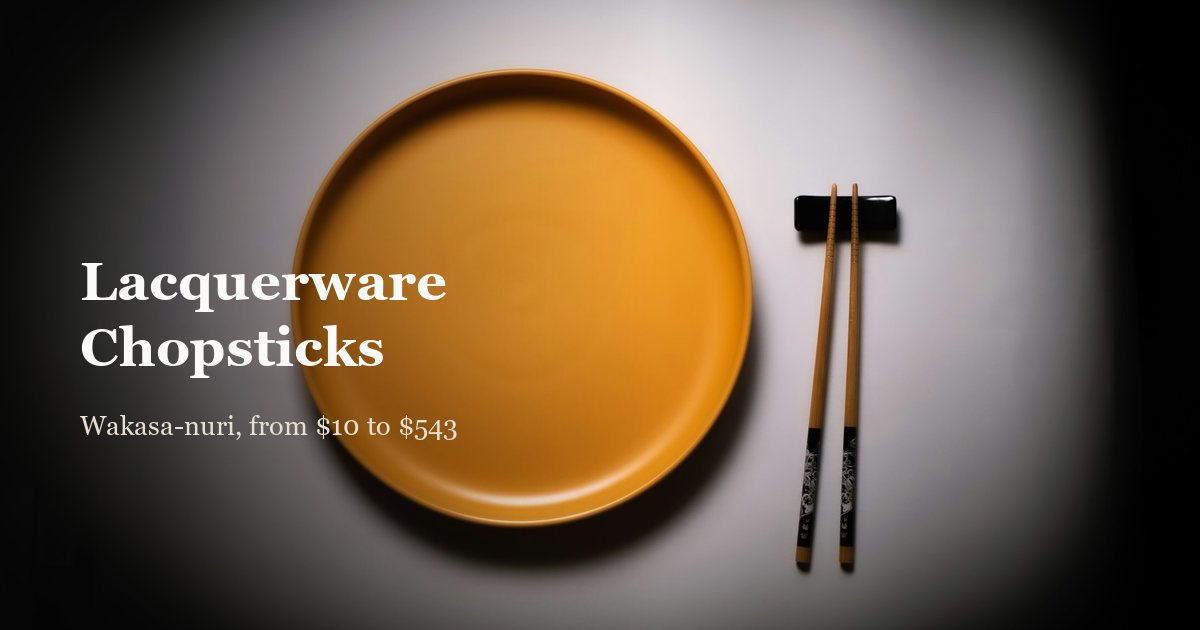
Quick answer: if you want a genuinely nice pair without overthinking it, get the Sakura Petals Pair Set with Chopstick Rests ($87). But before you buy anywhere, read the section below on “urushi” versus urethane — it changed which of these five we’d actually call premium.
Some of the shops we link to are partners who may pay us when you buy through them. This doesn't change which pieces we recommend. How this works.
Comparison at a Glance
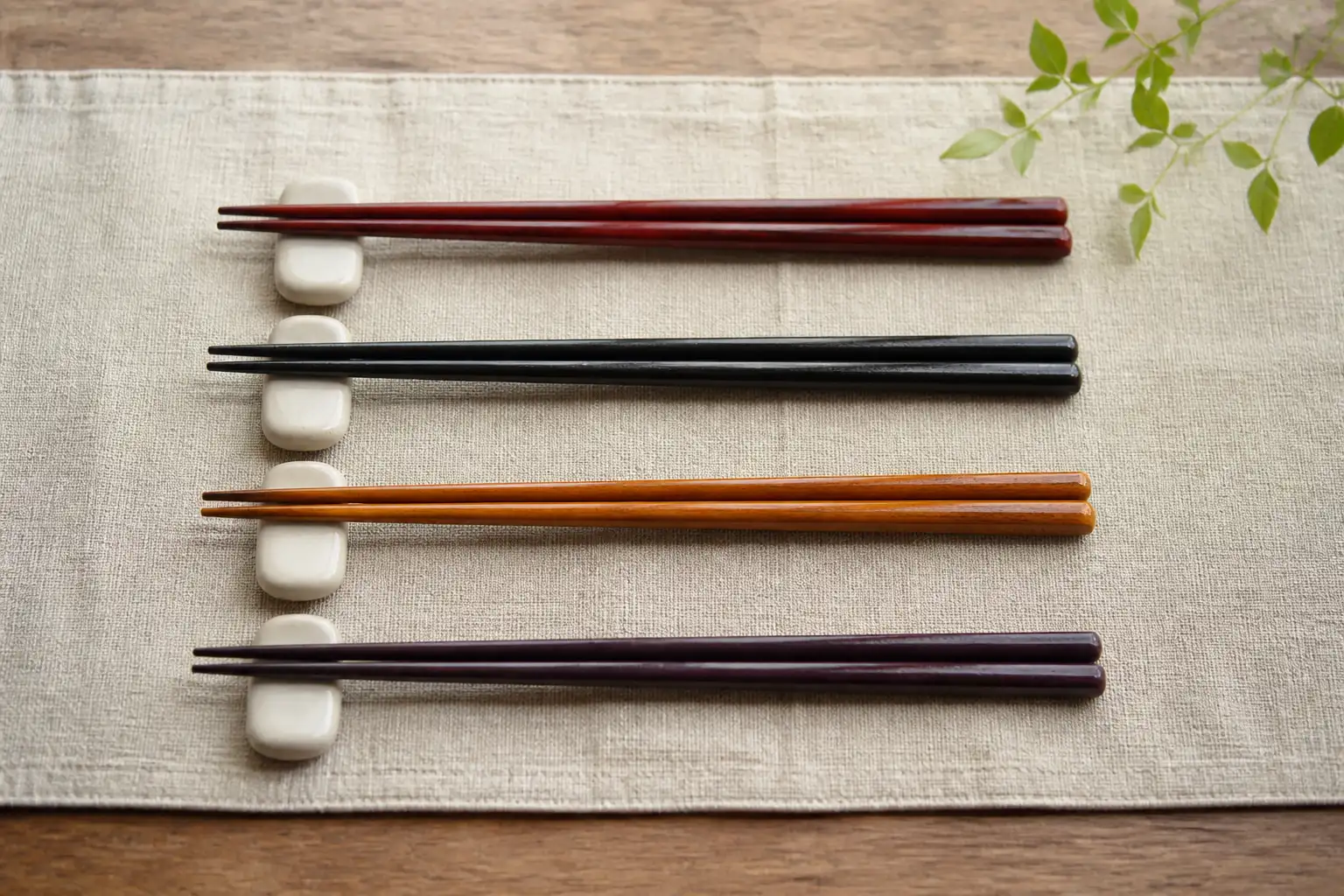
| Chopsticks | Price | Coating (per spec sheet) | Best For |
|---|---|---|---|
| Weeping Cherry | $10 | Urethane | Best budget |
| Grooved Tip Non-Slip | $15 | Urethane handle, unspecified lacquer tip | Best for beginners |
| Sakura Petals Pair Set | $87 | Polyester urethane | Best overall |
| Gold & Silver Leaf Set | $200 | Polyester handle, lacquer tip | Best gift |
| Winter Plum Flower | $543 | Lacquer (no urethane listed) | Best premium |
All five are Wakasa-nuri — Wakasa lacquerware from Obama City, Fukui Prefecture, which by itself accounts for the large majority of Japan’s lacquerware chopstick production. None of these are Wajima-nuri, Aizu-nuri, or Kishu-nuri, which are different regional lacquerware traditions worth knowing if you’re comparing across sites.
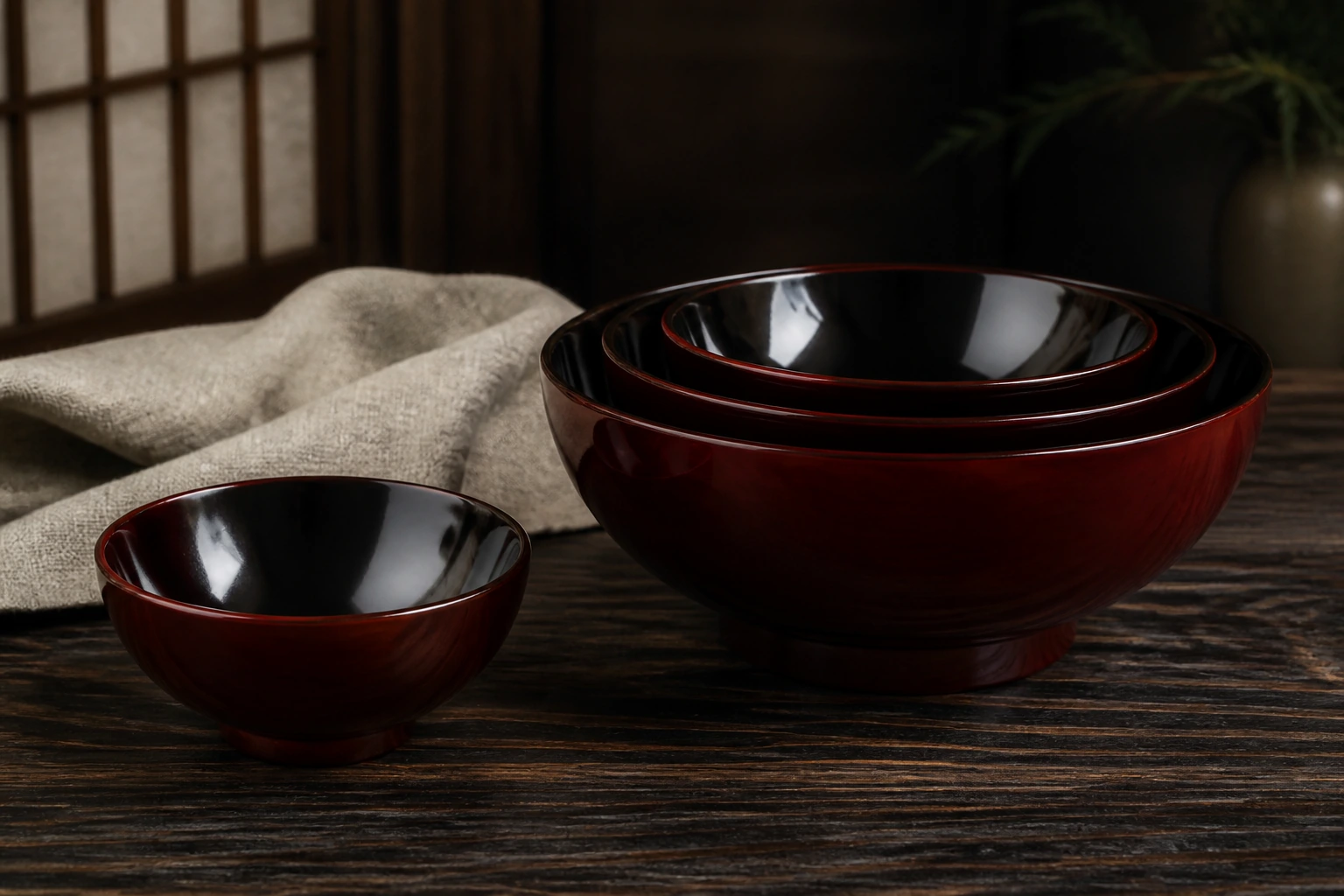
“Urushi” vs. Urethane: Read This Before You Buy Any Lacquerware
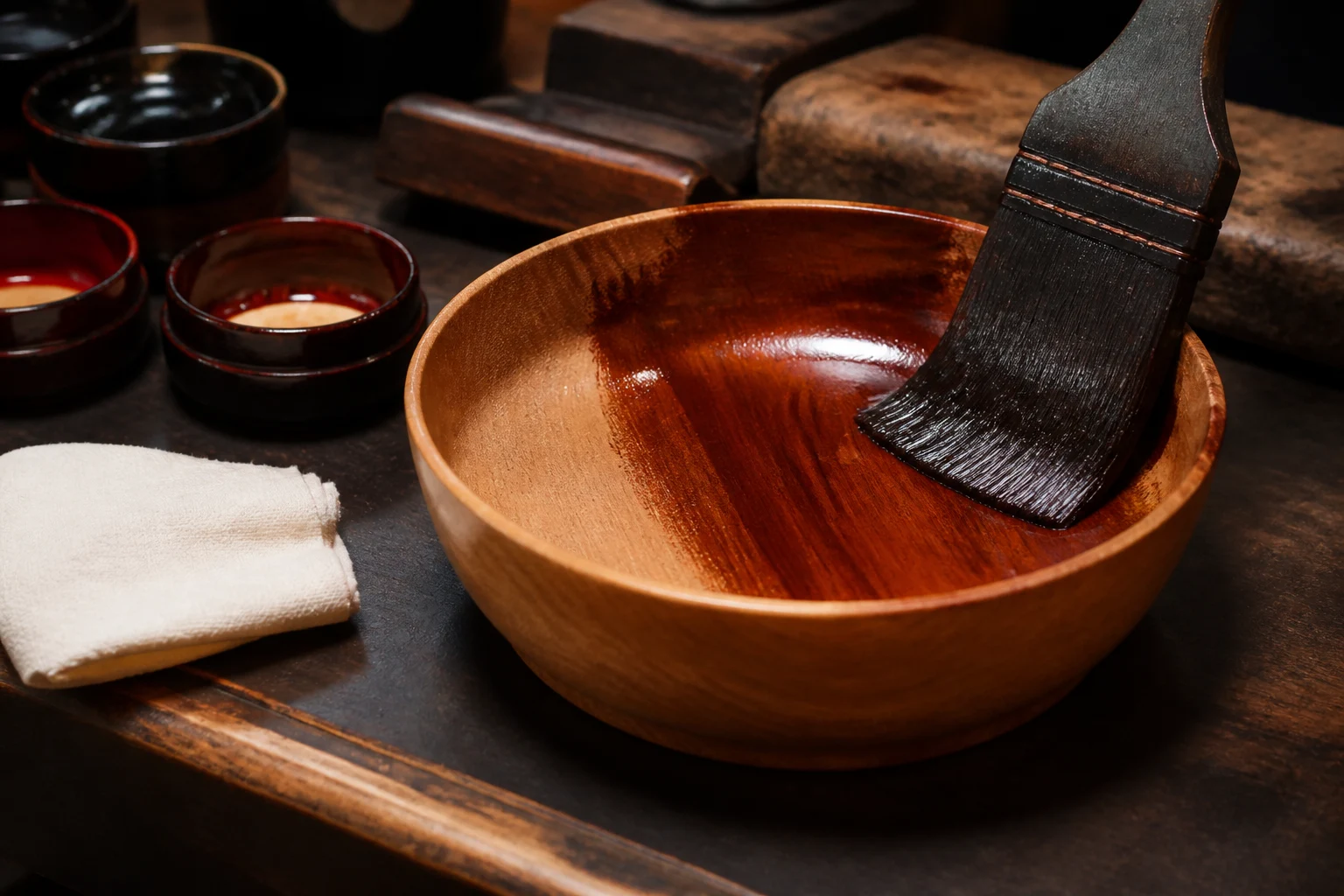
Genuine urushi is natural lacquer tapped from the sap of the Toxicodendron vernicifluum tree (the same plant family as poison ivy — the sap contains urushiol, the allergenic compound). It cures slowly in a warm, humid environment, is applied in many hand-polished layers, and generally isn’t dishwasher- or microwave-safe. Cashew lacquer and urethane/polyester coatings mimic the look at a fraction of the cost and labor, cure normally, and are what actually makes a “lacquerware” product dishwasher-safe.
Here’s the honest part: when we checked each product’s own structured spec sheet on Musubi Kiln (not just the marketing description), most of them say “urethane” or generic “lacquer,” not “urushi.” One listing’s ad copy even calls itself “high-durability urushi lacquer” while its own spec sheet lists the handle coating as urethane resin — a real inconsistency, not something we’re reading into it. As a rule of thumb: if a lacquerware product is advertised as dishwasher-safe, treat that as a sign it’s not traditional urushi, regardless of what the product description says elsewhere on the page. This is one piece of a wider pattern — our buyer’s guide to spotting Japanese craft knockoffs covers the same kind of ad-copy-vs-spec-sheet gap across knives, ceramics, and teapots too.
1. Weeping Cherry Chopsticks — Best Budget
Wood chopsticks with a urethane coating — the spec sheet says so plainly, so there’s no ambiguity to untangle here. Dishwasher-safe, which tracks with the urethane finish.
Pros:
- Real Wakasa-nuri craft product at a genuinely low price
- Dishwasher-safe, so no special care routine
Cons:
- Urethane-coated, not traditional urushi — don’t pay a premium expecting otherwise
- Single pair only, no rest included
Bottom line: a fine, honestly-priced entry point if you just want nicer chopsticks than what’s in your kitchen drawer. See it at Musubi Kiln.
2. Grooved Tip Non-Slip Chopsticks — Best for Beginners
Grip-optimized grooved tips make these a sensible pick for anyone still building chopstick dexterity — food is genuinely less likely to slide off. This is also the listing with the urushi/urethane inconsistency mentioned above: the description says “high-durability urushi lacquer,” but the spec sheet lists the handle as urethane resin and the tip only as unspecified “lacquer.” Buy it for the grip function, not for an urushi claim we can’t verify.
Pros:
- Grooved tips genuinely help with grip, a real functional feature for beginners
- Six color options
Cons:
- Marketing copy claims “urushi lacquer” but the product’s own spec sheet doesn’t back that up for the handle
- Dishwasher-safe, which is itself a sign this isn’t traditional urushi
Bottom line: buy this for the non-slip tips, not for the lacquer type. See it at Musubi Kiln.
3. Sakura Petals Pair Set with Chopstick Rests — Best Overall
Two pairs (23cm and 21cm — a “his and hers” length pairing) plus two Hasami-porcelain rests, in a wooden box with a “sakura saku” inscription. The coating is polyester urethane per spec, not urushi, but the presentation and the included rests are what earn this the “Best Overall” spot — it’s a complete, gift-ready set at a reasonable price, not a claim about lacquer purity.
Pros:
- Complete set: two pairs plus two rests, ready to give as-is
- Dishwasher-safe, practical for daily use
Cons:
- Polyester urethane coating, same honest caveat as the two picks above
- Not the pick if you specifically want to own a piece of traditional urushi craft
Bottom line: the best balance of presentation, completeness, and price if you’re not chasing an urushi claim specifically. See it at Musubi Kiln. It’s also one of the picks in our Japanese housewarming gift guide, if that’s the occasion you’re shopping for.
4. Gold & Silver Leaf Chopsticks Pair Set — Best Gift
Hand-applied gold and silver leaf by Kyoto artisans, packaged in a book-style paper box with a mizuhiki knot — explicitly marketed for weddings and anniversaries. The spec lists a polyester handle with a lacquer-coated tip (still not explicitly urushi), and notably, this one is not dishwasher-safe — which, per the rule of thumb above, is at least consistent with it containing more traditional lacquer work than the dishwasher-safe picks.
Pros:
- Genuinely special presentation for a gift-giving occasion
- Not dishwasher-safe, which tracks with more traditional lacquer work than the cheaper picks
Cons:
- At $200, a real step up in price for a pair of chopsticks plus rests
- Requires hand-washing and more care than the budget picks
Bottom line: the pick for a wedding gift or milestone anniversary, not for everyday use. See it at Musubi Kiln.
5. Winter Plum Flower Chopsticks — Best Premium
This is the one piece in this lineup we’d actually call likely-genuine urushi, and here’s why: it’s handcrafted by named fourth-generation artisan Furukawa Katsuhiko using the togidashi technique with abalone and eggshell inlay, through a 66-stage hand process — and it’s not dishwasher- or microwave-safe. The spec sheet lists the coating simply as “Lacquer,” with no urethane or polyester mentioned anywhere on the page, unlike every other item on this list. To be precise: the listing never uses the word “urushi” outright, but the process description and care instructions are consistent with traditional urushi rather than a synthetic coating.
Pros:
- Named artisan, documented multi-decade craft process
- The only item here with no urethane/polyester in its spec sheet
Cons:
- $543 — by far the most expensive item on this list
- Only one unit was in stock at the time of writing; check availability before you commit, and don’t be surprised if it’s sold out
Bottom line: the pick if you want an actual collector’s piece rather than nice everyday chopsticks. See it at Musubi Kiln, or read our full review for a closer look at whether it’s worth it — and see our lacquerware care guide before you buy any hand-wash-only piece.
What We Found on Amazon
Genuine artisan-made lacquer chopsticks are real and purchasable on Amazon — but the sponsored ads at the top of the search results for “urushi lacquer chopsticks” were, honestly, generic stainless-steel or plain wood chopsticks with no connection to lacquerware at all. Scroll past those. Two worth knowing about:
- Kasyou Studio “Urushi Kenko” Chopsticks — $66.98, and notably the only listing in this entire roundup, Musubi Kiln included, whose own spec field explicitly says “natural lacquer” at the tip (paired with a PBT resin body and sterling silver accent), made by Kaga Maki-e craftsmen. The listing is also upfront that dishwasher use can dull the lacquer tip’s luster over time, an honest admission that lines up with how real urushi actually behaves.
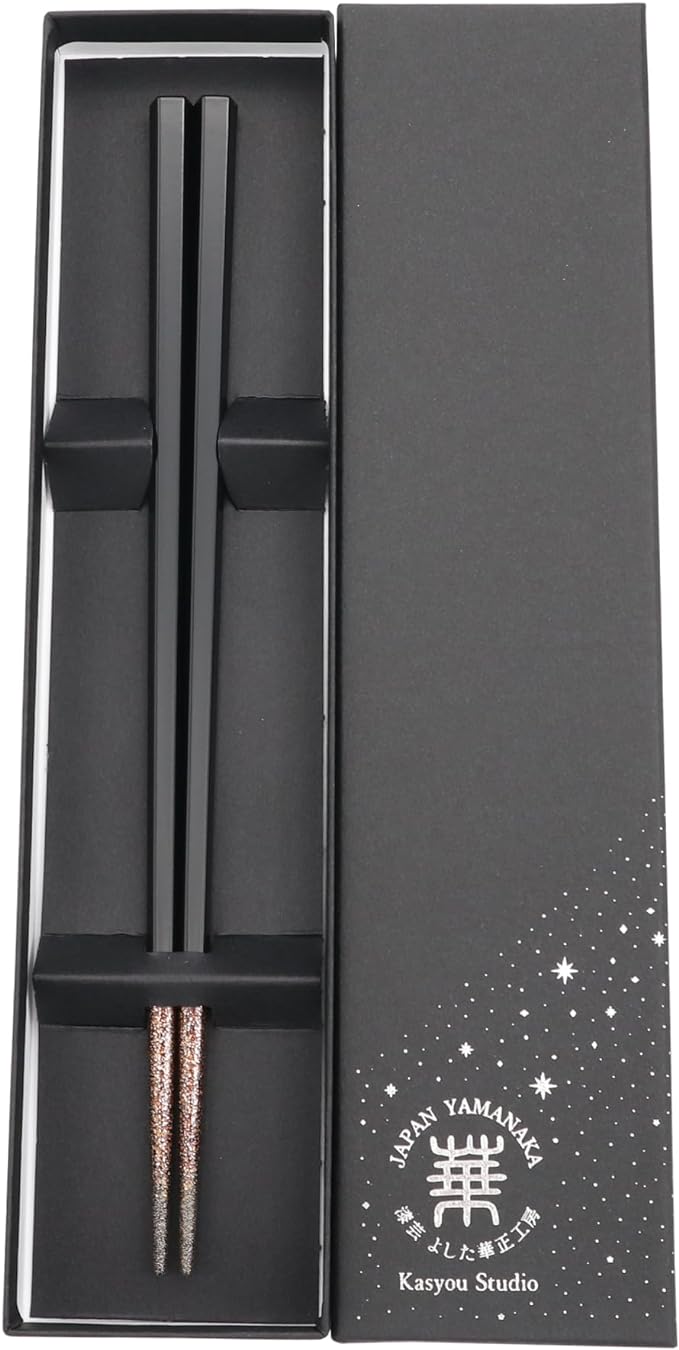
Kasyou Studio "Urushi Kenko" Chopsticks
Natural lacquer tip stated in spec, made by Kaga Maki-e craftsmen. 4.4★ (183 ratings).
- Kotobuki Wakasa Lacquer Chopsticks — around $25 for two pairs, bamboo with multiple lacquer coats, hand wash only.

Kotobuki Wakasa Lacquer Chopsticks
Two pairs, bamboo with multiple lacquer coats, hand wash only. 4.2★ (30 ratings).
Which One Should You Buy?
- If you just want nicer chopsticks for daily use, get the Weeping Cherry or Grooved Tip budget picks.
- If you want a complete gift-ready set, get the Sakura Petals Pair Set.
- If you’re buying for a wedding or milestone gift, get the Gold & Silver Leaf Set.
- If you actually want a piece of traditional urushi craft, get the Winter Plum Flower — or the Amazon-listed Kasyou Studio pair if you want genuine lacquer at a much lower price.
FAQ
Is “Wakasa lacquerware” the same as “urushi”? Not automatically. Wakasa-nuri is a regional craft tradition from Obama City, Fukui — but individual products within that tradition are finished with anything from genuine urushi to urethane or polyester coatings. Check the specific product’s material spec, not just the regional name.
How can I tell if a lacquerware product is genuine urushi without asking the seller? The single most reliable public clue is dishwasher/microwave safety: if a listing advertises itself as dishwasher-safe, it’s almost certainly not traditional urushi. Genuine urushi needs hand washing and doesn’t tolerate heat or harsh detergent well.
Is urethane-coated lacquerware “fake”? Not fake, just a different (and much less labor-intensive) product. It’s a legitimate, functional choice for everyday chopsticks — the issue is only when it’s marketed using “urushi” language it hasn’t earned.
Final Thoughts
The most useful thing you can take from this list isn’t any single pick — it’s the habit of checking a lacquerware product’s actual material spec instead of trusting the word “urushi” wherever it appears in the description. Four of the five Musubi Kiln products here are honestly urethane or unspecified “lacquer,” and the Amazon-listed Kasyou Studio pair made a stronger documented urushi claim than most of them.