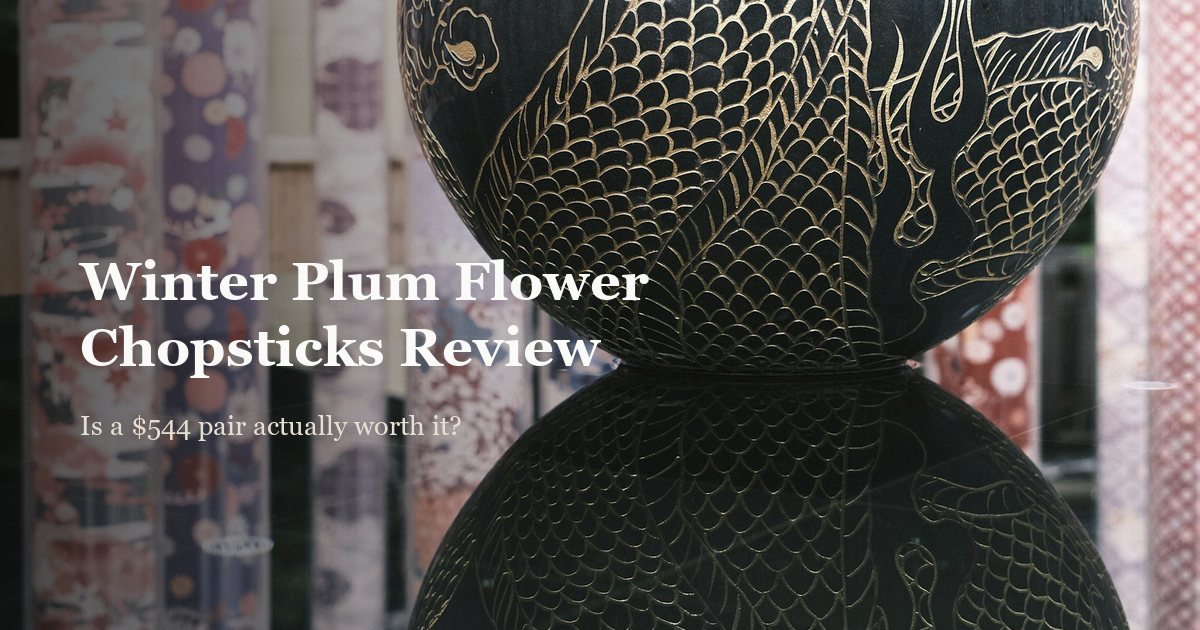
Quick verdict: yes, if you want a genuine collector’s piece and understand exactly what you’re paying for — but at $544 for one pair of chopsticks, with only a single unit in stock at the time of writing, this isn’t an impulse buy. If you just want nice everyday chopsticks, our Best Japanese Lacquerware Chopsticks guide has four other picks starting at $10.
What It Actually Is
The Winter Plum Flower Chopsticks are made by Furukawa Katsuhiko, who runs Furukawa Wakasa Lacquerware Store (古川若狭塗店) in the Nishizu area of Obama, Fukui Prefecture — the historical center of Wakasa-nuri lacquerware. This isn’t just a retailer’s back-story: an independent Obama tourism blog, NEST INN OBAMA, profiles him directly and confirms he’s a real, fourth-generation craftsman who previously worked in the automotive industry before returning specifically to keep his father’s craft alive.
Two claims worth flagging honestly: Musubi Kiln’s listing states the shop has “over 140 years” of history and that this piece takes “66 stages” to make. Both are plausible — Wakasa-nuri generally does involve dozens of steps, and other independent sources describe 60+ stage processes for similar work — but I couldn’t independently verify the exact “140 years” or “66” figures beyond the retailer’s own claim, so treat them as the maker’s stated figures rather than externally confirmed facts.
The Craft: Togidashi, Abalone, and Eggshell
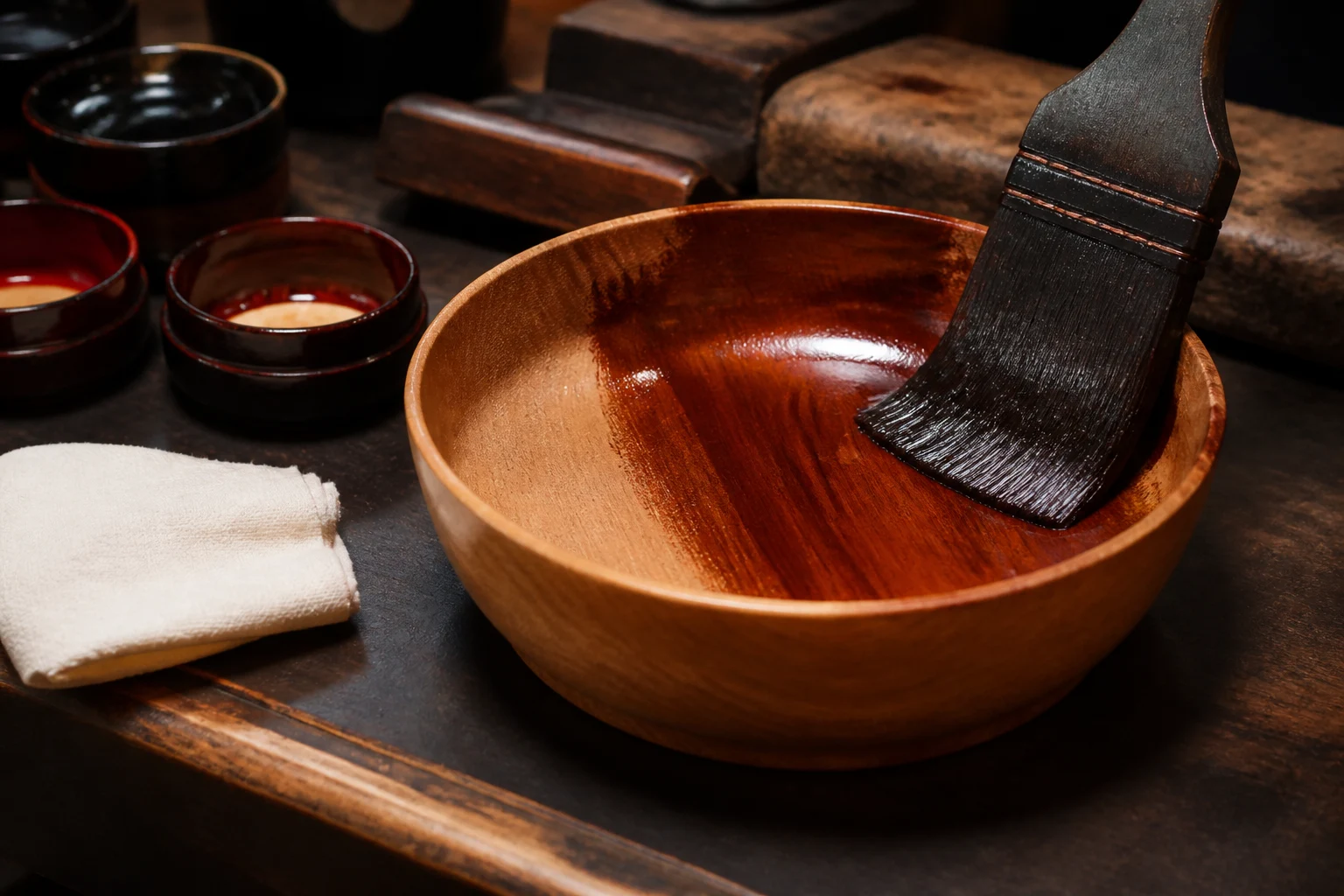
This piece uses the togidashi (研ぎ出し) technique, which is real and well-documented independently of this retailer. Per craft-heritage publisher Kogei Japonica, togidashi means embedding a decorative material into a lacquer layer, burying it under several more coats, then grinding the surface back down — traditionally with charcoal and whetstones — until the pattern reappears flush with the surface. The skill is in the polishing: over-polish and you chip the pattern, under-polish and the design stays blurry. Japan Traditional Crafts (JTCO) describes Wakasa-nuri’s own version of this process as involving 60-plus sequential steps of layering and polishing, which is consistent with (though not identical to) the “66 stages” claim.
The decorative material here is a mix of abalone shell inlay (raden) and eggshell inlay (rankaku) — both real, historically documented Japanese lacquer techniques. Raden dates back to the Nara period (per JAANUS, an academic Japanese art reference), and eggshell inlay is specifically associated with Wakasa lacquerware because pure white isn’t achievable with lacquer pigment alone — crushed, vinegar-treated eggshell is the traditional workaround, confirmed by both JTCO and a Google Arts & Culture feature produced with Obama City’s food culture museum.
Pros and Cons
Pros:
- A verifiable, named artisan with an independently-confirmable backstory — not just marketing copy
- Uses real, historically documented techniques (togidashi, raden, rankaku), not just “artisanal” language
- The only lacquerware chopsticks we’ve reviewed on this site with no urethane or polyester listed anywhere in the spec sheet
Cons:
- $544 for one pair of chopsticks is a genuinely large sum, and the exact “66 stages” / “140 years” figures come from the retailer, not an independent source
- Not dishwasher- or microwave-safe — this requires the hand-care routine of genuine urushi, not the low-maintenance handling of the cheaper options in our comparison guide
- Only one unit was in stock at the time of writing — treat any availability claim as time-sensitive and check the current listing before deciding
Who Should Actually Buy This
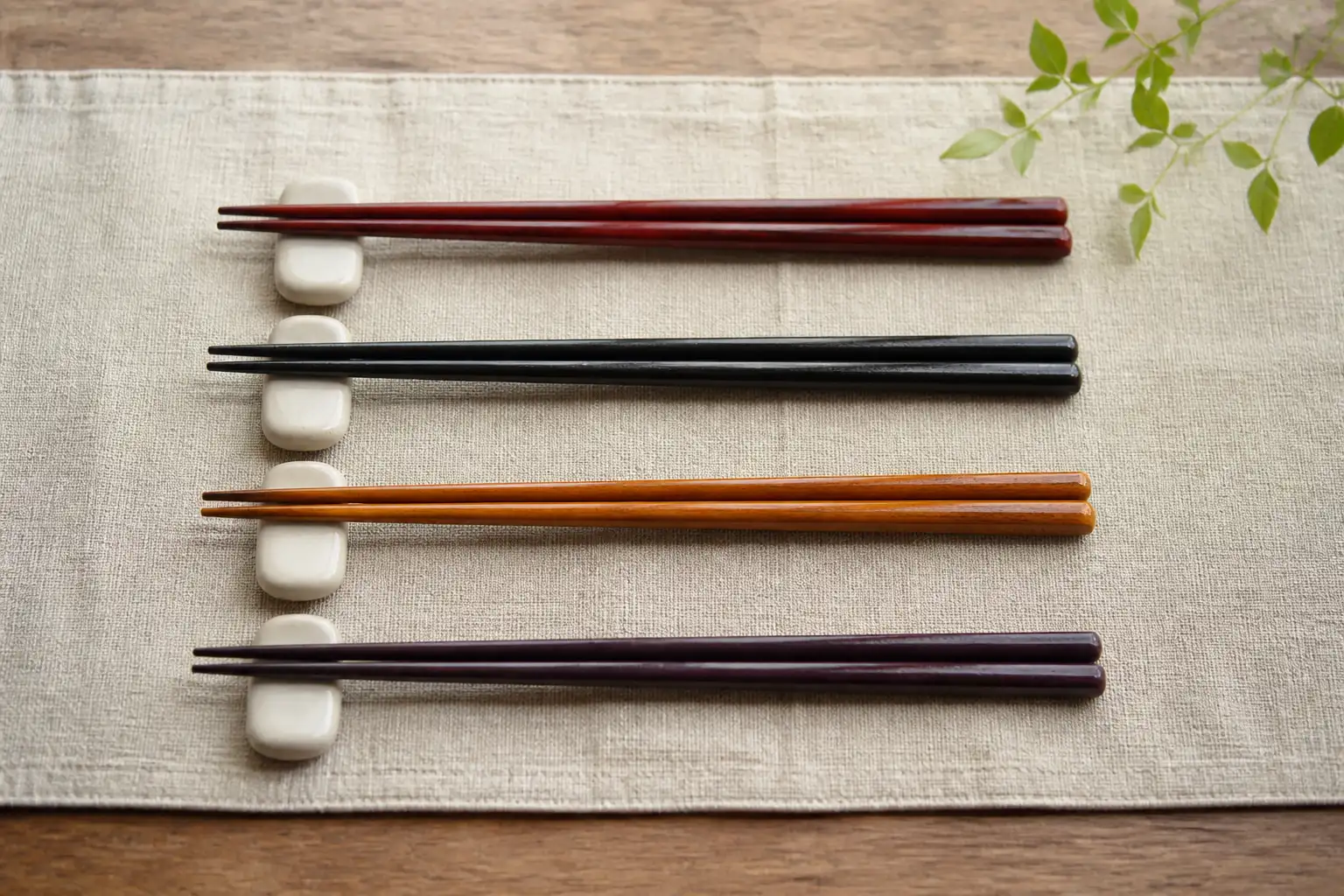
This is a collector’s piece, not a daily-use upgrade. If your interest is “I want nicer chopsticks for dinner,” the Sakura Petals Pair Set at $87 in our comparison guide gets you real Wakasa-nuri craft without the price or the hand-wash-only care routine. This piece makes sense specifically if you want to own a documented, named-artisan work — the kind of object you’d display as much as use.
FAQ
Is $544 a reasonable price for chopsticks? For mass-produced chopsticks, obviously not. For a hand-finished piece from a named artisan using a multi-stage inlay technique, it’s in line with what comparable hand-crafted Japanese lacquerware collector pieces cost — the price reflects labor and skill, not brand markup.
Can I use these for actual meals, or are they just for display? The listing doesn’t say they’re display-only, but genuine urushi lacquerware like this needs hand washing and gentle handling — not something you’d want to risk in a dishwasher or a hurried weeknight cleanup.
How is this different from the other Musubi Kiln lacquerware chopsticks reviewed on this site? It’s the only one where the spec sheet lists just “Lacquer” with no urethane or polyester anywhere — every other item in our comparison guide mixes in a synthetic coating somewhere.
Final Thoughts
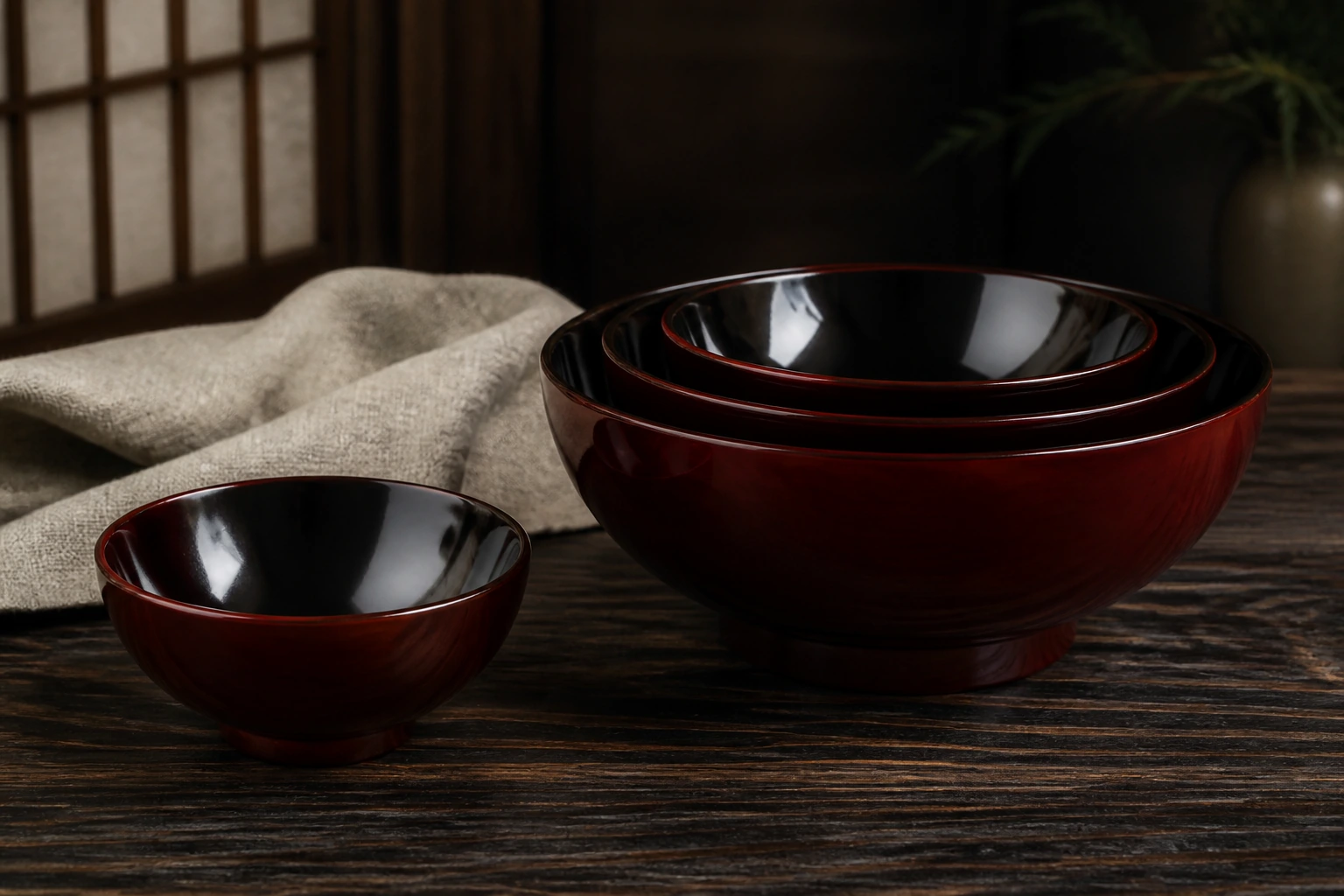
If you’ve read our lacquerware chopsticks comparison and want to know what “the real thing, no synthetic shortcuts” actually looks like at the top of the market, this is it. Just go in knowing you’re paying for a named craftsman’s hand-inlaid work, not a functional upgrade over a $50 pair — and check current stock before you get your heart set on it.
This piece is also a useful reference point for the checks we lay out in our guide to spotting Japanese craft knockoffs: a named artisan, a named region, and a spec sheet with no synthetic coating hiding in it anywhere.