Our lacquerware chopsticks comparison turned up something worth repeating here: most products marketed as “lacquerware” are actually coated in urethane or polyester, not traditional urushi — and the retailer’s own spec sheets often say so, even when the ad copy nearby says “urushi.” This guide covers how to tell the difference, and how to actually take care of whichever one you own. It’s the lacquerware-specific version of a pattern we track across this whole site — see our general guide to spotting Japanese craft knockoffs if you’re also shopping knives, ceramics, or teapots.
The One-Line Test: Is It Dishwasher-Safe?
If a lacquerware product is advertised as dishwasher- or microwave-safe, it is almost certainly not genuine urushi. Urushi is a natural lacquer that can’t tolerate sustained heat, harsh detergent, or a drying cycle without cracking or dulling — so any product built to survive a dishwasher is, by necessity, coated in something else (urethane or cashew-based lacquer). This isn’t a marketing trick to watch out for so much as a simple material fact you can use to your advantage when shopping.
Caring for Genuine Urushi
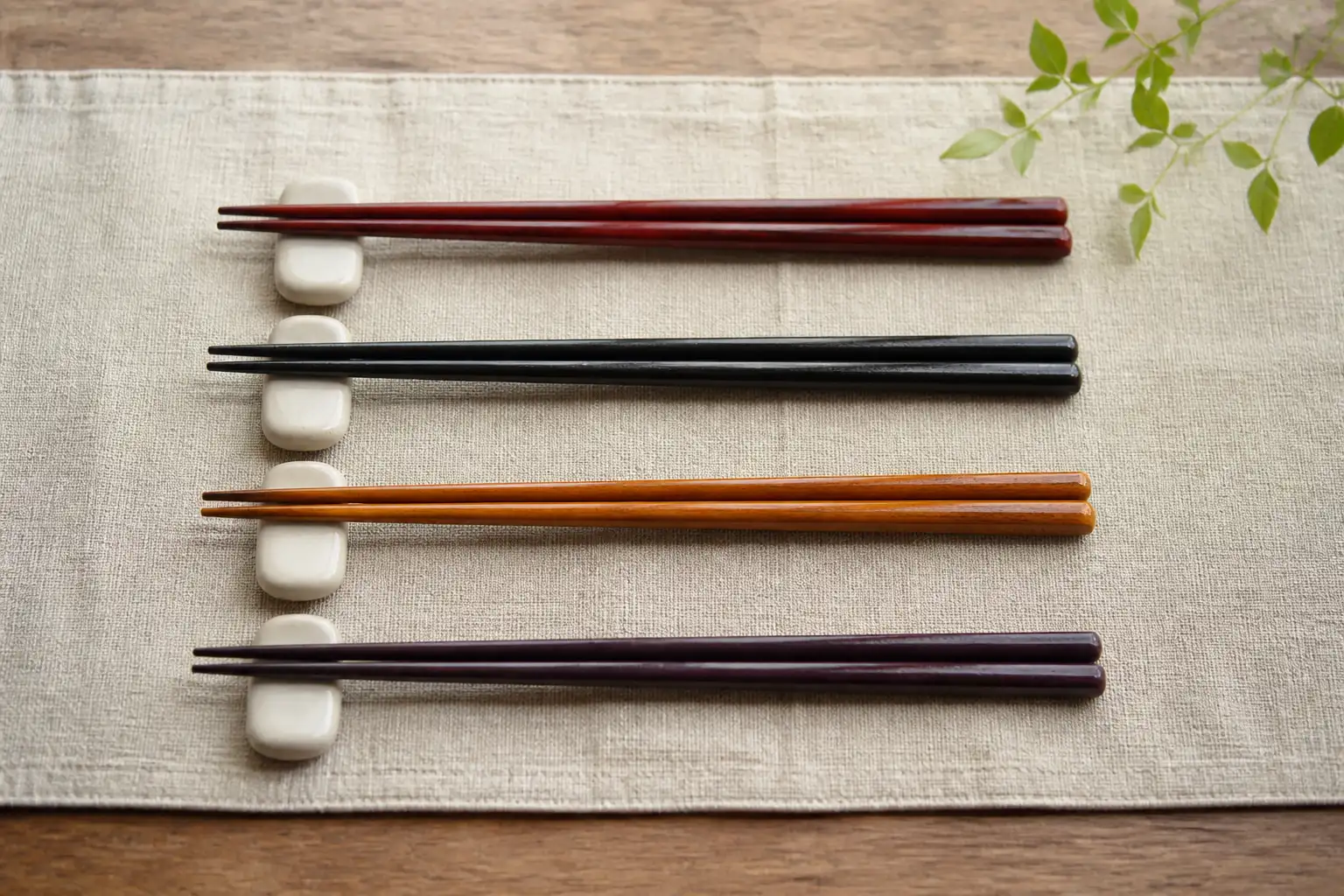
If your piece is genuine urushi — hand wash it in lukewarm water with a mild detergent or none at all, using a soft cloth or sponge. Never use an abrasive pad or scouring powder. Dry it immediately with a soft cloth rather than air-drying or letting it sit wet.
What to avoid:
- Dishwashers and microwaves — heat and drying cycles can crack the lacquer and warp the wood core underneath
- Direct or prolonged sunlight — UV exposure fades color and dulls the lacquer’s luster over time
- Extreme swings in humidity — the wood substrate expands and contracts with moisture; the lacquer coating doesn’t move the same way, so drastic swings can crack it
- Soaking — leaving urushi lacquerware in water for extended periods is one of the more common ways people accidentally damage it
Caring for Urethane or Cashew-Lacquer Pieces
If your piece is coated in urethane or cashew lacquer (which, per our chopsticks research, describes most affordably-priced “lacquerware” you’ll find), it’s genuinely lower-maintenance — dishwasher-safe in most cases, more UV-resistant, and far more forgiving of daily use. The tradeoff is durability of character, not durability of function: these coatings don’t develop the patina genuine urushi does, and tend to simply fade or wear thin over years rather than deepen.
Does Urushi Actually Get Better With Age?
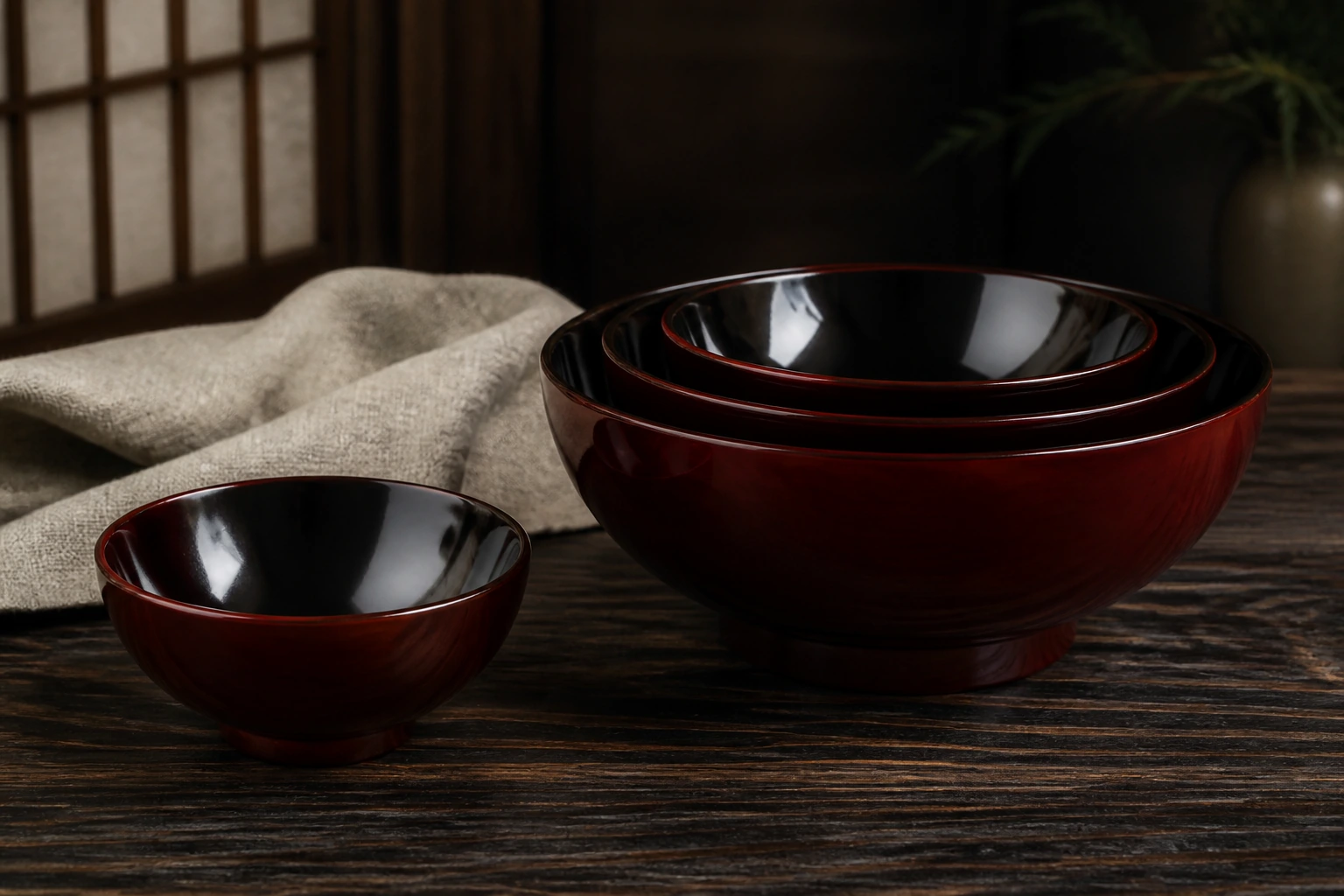
Genuinely, yes — this is one of urushi’s most distinctive traits. The lacquer keeps slowly curing and polymerizing for years after it’s applied, and pieces are widely described as gaining character with use rather than just wearing down. Exactly what that looks like varies by piece: some urushi work becomes glossier and more luminous as the coating becomes more transparent with age, while other styles develop a softer, more matte richness over time. The clearest example of this being intentional rather than incidental is Negoro-nuri — a style built from red lacquer layered over black, specifically so that decades of use wear through the red in places and reveal the black underneath as part of the design. The wear pattern isn’t a flaw to hide; it’s the point.
What Happens If It Gets Damaged?
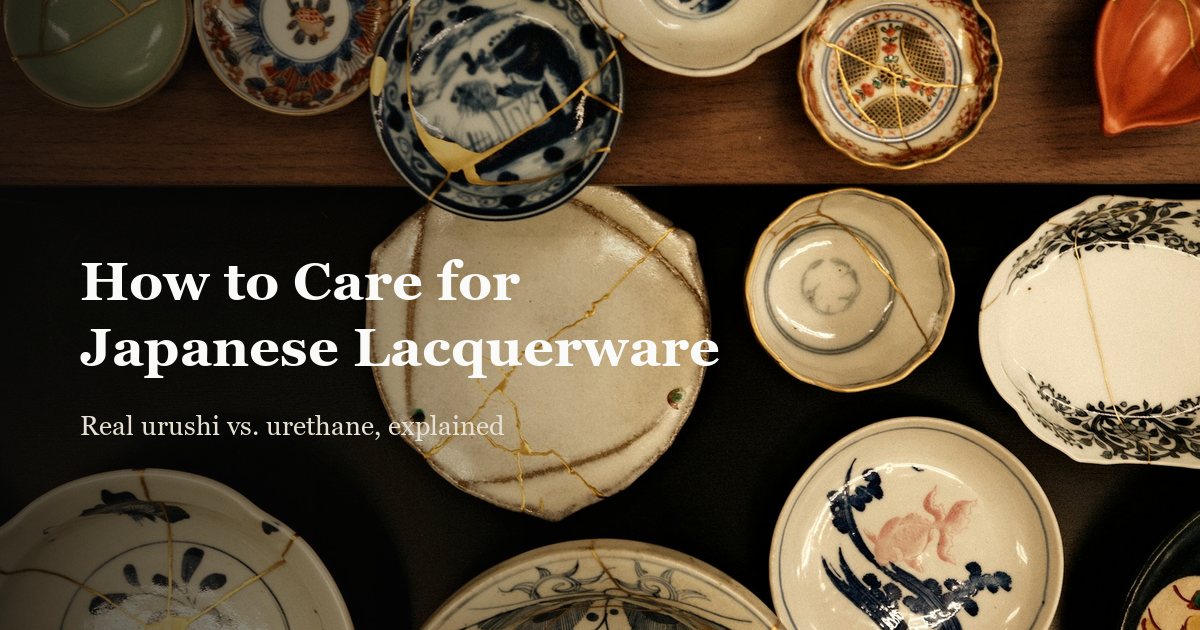
Here’s where it’s worth clearing up a common mix-up. Kintsugi — the well-known Japanese practice of repairing broken pottery with lacquer mixed with gold, silver, or platinum powder — is, technically, a lacquerware technique already, since the repair material is urushi. But it’s specifically built for ceramics, and independent restoration sources are clear that applying it to wood-bodied lacquerware brings real problems: wood absorbs lacquer unevenly (causing blotchy staining around the repair), and sanding during the kintsugi process risks damaging any existing decoration on the piece.
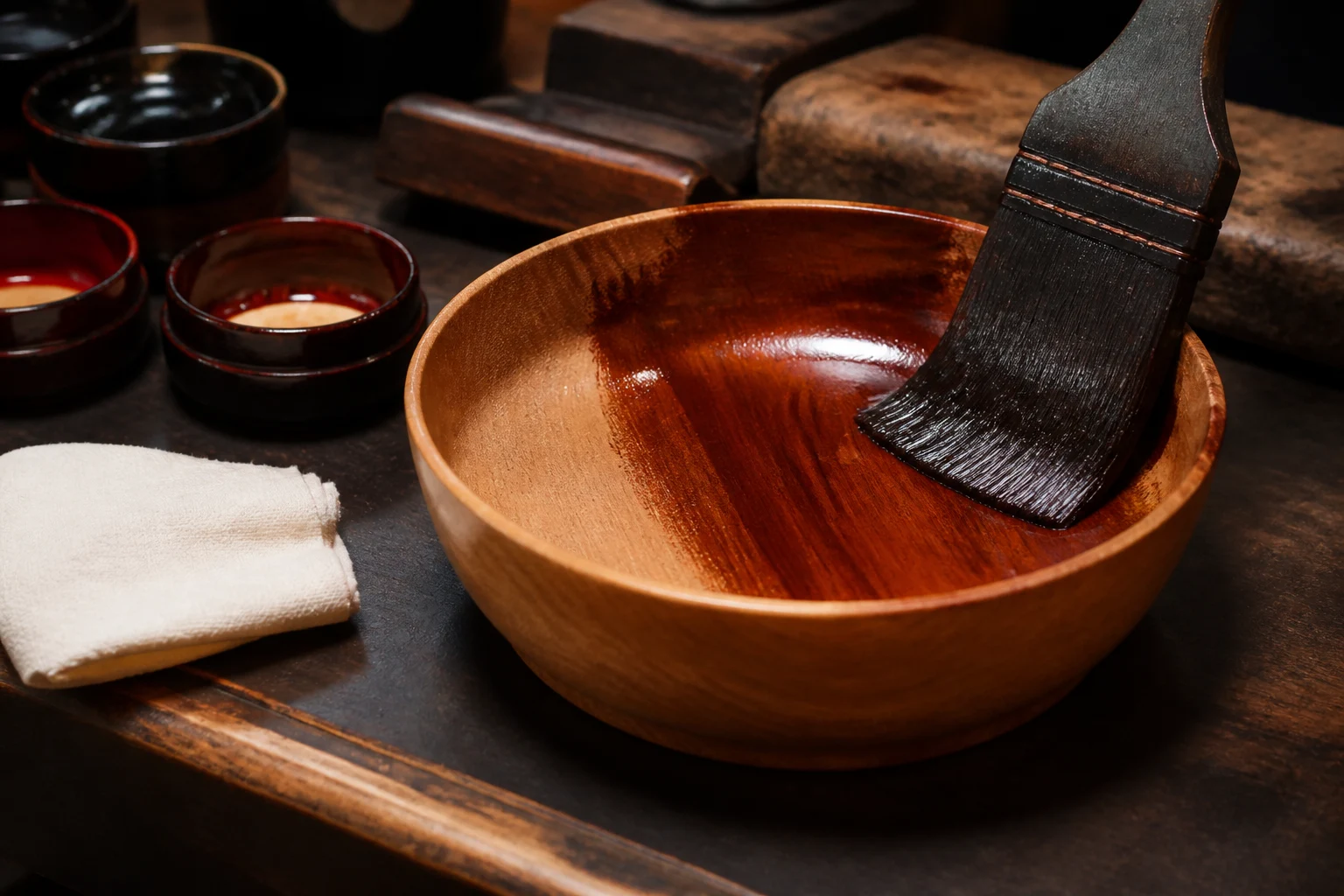
Wood lacquerware has its own, less famous repair tradition instead: professional refinishing by lacquerware specialists, using the same urushi the piece was originally coated in — filling losses, consolidating lifted lacquer, and in some cases full re-lacquering with base coat, top coat, and any maki-e decoration handled by separate specialist artisans. It doesn’t have a single catchy English name the way kintsugi does, but it’s a real, established service — Japanese repair shops typically price a bowl or tray refinish from around ¥5,000, scaling up for larger or more decorated pieces.
FAQ
How do I know if my lacquerware is real urushi without asking the seller? Check whether it’s advertised as dishwasher-safe — if it is, it’s very likely urethane or cashew lacquer, not traditional urushi. Genuine urushi products almost always specify hand-wash-only care.
Can I fix a chip in my lacquerware myself with a kintsugi kit? You can try, but be aware kintsugi kits are designed and marketed primarily for ceramics. On wood lacquerware, uneven absorption and the risk of damaging existing decoration make DIY kintsugi a real gamble — a professional lacquerware repair specialist is the safer route for a piece you care about.
Is it bad if my urushi lacquerware’s color changes over time? No — that’s expected, and often considered a desirable sign of a well-used, well-loved piece rather than damage.