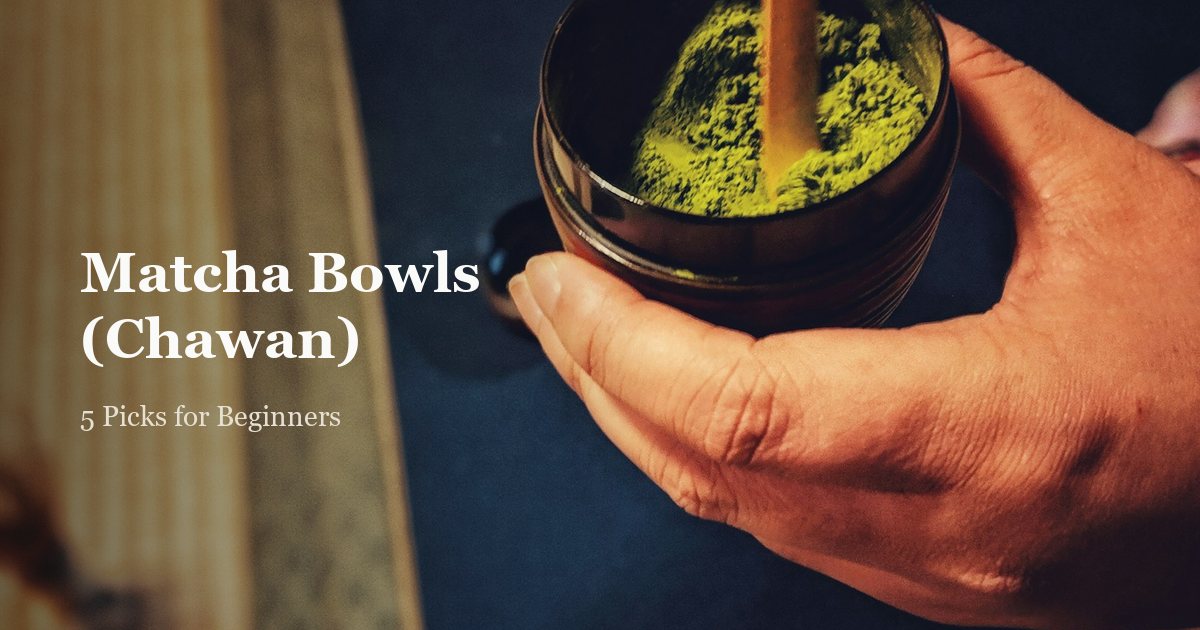
Quick answer: if you just want one good bowl and don’t want to overthink it, get the Rabbits in Sunny Spot Matcha Bowl ($105). It’s genuine Kutani ware, a size that works for daily use, and priced in the middle of what a real hand-decorated chawan actually costs. Read on for the full comparison, including two solid options under $60 on Amazon.
Some of the shops we link to are partners who may pay us when you buy through them. This doesn't change which pieces we recommend. How this works.
Comparison at a Glance
| Bowl | Price | Ware | Best For |
|---|---|---|---|
| Golden Moon and Rabbit | $74 | Kutani ware (porcelain) | Best budget |
| Rabbits in Sunny Spot | $105 | Kutani ware | Best overall |
| Sakura and Mt. Fuji | $259 | Kutani ware, wide stable base | Best for beginners’ grip |
| Yoshidaya Camellia | $214 | Kutani ware, Yoshidaya-style glaze | Best collector’s piece |
| Yu-Chabako Wood Grain Set | $548 | Yamanaka lacquerware, full kit | Best complete set |
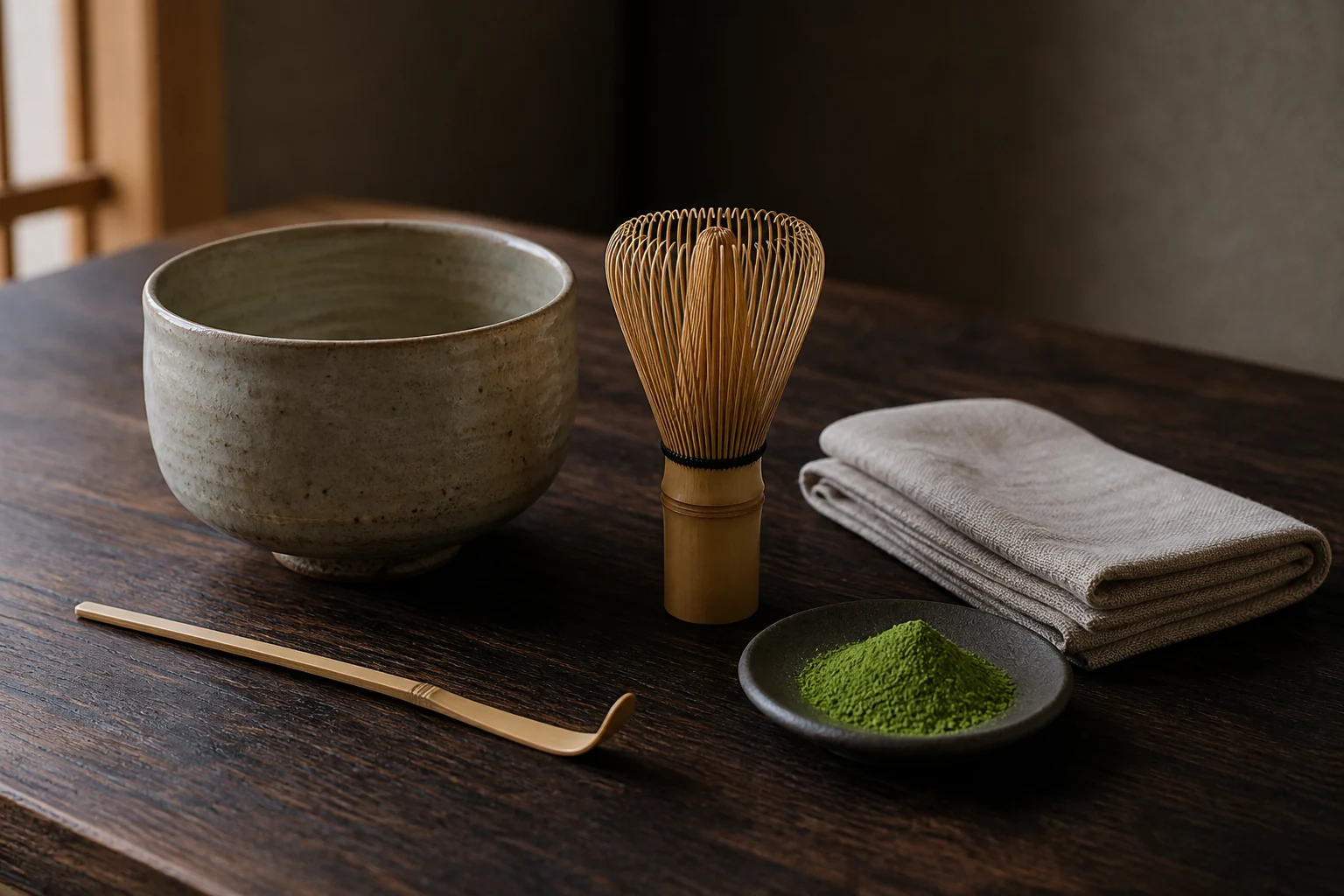
Why a Chawan Actually Matters (Not Just Tradition)
A matcha bowl’s wide mouth isn’t just aesthetic — it’s what gives your wrist room to move a bamboo whisk (chasen) in the fast side-to-side motion that turns powdered matcha into a smooth, foamy drink. Try the same motion in a narrow mug and the matcha tends to clump instead of emulsifying. Traditionally, shape also shifts with the season — wide, shallow bowls in summer let tea cool faster, while deeper, narrower bowls in winter hold heat longer — but that’s a refinement for enthusiasts, not something a beginner buying one bowl for daily use needs to worry about.
1. Golden Moon and Rabbit Matcha Bowl — Best Budget
Genuine Kutani ware from Ishikawa Prefecture, and at $74 it’s the most affordable real hand-decorated chawan in this lineup rather than a generic import. It ships in a paulownia wood gift box, which also makes it a reasonable gift if you want to introduce someone to matcha without spending $200+.
Pros:
- Real Kutani ware, not a generic “Japanese-style” import
- Lowest price of the porcelain bowls here
- Comes in a proper gift box
Cons:
- No included whisk or scoop — you’ll need to buy a chasen separately
- Exact capacity isn’t listed on the product page, so size expectations are a guess until it arrives
Bottom line: the one to get if you want to try matcha at home without committing to a $100+ bowl. See it at Musubi Kiln.
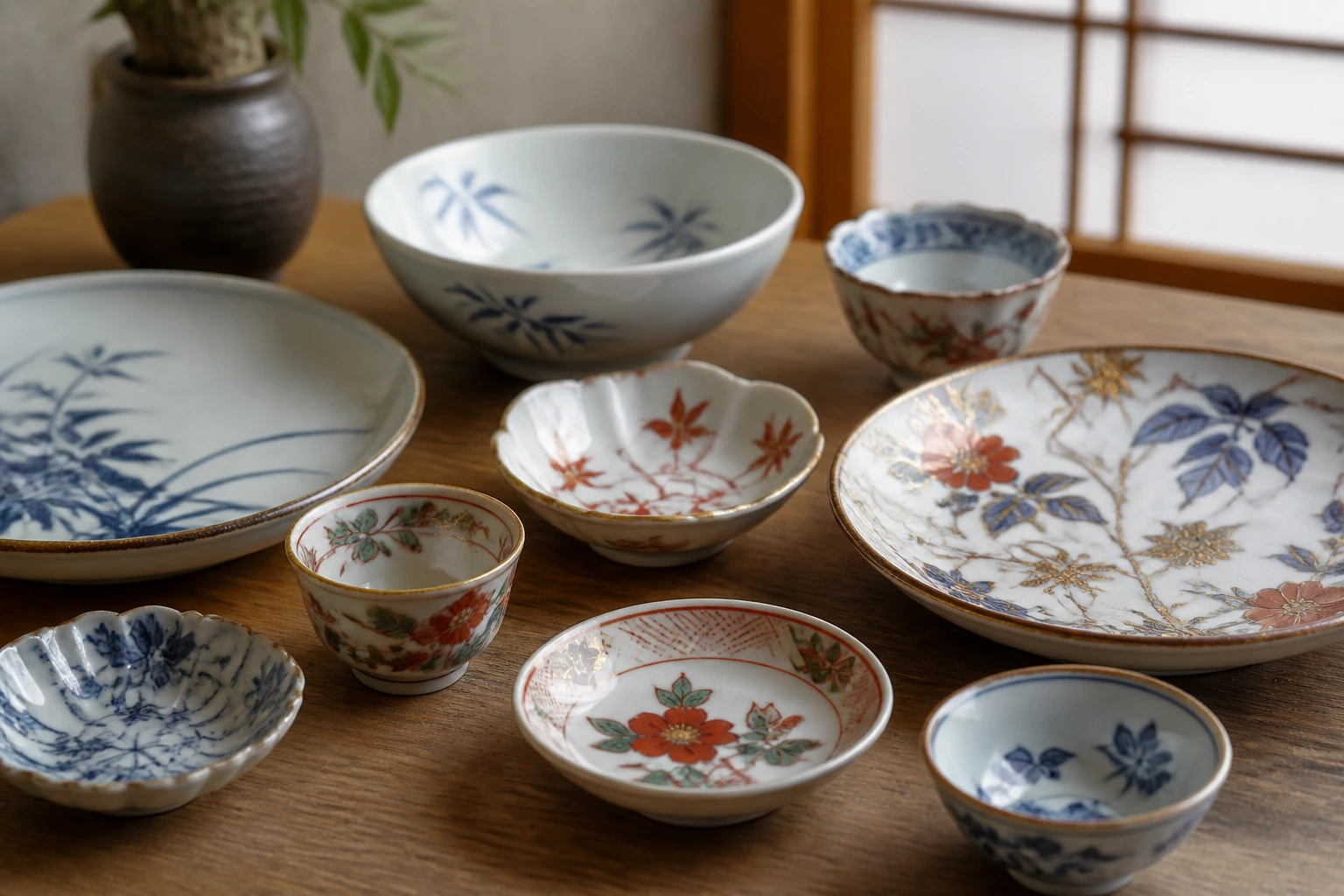
2. Rabbits in Sunny Spot Matcha Bowl — Best Overall
This is the pick if you want one bowl that looks and feels like real Kutani ware without paying collector prices. One honest caveat: Musubi Kiln’s own listing calls the material “porcelain” in one place and “stoneware” in another — Kutani ware is conventionally porcelain, but the site copy is inconsistent, so treat the exact material as unconfirmed until you ask the seller directly. It’s not an isolated slip either; we found a second, similar contradiction on a different Musubi Kiln product while researching our porcelain vs. stoneware guide, which covers how to tell the two materials apart yourself rather than relying on a single adjective in the listing.
Pros:
- Sits in the price range where hand-decorated Kutani ware actually starts looking “worth it” over a generic bowl
- Rabbit motif is a classic, non-seasonal design you can use year-round
Cons:
- Material listed inconsistently (porcelain vs. stoneware) on the seller’s own page
- No whisk or scoop included
Bottom line: the safest all-around pick if you only want to buy one bowl. See it at Musubi Kiln.
3. Sakura and Mt. Fuji Matcha Bowl — Best for Beginners’ Grip
This one’s listed with a genuinely useful detail for a beginner: a wide base that the maker’s own description says is “easy for beginners to whisk.” It’s by named Kutani artist Fukuda Yoshinori, which is also why it costs more than the “Best Overall” pick above — you’re paying for a named maker’s work, not just the ware type.
Pros:
- Wide, stable base specifically suited to learning the whisking motion
- Attributed to a named artist, which matters if you care about provenance
- Handcrafted wooden gift box included
Cons:
- Priced above the “Best Overall” pick despite being aimed at beginners — you’re paying for the artist attribution
- Only a handful of units were in stock at the time of writing; check availability before you commit to this one
Bottom line: worth the extra cost if the whisking motion itself is what you’re worried about getting right. See it at Musubi Kiln.
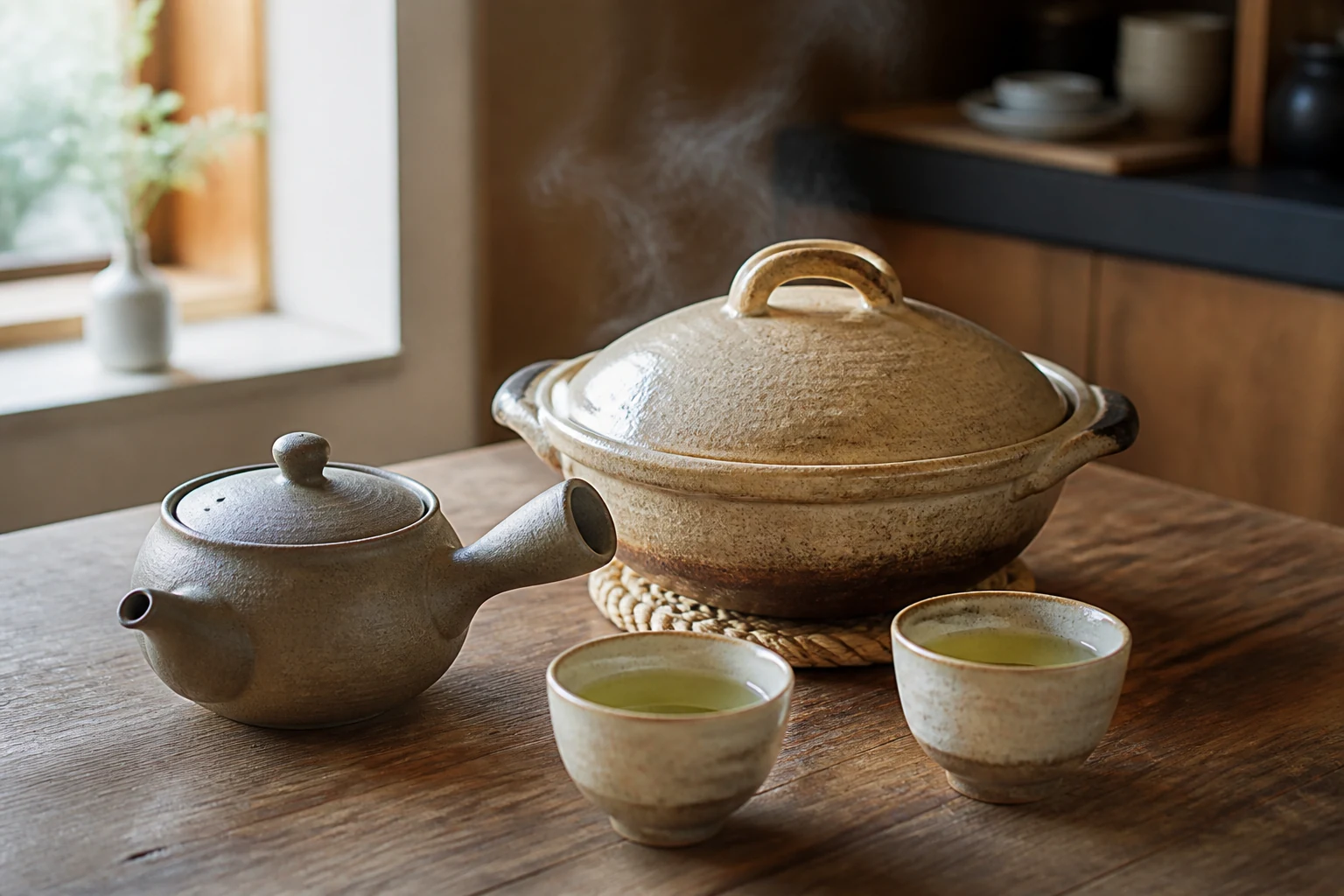
4. Yoshidaya Camellia Matcha Bowl — Best Collector’s Piece
The Yoshidaya style is a historic revival glaze within the Kutani tradition, and this bowl shows a visible fine glaze crackle (kannyu) that’s characteristic of it. This is the pick for someone who already knows they want a piece with real craft history behind it, not just a functional bowl.
Pros:
- Distinctive Yoshidaya-style glaze with visible kannyu crackle
- Wooden gift box included
Cons:
- Stock was down to single digits at the time of writing
- Not the bowl to start with if you’re still deciding whether home matcha is a habit you’ll keep up
Bottom line: a strong second bowl once you know you’re going to keep making matcha at home. See it at Musubi Kiln.
5. Yu-Chabako Wood Grain Matcha Tea Set — Best Complete Set
This is the only complete kit in this lineup — bowl, tea container (natsume), scoop (chashaku), whisk (chasen), whisk holder, and a wrapping cloth (furoshiki), all in a paulownia box. One thing worth being upfront about: the bowl in this set is lacquered zelkova wood, not ceramic or porcelain like the other four picks — a genuinely different material and feel.
Pros:
- Everything you need in one box, no separate whisk/scoop purchase
- Yamanaka lacquerware is a real regional craft, not a generic bundle
Cons:
- At $548, this costs more than four of the ceramic bowls above combined
- Musubi Kiln doesn’t currently sell a cheaper starter set — their complete kits all run $458 and up
Bottom line: the pick if you want to be handed a complete, ready-to-use setup and don’t mind paying for the convenience. See it at Musubi Kiln.
Two Real Options on Amazon (and One to Watch Out For)
Amazon isn’t only generic knockoffs here — we found two listings that are genuinely Japan-made and worth considering if you want faster shipping or a lower price:
- KUTANI Japanese Matcha Bowl (Rabbit) — explicitly labeled “Made in Japan, in Ishikawa.” It also shows up as a pick in our Japanese housewarming gift guide if the person you’re buying for already drinks tea.

KUTANI Japanese Matcha Bowl (Rabbit)
"Made in Japan, in Ishikawa" stated on the listing. 4.8★ (536 ratings).
- Yamaki Ikai Mino Ware Chawan — credited to maker Kaneta, Mino ware region, explicit “Made in Japan” claim.

Yamaki Ikai Mino Ware Chawan
Maker Kaneta, Mino ware, explicit "Made in Japan" claim. 4.5★ (379 ratings).
What to watch out for: several of Amazon’s top-selling “matcha bowl” listings (Jade Leaf is the most visible example) use vague phrases like “designed according to tradition” without naming an actual ware or maker — that’s marketing language, not a “Made in Japan” claim. If a listing doesn’t name a specific ware (Kutani, Mino, Hagi, Kyo/Kiyomizu, etc.) or a maker, assume it’s a generic import until proven otherwise. This is the same pattern we track across every category on this site — see our full guide to spotting Japanese craft knockoffs for the six checks that apply whether you’re buying a bowl, a knife, or a teapot.
Which One Should You Buy?
- If you want to try matcha without overspending, get the Golden Moon and Rabbit or one of the two Amazon picks above.
- If you want one solid bowl and nothing else, get the Rabbits in Sunny Spot.
- If the whisking motion itself is what worries you, get the Sakura and Mt. Fuji for its wider base.
- If you want everything in one box and don’t mind the price, get the Yu-Chabako set.
FAQ
What’s the difference between a chawan and a regular bowl? Mainly the wide, open shape — it gives a bamboo whisk room to move quickly without splashing, which a narrow mug or cereal bowl doesn’t allow. Most chawan run around 12 cm across and hold 350–500 ml.
Do I need an expensive chawan to make good matcha at home? No. Any bowl with a wide enough mouth will let you whisk properly. What you’re paying for above roughly $70–80 is the craft — hand-applied glaze, a named ware region, sometimes a named artist — not a functional improvement in how the matcha tastes.
Can I use one chawan for both hot and cold matcha? Yes, for casual home use. The traditional distinction between wide summer bowls and deep winter bowls is about heat retention, not a hard rule — a single mid-sized bowl works fine year-round unless you’re deliberately building a seasonal collection.
Final Thoughts
If you only take one thing from this list: check that whatever you buy actually names a ware region (Kutani, Mino, Hagi, Kyo-yaki) or a maker. That single detail is the difference between a real chawan and a bowl that’s just marketed as one. The Rabbits in Sunny Spot bowl is our starting recommendation, but the two Amazon picks above are honest, cheaper alternatives if you want to start smaller.