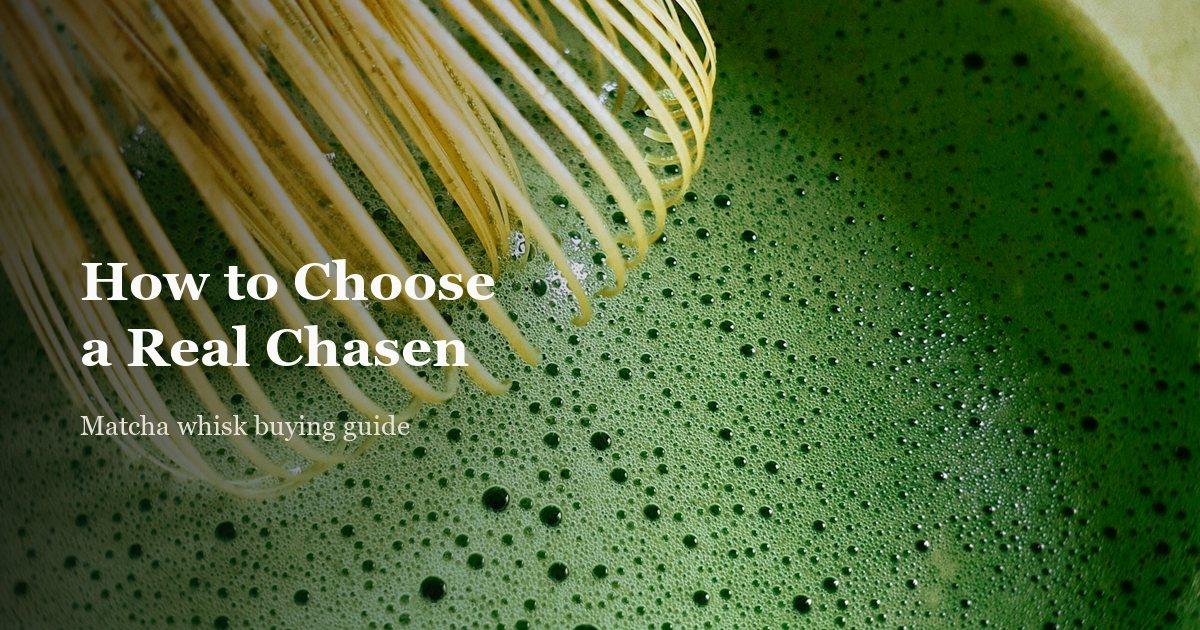
Quick answer: a real chasen is hand-split from a single piece of bamboo, not molded resin, and genuine ones typically name both the prong count and the maker. Most of what turns up first on Amazon for “matcha whisk” is either resin or an unnamed “handcrafted” import. The one we’d actually buy is the Nishimoto Ippuku Chasen (¥14,553, 70 prongs) — details below.
What a Real Chasen Actually Is
A chasen is carved from a single piece of bamboo, split into fine bristles and bound with thread near the base — no separate parts, no assembly. The craft is said to date back roughly 500 years to the Muromachi period, originating in Takayama, a small area of Ikoma, Nara Prefecture. According to the tradition documented by the Japan Sui Collection and Nara Tea Co., the first chasen was made at the request of Murata Juko — the founder of wabi-cha, the tea ceremony style built around simplicity — by Sōsetsu, the second son of the lord of Takayama Castle.
Chasen-making in Takayama has stayed a hereditary craft ever since: chasen-shi (chasen craftsmen) pass the skill down within families, with some current makers being 18th- or even 25th-generation. Only a small number of these master craftsmen remain today.
What’s Actually on Amazon
Search “matcha whisk” or “chasen” on Amazon and a lot of what comes up isn’t bamboo at all. We found resin (PP plastic) whisks explicitly marketed as “Made in Japan,” alongside bamboo whisks described only as “handcrafted” or “100% natural” with no maker or region named — the same pattern we found researching fake Japanese knife brands: real material claims without anyone actually standing behind them.
Resin whisks aren’t necessarily bad tools — some people prefer them for dishwasher-safe convenience — but they’re a different product from a traditional chasen, and a listing that calls a plastic whisk a “chasen” without clarifying that is stretching the term.
What to Check Before You Buy
- Bamboo, not resin — check the material field, not just the product photos.
- A stated prong count — genuine chasen are sold by prong count (60–120 is typical); a listing that skips this detail usually skips the maker too.
- A named maker or workshop, not just “handcrafted in Japan.”
The One We’d Actually Buy
The Nishimoto Ippuku Chasen Matcha Whisk (¥14,553, roughly $90–95) names its maker (Nishimoto), states a 70-prong count, and is hand-split from a single piece of bamboo with the tips curled inward to protect them — all the details the vague Amazon listings above tend to skip. In stock in good quantity as of this writing.
Pair it with a whisk holder (kusenaoshi) to keep the bamboo tines in shape between uses — Musubi Kiln’s Floating Sakura Matcha Whisk Holder was also in stock at the time of writing.
If you don’t already have a bowl to use it with, see our matcha bowl (chawan) comparison for five picks across a range of budgets.
Musubi Kiln links above are plain links — Musubi Kiln isn't yet a partner shop for this site.
FAQ
Does a higher prong count mean better quality? Not necessarily “better” — more of a different use case. Higher prong counts (100+) tend to produce a finer, frothier foam and are often favored for thin (usucha) tea, while lower counts are more common for everyday use. It’s a preference question more than a quality hierarchy.
Is a resin chasen a bad choice? Not inherently — resin whisks are more durable and dishwasher-safe, which some people genuinely prefer. Our objection is specifically to listings that market a plastic whisk with the same imagery and claims as a traditional bamboo one without being clear about the material.
How long does a bamboo chasen last? Bamboo chasen wear out with regular use — expect to replace one every couple of months if you’re whisking daily, sooner if it’s not cared for properly (never dishwasher-safe, rinse and dry upright).
Final Thoughts
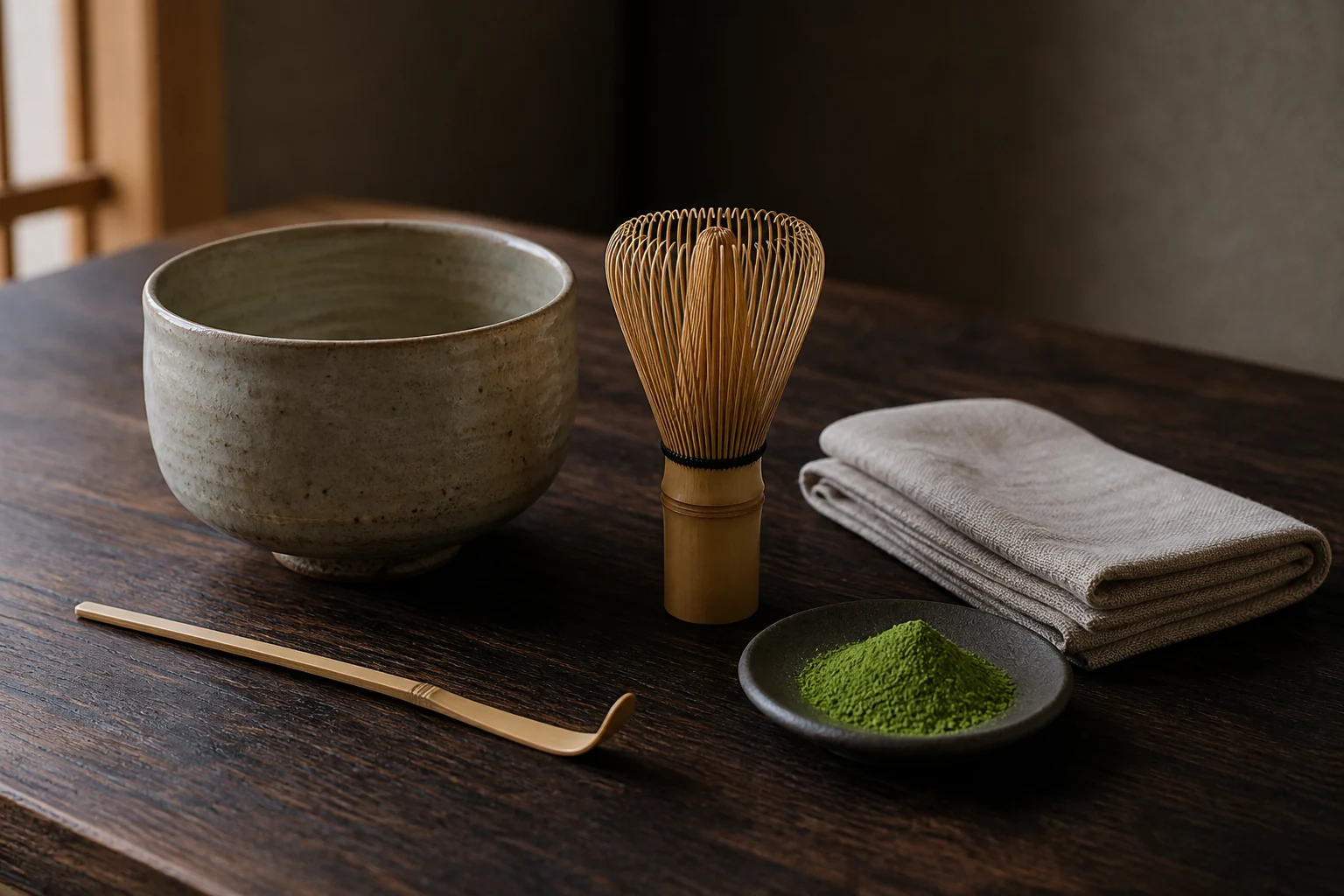
A chasen is a small purchase, but it’s a good example of the same pattern we keep finding across this site: the material and maker details that separate a real one from a generic import are usually right there in the listing, if you know to look for a prong count and a named maker instead of just “handcrafted in Japan.”
We’ve laid out the same underlying checklist — named region, named maker, an explicit material spec — that applies across every craft category on this site in our guide to spotting Japanese craft knockoffs.