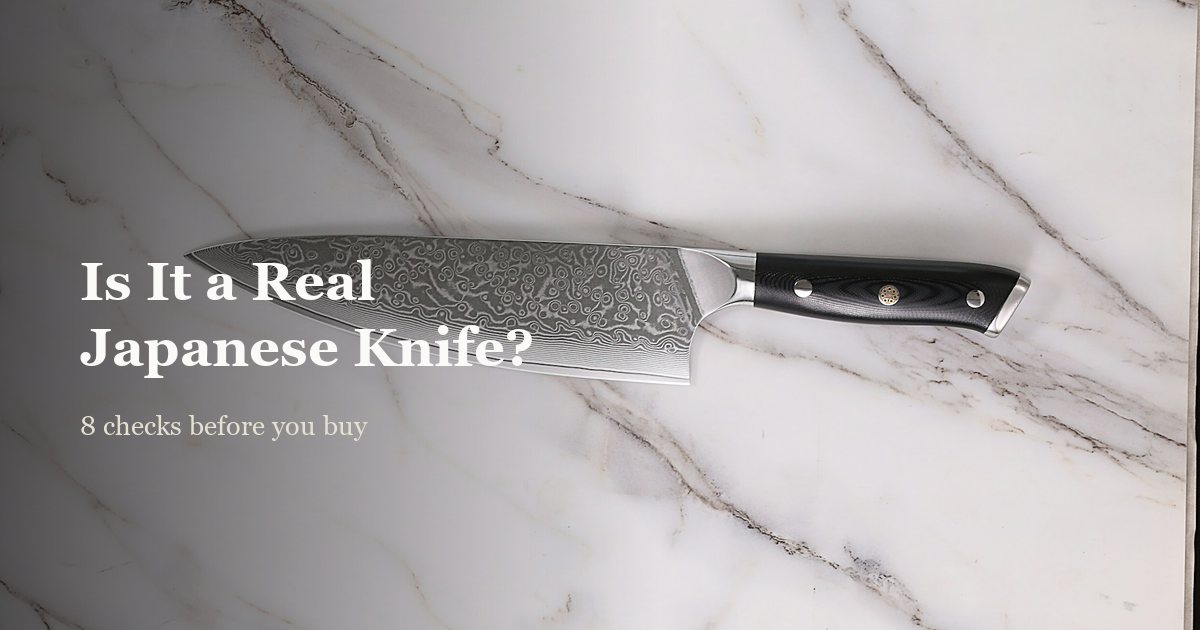
Quick answer: check the listing’s Country of Origin field, look for a named manufacturer and city (not just “Japanese steel”), confirm the steel type is specific (VG10, white/blue carbon steel — not just “premium”), and see whether the brand is also sold by a dedicated knife retailer. If a listing fails more than one or two of these, treat it with caution. Full checklist below.
Some of the shops we link to are partners who may pay us when you buy through them. This doesn't change which pieces we recommend. How this works.
1. Check the Country of Origin Field
Amazon requires sellers to disclose a country of origin on most kitchen goods, usually in the product details section below the main description. This is the single fastest check: a knife marketed with Japanese aesthetics but listing China, Vietnam, or no country at all is telling you directly, you just have to scroll to find it. Our guide to brands reported to mislabel their origin covers several specific examples where the listing itself discloses a non-Japanese origin.
2. Look for a Named Manufacturer, Not Just “Japanese Steel”
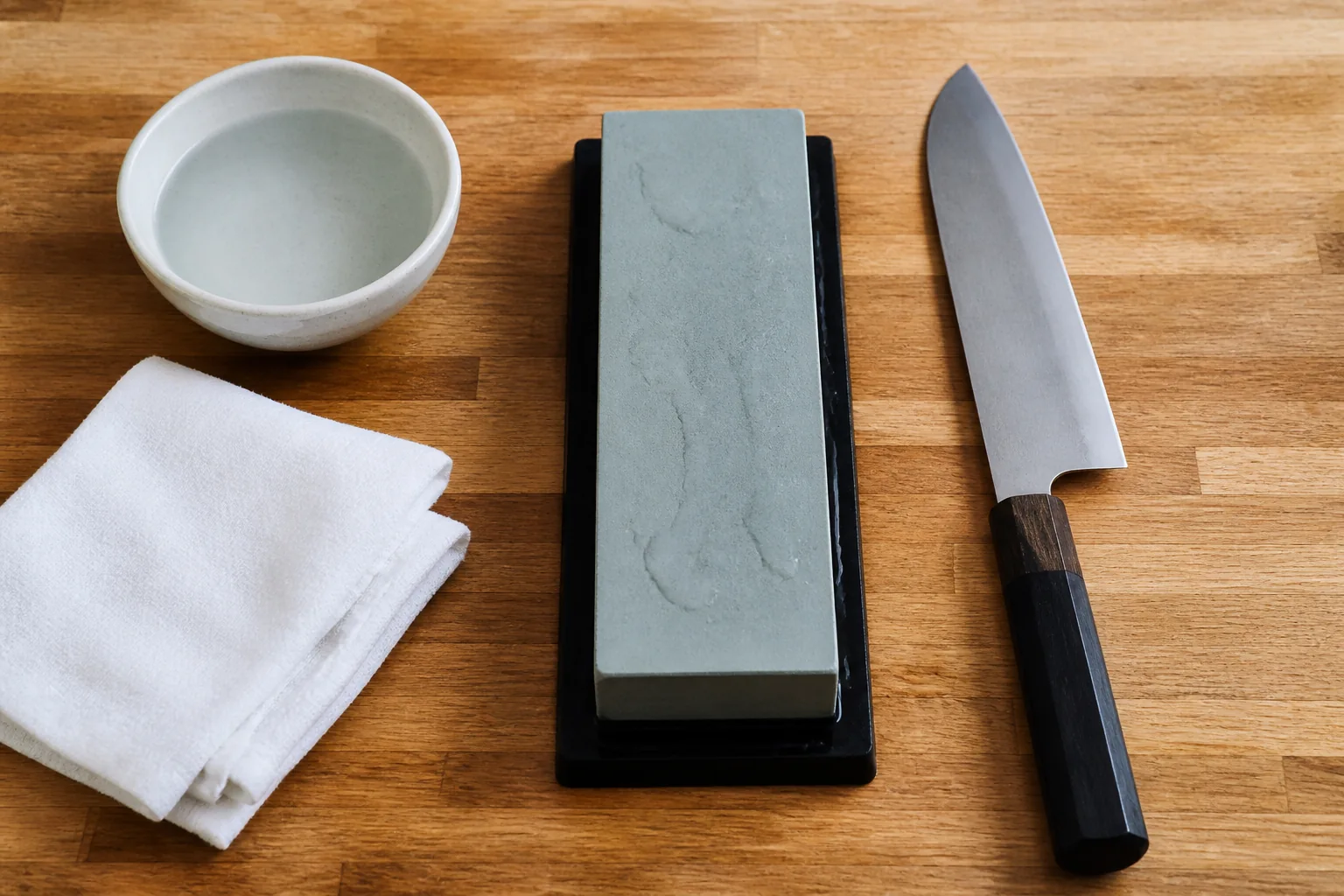
Real Japanese cutlery brands name an actual company: Tojiro, Kai Corporation (Shun), Yoshikin, Fujitora. A listing that only ever says “Japanese steel” or “Japan-inspired” without naming who actually makes the knife is worth a second look — legitimate makers aren’t shy about naming themselves.
3. Look for a Named City or Region
Established Japanese knife-making centers show up by name in genuine listings and brand histories: Seki (Gifu, Kai/Shun’s home), Sakai (Osaka, historically tied to sword- and knife-making), Tsubame-Sanjo (Niigata, metalwork), and Echizen (Fukui). A brand that can’t point to an actual production region — only a vague “Japan” — is a softer version of the same red flag as a missing country of origin.
4. Check for an Etched Maker’s Mark
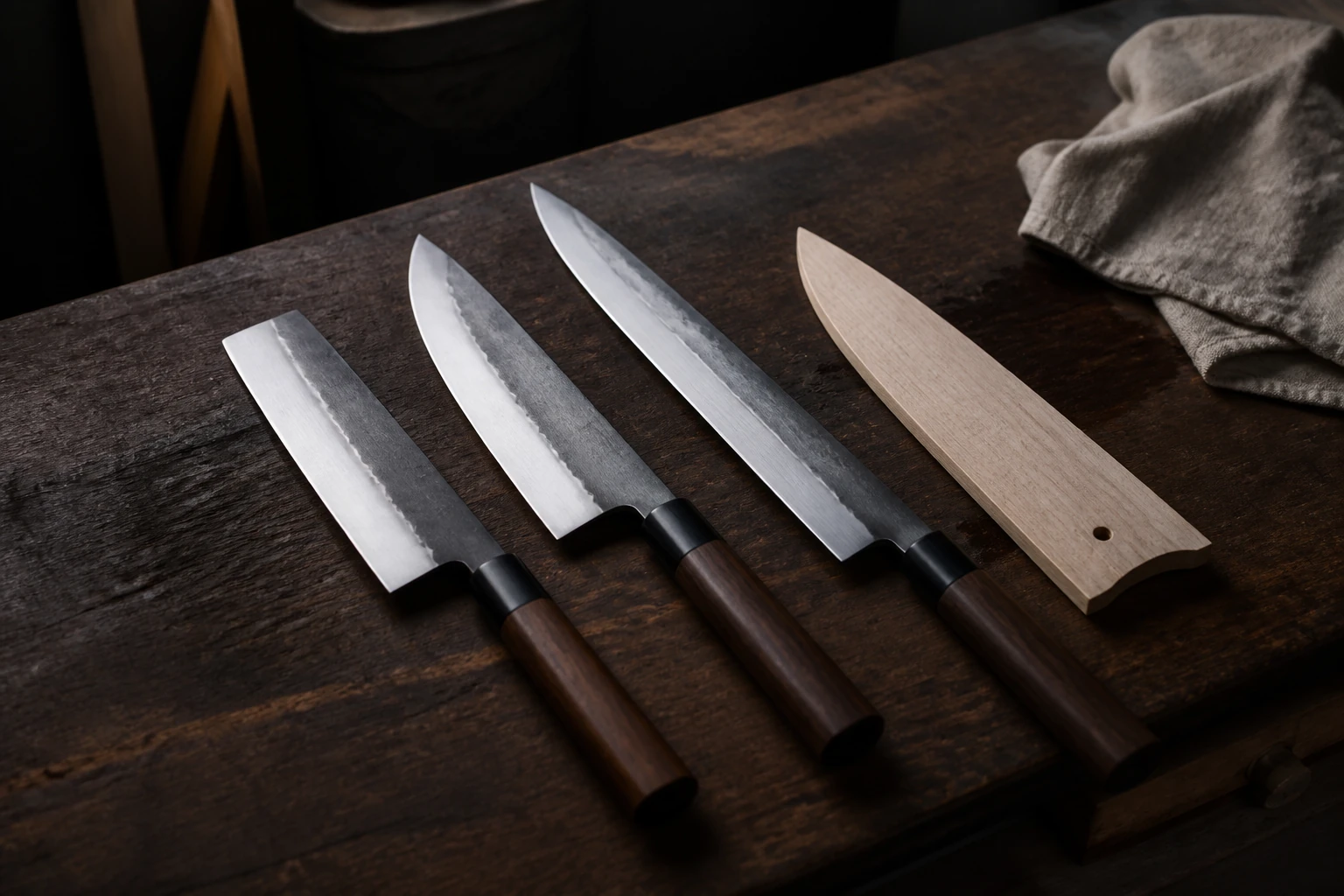
Genuine Japanese knives are frequently etched or stamped with the maker’s name, often in kanji, directly on the blade. It’s a small detail, but it’s one that’s expensive and pointless to fake convincingly on a mass-produced import — it’s a sign someone specific is standing behind the knife.
5. Confirm the Steel Type Is Specific
“Premium steel” or “Japanese steel” without a name is vague by design. Real listings name the actual steel: VG10, AUS-8, white steel (shirogami), blue steel (aogami), or a named Damascus core. If a listing leans hard on “Damascus” pattern without saying what’s actually inside the cladding, that’s worth noting too — Damascus refers to a surface pattern, not a steel grade, and some genuine mid-tier knives don’t disclose the core steel either, so this check works best combined with the others rather than alone.
6. See If It’s Sold at a Dedicated Knife Retailer
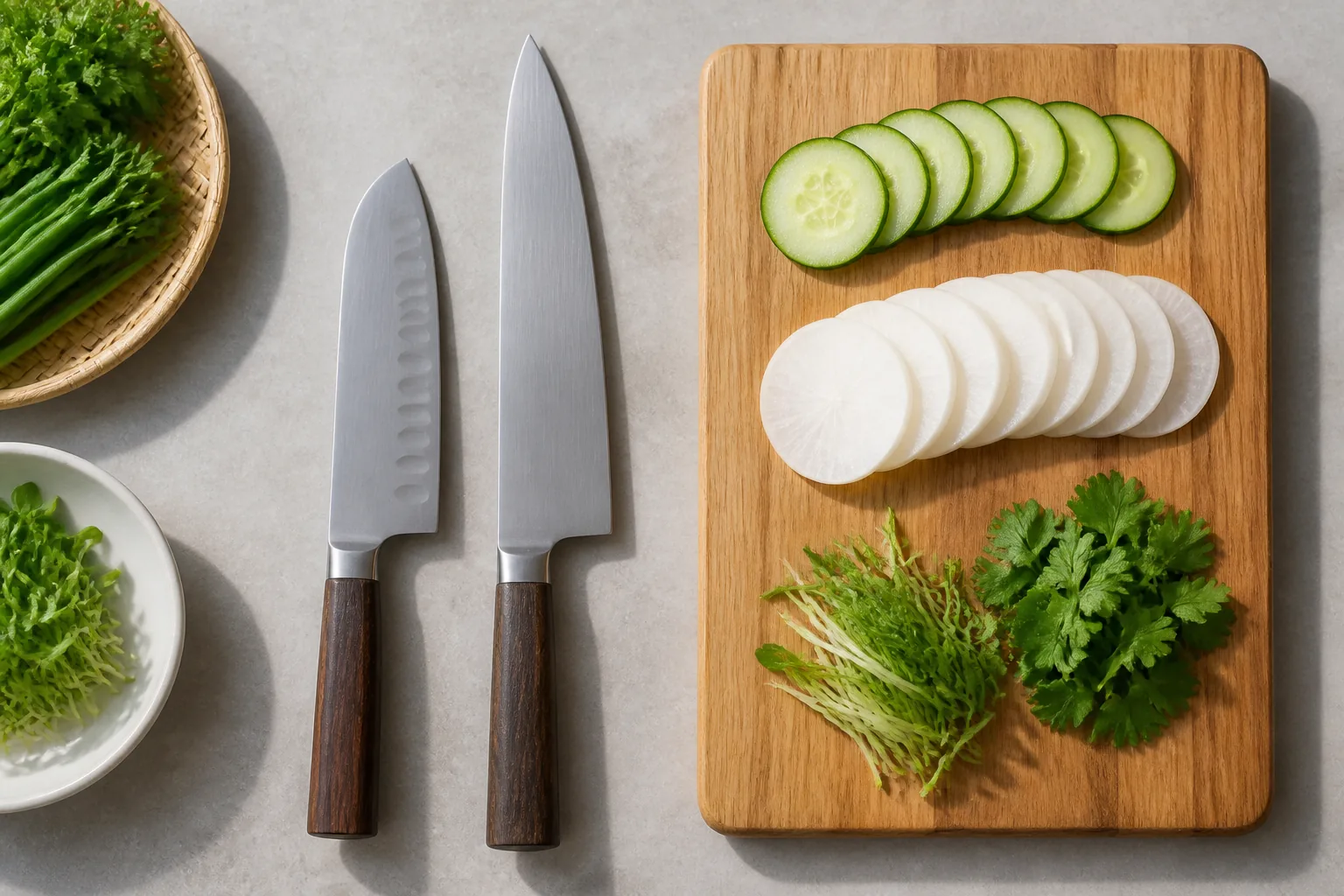
Established Japanese brands are usually stocked by specialty retailers in addition to Amazon — Chef Knives To Go, Knifewear, Cutlery and More, or Hocho Knife. If a brand’s presence begins and ends with an Amazon storefront (or a standalone Shopify site with no other retail footprint), that’s a pattern worth being aware of, not a guarantee of anything on its own.
7. Be Wary of Permanent “Discounts”
A knife that’s always 50–70% off isn’t really being discounted — that’s just the sticker price built with a fake anchor. It’s not proof of anything by itself, but combined with the other checks it’s a common feature of the mislabeled-origin listings we found in our brand research.
8. Check Whether the Name Echoes a Real Brand
A few listings use names close enough to an established Japanese brand to borrow its credibility without directly claiming it — our research turned up one example using a near-identical name to a real, well-known maker. If a brand name looks familiar, search it directly rather than assuming the listing is who it sounds like.
9. Check the Brand’s Founding Claim Against Its Actual Domain Age
Some brands’ “From the brand” story on Amazon states a founding year decades before the company could plausibly have existed online — Huusk’s listing says “Since 1994,” but a WHOIS lookup on huusk.com shows the domain was only registered in October 2015. This check takes under a minute: search “[brand name].com whois” or use a lookup tool directly, and compare the result against whatever founding year the brand claims. A large gap doesn’t prove the products are bad, but it’s a direct signal the brand’s own marketing isn’t being straight with you about its history.
Three Knives That Pass All Nine Checks
If you want a shortcut, all three of these name their manufacturer, city, and steel type directly, and are sold at more than just an Amazon storefront:
- Fujitora Santoku (FU-503) — cobalt-alloy steel core, “Made in Japan” stated directly on the listing.

Fujitora Santoku 6.7" (FU-503)
Cobalt alloy steel, made in Japan. 4.6★ (11 ratings).
- Shun Classic Santoku — Kai Corporation, manufactured in Seki, Gifu, VG-MAX steel core named specifically.

Shun Classic 7" Hollow Ground Santoku
VG-MAX steel core, made in Seki, Gifu. 4.7★ (803 ratings).
- Sakai Takayuki TUS Steel Santoku — made by Aoki Hamono Co., Ltd. in Sakai City, TUS high-carbon stainless steel named directly, “MADE IN JAPAN” etched on the blade itself. Bought directly from Hocho Knife, a specialty Japanese knife retailer, rather than Amazon — a direct example of check #6 below.

Sakai Takayuki TUS Steel Santoku 180mm
Made by Aoki Hamono in Sakai City, Japan. 5.0★ (3 ratings).
See our full santoku knife roundup for more verified picks across a range of budgets.
FAQ
Is any one of these checks enough on its own? No — treat them as a combined picture rather than a single test. A missing country-of-origin field alone might just be a sloppy listing; several of these red flags stacked together is the real signal.
Does failing one check always mean a knife is mislabeled? Not necessarily. Some genuinely Japanese-made knives don’t disclose core steel grade on the listing, for instance. That’s why this is a checklist to weigh, not a single pass/fail test.
Where can I see specific brands that fail these checks? Our guide to brands reported to mislabel their origin documents eight specific examples with sourced evidence for each.
Final Thoughts
None of these checks require special expertise — they’re all things you can verify in a couple of minutes on the product page itself. Run through them before buying, and when in doubt, cross-reference the brand at a dedicated knife retailer rather than relying on Amazon alone.
This is the knife-specific version of a pattern that repeats across every category we cover — see our cross-category guide to spotting Japanese craft knockoffs if you’re also shopping for ceramics, teapots, or lacquerware.