Some of the shops we link to are partners who may pay us when you buy through them. This doesn't change which pieces we recommend. How this works.
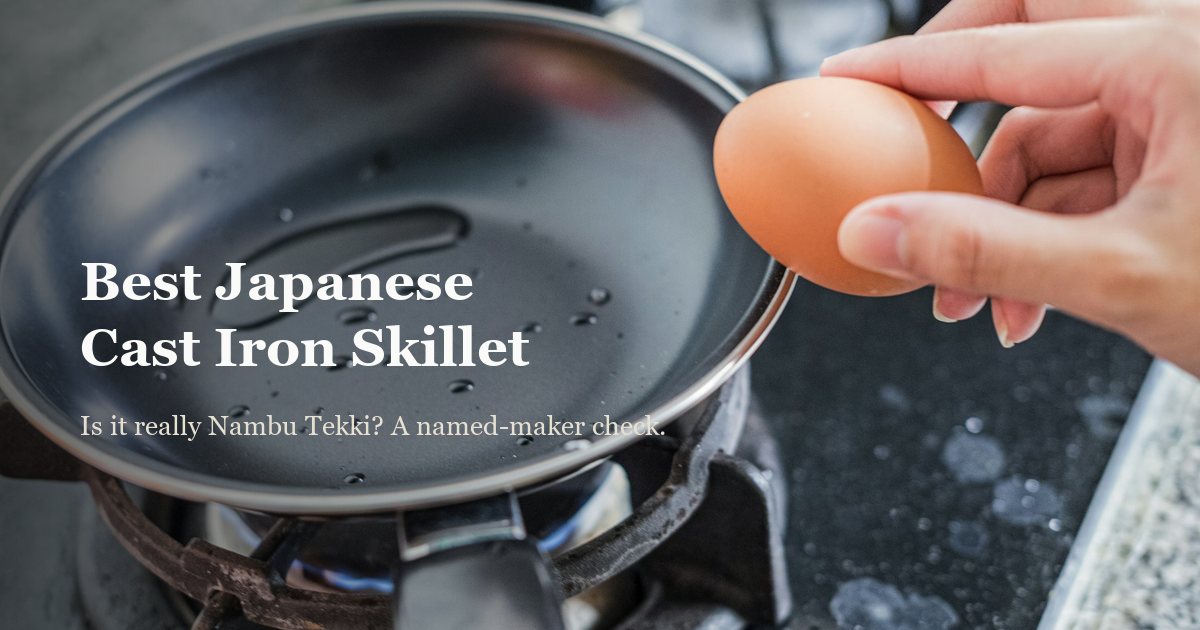
"Nambu Tekki" (南部鉄器) names a cast-iron tradition from Morioka and Mizusawa in Iwate Prefecture, not a single company, and the name itself carries less legal weight abroad than you'd expect: a Chinese court handed the trademark to a third party in 2018 after an eight-year dispute. The name alone doesn't prove a pan is genuine. What does is a named manufacturer with a real history, like Iwachu's cast iron tamagoyaki pan, founded in Morioka in 1902, stated directly in the listing rather than implied by the word "Nambu."
Nambu Tekki Isn’t a Company, and the Name Isn’t Locked Down Abroad
Nambu ironware is a genuine regional craft, cast in sand molds around Morioka and Mizusawa using techniques that trace back roughly 400 years, and it earned Japan’s first-ever national Traditional Craft Product designation for ironware in 1975. That history is real and independently documented. What it isn’t is a single trademarked brand the way, say, Le Creuset is: “Nambu Tekki” is a craft name that multiple ironworks in the region can legitimately use for pieces that meet the tradition’s standards.
That distinction matters more than it sounds, because the name has had real trouble holding up outside Japan. According to a report on the dispute, the Nambu Tekki Cooperatives Federation of Iwate lost an eight-year court battle in China in 2018, and the right to use the name there now belongs to a third party unconnected to the original producers. Genuine Japanese ironworks can no longer export under their own name into that market, and the report notes the predictable result: mass-produced pieces marketed as “Japanese Nambu Tekki” without any real connection to Iwate. (Source: Domo Communications.)
None of that means every skillet labeled “Nambu” on Amazon is fake. It means the label by itself isn’t proof of anything, in the same way “Japanese-style” isn’t proof on a lacquer bowl or a kutani plate. What’s verifiable is a named manufacturer with an independent history, a stated country of origin in the listing’s actual product details rather than just the title, and, ideally, a maker whose name shows up in independent write-ups of the craft, not only in its own Amazon copy.
Two Shapes, Not One “Skillet”
Search “Japanese cast iron skillet” and most of what actually ships to the US isn’t a round frying pan. It’s an omelette pan, oval with a gently curved edge built for folding eggs, or a tamagoyaki pan, rectangular and built for rolling the layered omelette of the same name. True round Nambu skillets exist, but the round shape is the harder one to find in stock from a named maker at the moment we checked. We’re covering both shapes honestly rather than forcing a round-pan pick that isn’t reliably available, because a rectangular tamagoyaki pan from a real Iwate ironworks is a more useful purchase than a round pan from nobody in particular.
Comparison at a Glance
Checked against current Amazon.com listings on September 23, 2026. Prices are converted from Amazon’s yen-denominated listing at the time of research and will vary by retailer.
Iwachu Iron Tamagoyaki Omelette Pan
Iwachu is one of the most-established names in Nambu ironware, tracing back to 1902 in Morioka, and its tamagoyaki pan is the highest-rated cast iron piece from the brand we checked: 4.8 out of 5 across 726 ratings, with buyers specifically praising the non-stick behavior that a well-seasoned cast surface develops over time. The listing states the pan is made by Iwachu directly, rather than leaning on “Nambu Tekki” as a stand-alone claim, which is the distinction the trademark situation above makes worth checking for.
Pros:
- 726 ratings at 4.8 stars, the strongest review base of any cast iron piece we checked from this brand
- Named manufacturer (Iwachu) stated directly, not just the regional craft name
- Rectangular shape is the correct tool if what you actually want is tamagoyaki, not a general frying pan
Cons:
- Not a round skillet; if that’s specifically what you’re after, see the omelette pan below or the sizing note further down
- Cast iron needs the same seasoning and dry-immediately care as any bare iron pan, not a wipe-and-done nonstick surface
- Wood handle keeps it off the stovetop for oven finishing the way an all-metal skillet would allow

Iwachu Iron Tamagoyaki Omelette Pan, Black
Cast iron, made by Iwachu (Morioka, since 1902). Rectangular tamagoyaki shape.
Iwachu Iron Omelette Pan, Medium
If you want something closer to a general-purpose skillet, Iwachu’s oval omelette pan is the closer match: an 8.5” diameter with a curved edge meant for folding an omelette rather than rolling one, and it’s a genuine frying pan you can use beyond eggs. It carries an Amazon’s Choice badge, 4.6 stars across 298 ratings, and states “Made in Japan” directly in its structured product details rather than only in marketing copy. Customer feedback specifically calls out that eggs release cleanly once the pan is seasoned, alongside some split opinion on whether the interior finish is fully smooth out of the box, worth knowing since cast iron generally improves with use rather than arriving perfect.
Pros:
- “Made in Japan” stated directly in the listing’s structured details, not just the title
- Amazon’s Choice with a solid 4.6-star average across 298 ratings
- Curved oval shape works as a general frying pan, not strictly an egg-only tool
Cons:
- Some reviewers note the interior texture is slightly rougher than a fully polished Western skillet before it’s seasoned
- Still not a round skillet in the traditional sense, closer to an oval frying pan
- Cast iron care requirements (dry immediately, no soap-heavy scrubbing) apply here too

Iwachu Iron Omelette Pan, Medium
Cast iron, 8.5" diameter, Made in Japan. Oval frying-pan shape.
What About a True Round Skillet?
Iwachu does make round frying pans under the Nambu ironware name in several sizes, and you’ll find them listed on Amazon.com. Availability shifts often enough that we’re not linking a specific listing here: at the time we checked, the round pans we found were either sold at a size that ships from a Japan-based seller with import fees added, or temporarily out of stock. If you specifically want a round skillet rather than the oval or rectangular pans above, search “Iwachu frying pan Nambu Ironware” directly on Amazon and apply the same check this whole article is built around: a stated country of origin and a named manufacturer, not just the word “Nambu” in the title, and be prepared for pricing or shipping that looks different from a standard domestic Amazon listing.
Where Generic “Nambu” Listings Get Murky
Search “cast iron skillet made in Japan” and alongside Iwachu’s listings, you’ll find a scatter of unbranded pieces with generic titles, no stated manufacturer, and only a handful of reviews, sometimes as few as two. These aren’t necessarily fake; a small import lot can be perfectly real cast iron cookware. But given what happened to the Nambu Tekki trademark in China, a listing that leans on the regional craft name alone, with no company behind it you can look up, is exactly the situation where you can’t independently verify anything beyond “the seller says so.” That’s a materially weaker claim than Iwachu’s, where the company’s own 100-plus-year history is documented outside of its own Amazon listings.
Caring for a Cast Iron Skillet or Omelette Pan
Nambu ironware ships with a light protective coating and needs seasoning before regular use, the same as any bare cast iron pan: a thin layer of oil, heated until it polymerizes into a coating that builds up over repeated use. After cooking, the standard advice from Iwachu and other Japanese ironworks is to skip soap-heavy scrubbing, rinse with hot water and a stiff brush, dry immediately over residual heat rather than air-drying, and finish with a light wipe of oil. Skipping the immediate-dry step is the single most common way a cast iron pan rusts, since Nambu ironware doesn’t carry the enamel lining a tetsubin kettle sometimes does; if you want a kettle instead of cookware, see our tetsubin buying guide for that separate check.
Which One Should You Buy?
- You want to make actual tamagoyaki, or serve it in a bento: get the Iwachu Tamagoyaki Omelette Pan. The rectangular shape is built for the rolled-omelette technique specifically.
- You want a general-purpose frying pan that also handles eggs well: get the Iwachu Omelette Pan, Medium. It’s the closer match to a standard skillet of the two.
- You specifically want a round skillet: search Iwachu’s own round frying pan listings directly rather than a generic “Nambu” listing with no named maker, and double-check shipping and import terms before buying.
FAQ
Is “Nambu Tekki” a brand or a place name? Neither, exactly. It’s a craft designation for cast ironware from the Morioka and Mizusawa areas of Iwate Prefecture, made by any of several independent ironworks that follow the tradition, not a single company’s trademark. Japan granted it Traditional Craft Product status in 1975, the first ironware to receive that designation.
If a listing says “Nambu Tekki,” is it automatically fake? No. Genuine Nambu ironware from real Iwate manufacturers is sold under that name all the time. The point isn’t that the name is meaningless, it’s that the name alone, outside Japan, doesn’t carry the legal protection you’d assume, so it’s worth checking for a named company behind the listing rather than treating “Nambu Tekki” in the title as sufficient proof by itself.
What actually happened with the trademark in China? A Chinese court awarded rights to the “Nambu Tekki” name in China to a third party unconnected to the original Iwate producers, after the Nambu Tekki Cooperatives Federation fought the case for eight years and lost, as reported in 2018. It’s specific to the Chinese market, but it illustrates why the name by itself isn’t a reliable authenticity marker anywhere outside Japan.
Do I need to season a Nambu ironware pan before first use? Yes, the same as any bare cast iron pan. Both Iwachu pans above ship with a light protective coating rather than being pre-seasoned to a fully nonstick state, and the surface improves with oiling and use over the first several cooks.
Final Thoughts
The word “Nambu” tells you a pan claims to come from a specific ironworking tradition in Iwate Prefecture. It doesn’t tell you which of the many ironworks made it, and after 2018, it doesn’t even guarantee legal protection for producers outside Japan. What tells you something is a named company with a real, checkable history, which is why both picks above come from Iwachu rather than an unbranded “Nambu Tekki” listing. For the kettle side of Nambu ironware, see our tetsubin buying guide, and for the wider pattern this trademark issue fits into, see our buyer’s checklist for real vs. knockoff Japanese craft.