Some of the shops we link to are partners who may pay us when you buy through them. This doesn't change which pieces we recommend. How this works.
A genuine tetsubin is bare, uncoated cast iron built for direct heat, not an enamel-lined pot with "stovetop safe" in the title. The Iwachu 11884 (~$209) and the ITCHU-DO HAKEME 1000ml (~$189) are both made in Japan, both explicitly say "no enamel," and both are the real thing. Most of what shows up first when you search "japanese tetsubin" is not.
Comparison at a Glance
| Iwachu 11884 | ITCHU-DO HAKEME 1000ml | |
|---|---|---|
| Maker | Iwachu (Morioka, Iwate) | Itchu-do (壱鋳堂) |
| Capacity | 0.8 L (27 fl oz) | 1.0 L (34 fl oz, 1.1 L full) |
| Interior | Bare cast iron, no enamel | Bare cast iron, “Origin: Made in Japan” on listing |
| Price | ~$209 | ~$189 |
| Rating | 4.4★ (258 ratings) | 4.4★ (66 ratings) |
| Stove use | Yes, direct gas/charcoal flame | Yes, direct gas/charcoal flame |
| Availability | Usually ships in 5–6 days | Sold through marketplace sellers, not a one-click Buy Box |
Checked against current Amazon.com listings and product specs on August 30, 2026.
What Actually Makes a Tetsubin a Tetsubin
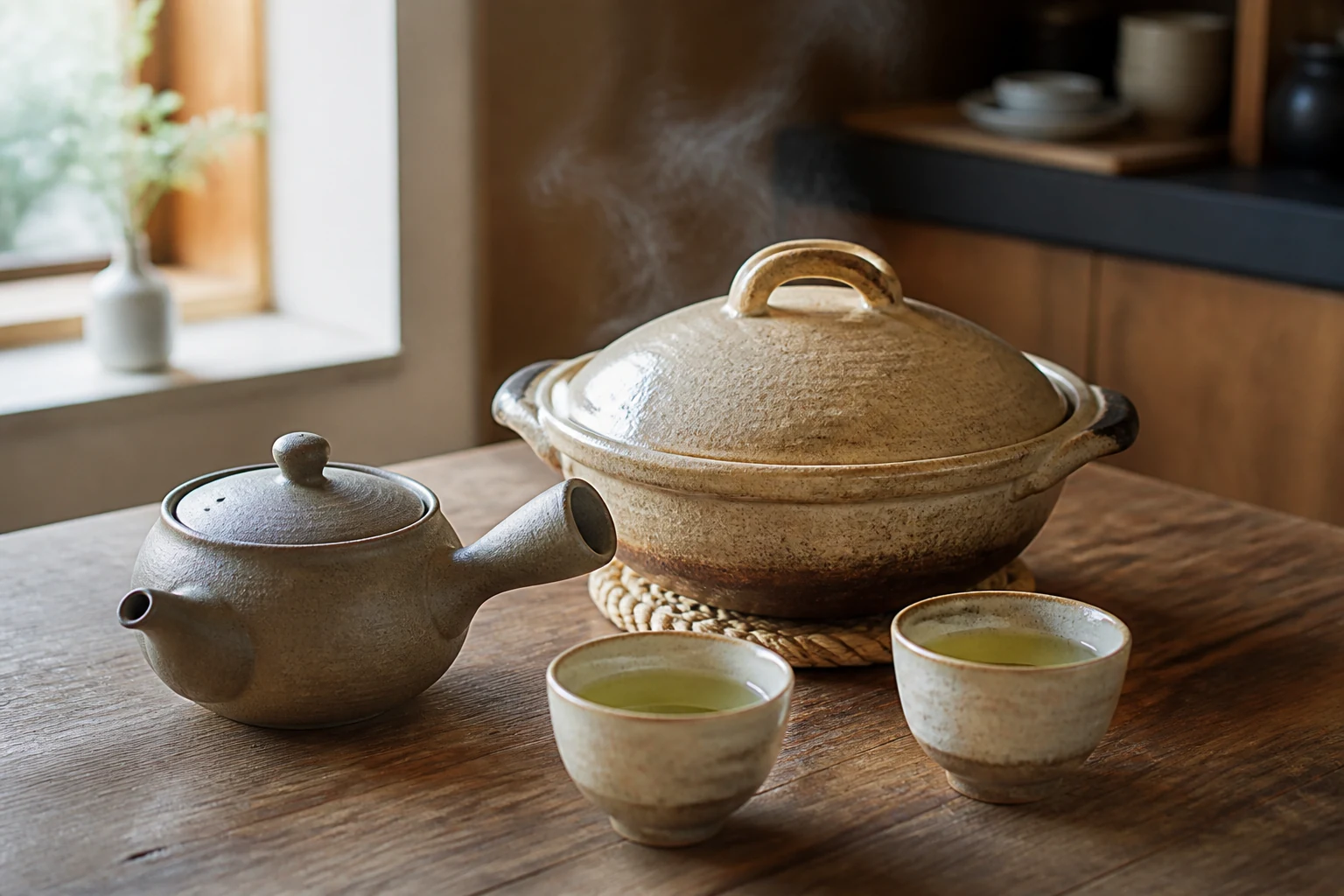
A tetsubin is a cast-iron kettle with a bare, uncoated interior, meant to sit directly on a flame and boil water. That’s the whole definition, and it’s also exactly where the confusion starts, because Amazon’s “japanese tetsubin” search results are dominated by a different object: enamel-lined cast-iron teapots, more precisely called tetsukyusu, which are built to steep tea after the water has already been boiled somewhere else. We covered the mechanics of that mix-up in detail in our tetsubin vs. cast-iron teapot guide: the short version is that the enamel coating that makes a tetsukyusu safe for holding tea is the same coating that cracks if you put it over direct heat.
This article has a narrower job: once you know you want a real, direct-fire tetsubin, which specific listings are actually made in Japan, and which are imports borrowing the word.
Nambu Tekki, and Why the Name Alone Isn’t Proof
The style of ironware behind most genuine tetsubin is Nambu Tekki (南部鉄器), centered on Morioka and Mizusawa in Iwate Prefecture, where casting techniques go back roughly 400 years to iron workers brought in by the local domain. Nambu Tekki was the first traditional craft in Japan to receive the national government’s dentō kōgeihin (Traditional Craft) designation, on February 17, 1975, from what’s now the Ministry of Economy, Trade and Industry, a status confirmed by multiple independent Japanese craft-industry sources, not just retailer marketing copy.
Here’s the catch worth knowing before you shop: the word “Nambu Tekki” itself isn’t a tightly controlled term in every overseas market, and generic “nambu-style” or “Japanese-style” cast iron sold outside Japan doesn’t always come from Iwate at all. That means the craft name on its own isn’t the proof point. What matters is whether a specific listing names an actual maker (Iwachu, Itchu-do, Ikenaga Ironworks, and a handful of others are genuine Iwate ironworks) and states a country of origin, not just a craft-style name in the title.
Iwachu 11884 Iron Bottle Teapot
Iwachu’s 11884 Iron Bottle Teapot is listed by the manufacturer as “No Enamel, Direct Fire,” part of Iwachu’s Nambu ironware line, made in Japan. Iwachu was founded in 1902 in Morioka and is the name most Japanese-tea retailers point to first when asked which tetsubin brand is genuinely from Iwate. It’s an Amazon’s Choice pick with a 4.4-star rating across 258 reviews, and ships with a stainless tea strainer for pouring (not for steeping tea inside the bare iron).
Pros:
- Bare cast-iron interior, explicitly rated for direct gas or charcoal heat
- Made in Japan by a manufacturer with a documented 120+ year history in Nambu ironware
- Highest review count of any genuine tetsubin currently on Amazon.com, which makes the 4.4-star average easier to trust
Cons:
- No built-in strainer basket, because it isn’t built to hold tea leaves
- Needs to be dried immediately after every use, or it rusts
- Meaningfully more expensive than the enamel-lined imports that dominate search results, and that price gap is itself part of how to tell the two apart
Bottom line: the safest first tetsubin to buy if you want one name you can verify without digging.

Iwachu 11884 Iron Bottle Teapot
No enamel, direct-fire Nambu ironware, made in Japan since 1902. 4.4★ (258 ratings).
ITCHU-DO HAKEME 1000ml
The ITCHU-DO HAKEME Nambu Tetsubin, 1000ml is made by Itchu-do (壱鋳堂), a separate Iwate ironworks from Iwachu, with its Amazon listing stating “Origin: Made in Japan” directly in the product details rather than only in the title. At 1.8kg for a 1-liter capacity, it’s a larger pour than the Iwachu pick above, with a 4.4-star rating across 66 reviews. Worth flagging: it doesn’t currently have a standard one-click Buy Box, so you’ll see “See All Buying Options” and choose from several marketplace sellers rather than adding it straight to your cart. Check the seller’s shipping estimate before ordering if timing matters.
Pros:
- Second, independently verifiable Iwate maker, useful if you specifically don’t want an Iwachu piece
- Origin stated in the structured product details, not just marketing text
- Foldable handle, which makes storage easier than a fixed-handle kettle
Cons:
- No standard Buy Box; you’re buying through a marketplace seller listing
- Smaller review sample than the Iwachu pick
- Also needs the same dry-immediately-after-use care as any bare-iron piece
Bottom line: the pick if you want a second confirmed-genuine option, or the Iwachu listing is temporarily out of stock.

ITCHU-DO HAKEME Nambu Tetsubin, 1000ml
"Origin: Made in Japan" stated directly in the product details. 4.4★ (66 ratings).
What to Avoid: The “Stovetop Safe, Enameled Interior” Combination
Search “japanese tetsubin” on Amazon and the top results skew heavily toward brands like suyika, Sotya, and similar names: none of them Japanese, all enamel-lined, several marketed with “Stovetop Safe” printed right next to “Enameled Interior” in the same listing title. That’s not a small contradiction. Every independent tea retailer and craft source we checked for the companion piece on this site is specific that an enamel coating and repeated direct-flame heat don’t mix well over time. The coating is what makes a tetsukyusu safe to hold tea in, and it’s also what a real flame eventually damages.
None of this means those products are scams; a $30 enamel-lined teapot with a strainer basket is a perfectly normal way to steep loose-leaf tea, and several carry thousands of decent reviews for that specific job. The problem is buying one thinking it’s rated to boil water on your stove. If a listing pairs “tetsubin” in the title with “enameled interior” and “stovetop safe” in the same breath, read the full description before you buy. That’s the exact mismatch this article exists to flag.
How to Check a Listing Before You Buy
- Look for “no enamel” or “direct fire” in the product description, not just “tetsubin” in the title. Genuine sellers of the bare-iron version say so explicitly, because it’s the feature that justifies the price.
- Check the stated country of origin field, not just whether the title says “Japanese” or “Nambu.” A listing that names an actual company (Iwachu, Itchu-do, Ikenaga Ironworks) is a stronger signal than one that only uses the craft-style name.
- Treat a price well under roughly $130–150 as a flag, not a bargain. Genuine Nambu Tekki tetsubin are hand-finished in small batches; a $30–40 “tetsubin” is very unlikely to be one, whatever the listing says.
- Weight is a rough tell, too. A real cast-iron tetsubin feels heavy for its size. A kettle that feels notably light is more likely thin-walled alloy than the iron a genuine piece is cast from.
Caring for a Bare-Iron Tetsubin
Dry it immediately after every use: pour out any remaining water and let residual stove heat finish drying the interior, rather than leaving it to air-dry on its own. Left wet, bare cast iron rusts within a day or two. With normal boil-and-dry use, the interior develops a dark mineral patina that ironware makers treat as a feature rather than a flaw, not the same thing as rust. Never use soap or an abrasive scrubber inside, never put it in a dishwasher, and don’t pour cold water into a kettle that’s still hot from the stove. The thermal shock can crack the iron.
Which One Should You Buy?
- You want the single most-reviewed, easiest-to-verify genuine option: the Iwachu 11884.
- You specifically want a second maker, or the Iwachu listing is out of stock: the ITCHU-DO HAKEME.
- You found a $30–40 “tetsubin” advertised as stovetop-safe with an enameled interior: it’s very likely a tetsukyusu, not a tetsubin. See our tetsubin vs. cast-iron teapot guide before buying it expecting to boil water in it.
- You actually want cookware, not a kettle: see our best Japanese cast iron skillet guide for the same real-maker check applied to Nambu-style frying and tamagoyaki pans.
FAQ
What’s the difference between a tetsubin and a “Japanese cast iron teapot”? “Tetsubin” specifically means a bare-iron kettle for boiling water on direct heat. Most listings using the broader phrase “Japanese cast iron teapot” are actually enamel-lined tetsukyusu, built for steeping tea rather than boiling water. See our full comparison for the mechanics of why that distinction matters.
Is Nambu Tekki a protected term, like Champagne or Parma ham? Within Japan it’s a nationally designated traditional craft (since 1975), but the term isn’t uniformly trademark-protected in every overseas market, which is part of why “Nambu-style” and “Japanese-style” cast iron of unclear origin circulates on marketplaces outside Japan. That’s exactly why this guide checks for a named maker and a stated country of origin, rather than relying on the craft name alone.
Can I use a genuine tetsubin on an induction cooktop? Not by default. A traditional direct-fire tetsubin is designed for gas or charcoal flame. Some manufacturers, including Iwachu, sell separate induction-compatible models as a distinct product line. Check the specific listing for “induction compatible” rather than assuming any tetsubin works on one.
Why are genuine tetsubin so much more expensive than the imports? Authentic pieces are still largely hand-finished in small batches using traditional sand or clay molds, which is significantly more labor-intensive than machine-stamped mass production. That labor cost is the main driver of the roughly 5x price gap between a $30 import and a $150–200 genuine piece, not simply a “Japan tax” on the name.
Will a genuine tetsubin rust if I’m not careful? Yes. Bare cast iron rusts if it’s left wet or stored damp. The fix is drying it immediately after each use, which is also what encourages the desirable mineral patina rather than ordinary rust.
Final Thoughts
The word “tetsubin” alone doesn’t tell you much on Amazon anymore. It’s been applied to everything from genuine 120-year-old Iwate ironworks pieces to $25 enamel-lined imports with no stated country of origin. The two checks that actually separate them are the same ones that work across this whole site: does the listing name a real maker and state Japan as the country of origin, and does the description explicitly say “no enamel” or “direct fire” rather than just putting “tetsubin” in the title. For the deeper mechanics of why enamel and direct heat don’t mix, see our tetsubin vs. cast-iron teapot guide, and for kyusu teapots specifically, our guide to telling whether a kyusu is actually made in Japan.