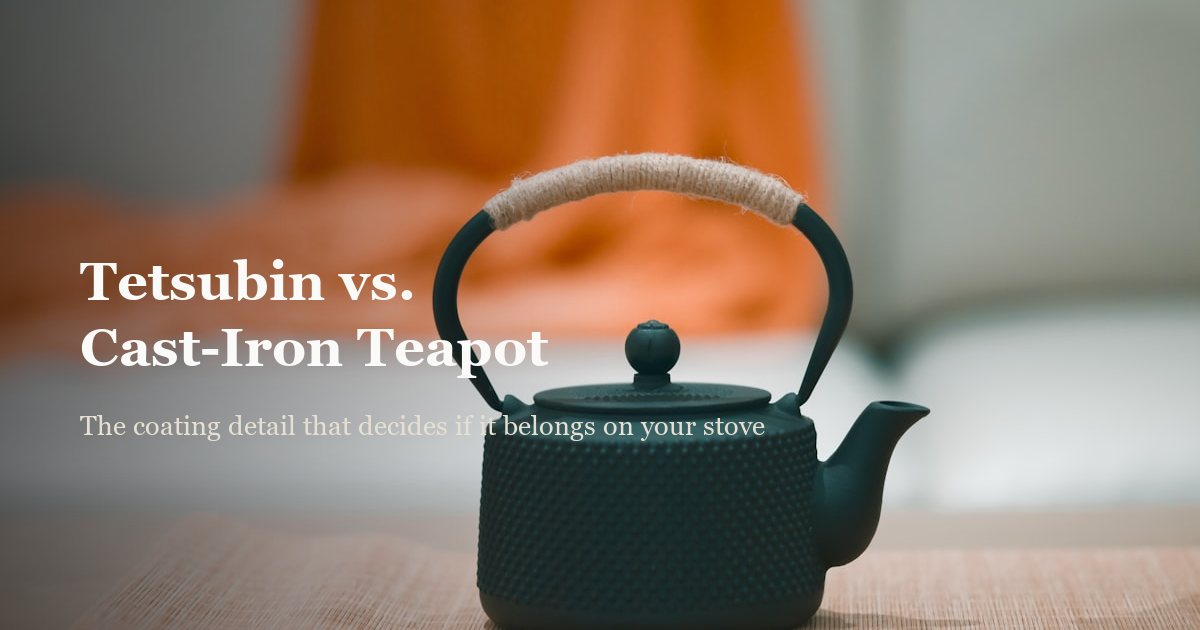
If the listing says "enameled interior," it's a cast-iron teapot for steeping tea, not a tetsubin for boiling water, whatever the title calls it. Put it on the stove and you'll damage the coating. A genuine tetsubin has a bare, uncoated iron interior built for direct flame and never touches loose tea leaves directly.
Some of the shops we link to are partners who may pay us when you buy through them. This doesn't change which pieces we recommend. How this works.
Comparison at a Glance
Checked against current Amazon.com listings and product specs on August 29, 2026.
Why the Same Word Covers Two Different Objects
A tetsubin is, strictly, a cast-iron kettle: you fill it with water and put it directly on a heat source, and its bare iron interior gradually develops a mineral layer that Japanese ironware makers treat as a feature, not a flaw (Japan Objects). The object that looks almost identical but has a glazed or enameled interior is, more precisely, a tetsukyusu, built for steeping tea rather than boiling water. Several independent tea retailers converge on the same distinction: the enamel-lined version “cannot be used to heat water because this would irremediably damage the enamel coating inside” (Nio Teas), and is meant to receive water that’s already been boiled somewhere else, not to sit on a burner itself (Japanese Taste).
In everyday English retail listings, “tetsubin” gets used for both, and Amazon search results are dominated by the enamel-lined kind. That’s not automatically a problem: a cast-iron teapot with a strainer basket is a perfectly normal way to steep loose-leaf tea. The problem is buying one thinking it’s rated for the stove, or buying a genuine bare-iron tetsubin and routinely leaving tea leaves steeping in it, which can accelerate rust on a surface that was never meant to hold anything but plain water.
Even Iwachu, the Morioka ironware maker most Japanese-tea retailers point to as the real thing, sells both types under “tetsubin” in its product names. Its own Amazon listing for the enamel-lined Hobnail model states plainly under “About this item”: “Coated interior to prevent rust. Not for use over an open flame.” One buyer review on that same listing makes the mix-up explicit: they’d assumed the pot was for boiling and had to learn from the packaging insert that the “Tsubasa” (their spelling of tetsubin) sold without a coating is the one for that job, while a coated pot like the one they bought is for pouring already-boiled water over tea instead.
The Amazon Search Result You’ll Actually See
Search “japanese tetsubin” on Amazon and the results skew heavily toward brands like suyika, YJX, and Sotya: none of them Japanese, all enamel-lined, and several marketed with the words “Stovetop Safe” printed right next to “Enameled Interior.” That combination is worth pausing on. The tea retailers cited above are specific that an enamel coating and direct stovetop heat don’t mix well over repeated use, regardless of what a given listing claims. It doesn’t necessarily mean every one of these products will fail on first use, but it does mean the “stovetop safe” claim on a $30 import isn’t backed by the same design logic as a $200 Iwachu tetsubin built without any coating at all.
Genuine Tetsubin (For Boiling)
Iwachu 11884 Iron Bottle Teapot, Type 7 New Arare is listed by the manufacturer as “No Enamel, Direct Fire,” made in Japan under Iwachu’s Nambu ironware line, with an 0.8-liter capacity. It’s an Amazon’s Choice pick holding a 4.4-star rating across 258 reviews. It ships with a stainless tea strainer accessory for pouring, not for steeping tea inside the bare iron itself.
Pros:
- Bare cast-iron interior, genuinely rated for direct gas or charcoal heat
- Made in Japan by a maker with over a century of Nambu ironware production
- Develops the mineral patina that’s part of the appeal for tetsubin collectors
Cons:
- No built-in strainer, because it isn’t meant to hold tea leaves
- Needs to be dried immediately after each use to avoid rust
- Meaningfully more expensive than the enamel-lined imports that dominate search results
Bottom line: the pick if you actually want to boil water on a bare-iron kettle in the traditional way.

Iwachu 11884 Iron Bottle Teapot
No enamel, direct-fire rated, made in Japan. 4.4★ (258 ratings).
Enamel-Lined Cast-Iron Teapot (For Steeping)
Iwachu 12302 Teapot, Type 5 Arare is the enameled version of the same maker’s lineup: the interior and underside of the lid are enamel-processed specifically so the pot can hold steeping tea without the bare iron reacting with it.
Pros:
- Made in Japan by the same manufacturer as the bare-iron option above
- Enamel coating means no rust risk from steeping tea directly in the pot
- Meaningfully cheaper than the direct-fire tetsubin
Cons:
- Not for the stove, full stop; boil water separately and pour it in
- Longer shipping window than the in-stock direct-fire model
- Small review sample on this specific listing; check current buyer feedback before ordering
Bottom line: the pick if what you actually want is a teapot for loose-leaf tea, not a water-boiling kettle.

Iwachu 12302 Teapot, Type 5 Arare
Enamel-lined interior for steeping tea, made in Japan.
Caring for Each Type
A bare-iron tetsubin rusts if it’s left wet, so the standard advice from ironware sellers is to empty it and let residual heat dry the interior after each use, never leave water sitting inside overnight. An enamel-lined pot doesn’t have that rust risk, but the enamel itself can chip if it’s dropped or scrubbed with anything abrasive, and once it chips the bare iron underneath is exposed. Neither type goes in a dishwasher.
Which One Should You Buy?
- You want to boil water the traditional way, on direct heat, and don’t mind a slower start each time: the bare-iron Iwachu 11884.
- You want a teapot that holds loose-leaf tea without rusting, and you’ll boil your water elsewhere first (kettle, stovetop, electric): the enamel-lined Iwachu Type 5 Arare.
- You saw a $30 “tetsubin” advertised as stovetop-safe with an enameled interior: read the listing twice. That combination is exactly the mismatch this article is about.
FAQ
Can I boil water directly in an enamel-lined cast-iron teapot? No. Every source we checked, including the manufacturer’s own product listing for the enamel-lined Iwachu model, states the coated interior isn’t rated for direct flame. Boil water separately and pour it in.
Will a genuine tetsubin rust? Yes, if it’s left wet. Bare cast iron develops a mineral patina with normal boil-and-dry use, which ironware makers treat as a feature, but standing water or damp storage causes ordinary rust rather than the desired patina.
Is “tetsukyusu” the same as “tetsubin”? Not precisely. Tea retailers use tetsukyusu to describe the enamel-lined, steeping-only version specifically, while tetsubin traditionally refers to the bare-iron kettle. In everyday retail listings, including some from Japanese manufacturers, the word “tetsubin” gets applied to both.
Are the cheaper “Japanese tetsubin” teapots on Amazon actually from Japan? Most of the ones dominating current search results are not. Brands like suyika, YJX, and Sotya don’t claim Japanese manufacture in their listings; they’re enamel-lined cast-iron teapots in a similar style, sold at a fraction of the price of a Japan-made piece.
Does it matter for taste which one I use? Mineral-rich water from a bare-iron tetsubin is sometimes described as tasting rounder or softer, though this is a matter of personal preference rather than a measurable claim we can verify. An enamel-lined pot doesn’t affect the water’s mineral content, since it never contacts boiling water directly.
Final Thoughts
The confusion here isn’t really Amazon’s fault or even most sellers’ fault; even Iwachu uses “tetsubin” as a product-line name for both the coated and uncoated versions. The fix is reading past the title to the spec line that says “enamel” or “no enamel,” because that one detail determines whether the pot belongs on your stovetop or next to your kettle. If you’ve confirmed you want the bare-iron, direct-fire kind, our roundup of authentic tetsubin kettles covers which specific listings are actually made in Japan. For the ceramic side of Japanese tea vessels, see our guide to telling whether a kyusu teapot is actually made in Japan.