Some of the shops we link to are partners who may pay us when you buy through them. This doesn't change which pieces we recommend. How this works.
For the cheapest genuinely Japan-made pick, get the JapanBargain Mino-yaki Sake Set (~$30, 4.8★ across 72 ratings, "Made in Japan" stated directly on the listing). For a proper named-kiln piece, the Bizan Kiln Sakura and Bird Kutani Sake Set (~$91) is real Kutani ware from a named kiln. "Sake set" itself is just a product category, not a protected term — a lot of the best-selling listings on Amazon for "Japanese Sake Set" never state a country of origin anywhere in the product details, no matter how traditional the pattern looks.
The 5 Picks
| Sake Set | Price | Ware | Why It Works |
|---|---|---|---|
| JapanBargain Mino-yaki (Amazon) | ~$30 | Mino ware, porcelain | Cheapest verified Made-in-Japan pick, 72 ratings |
| Bizan Kiln Sakura and Bird (Musubi Kiln) | ~$91 | Kutani ware, porcelain | Entry-level named kiln, hand-painted overglaze |
| Ginsai Camellia (Musubi Kiln) | ~$142 | Kutani ware, porcelain | Silver-leaf (ginsai) decoration, hand-wash only |
| Hidasuki Gourd-shaped (Musubi Kiln) | ~$197 | Bizen ware, stoneware | Unglazed, functionally different from the porcelain picks |
| Yazaemon Old Imari Sakura (Musubi Kiln) | ~$329 | Arita ware, porcelain | Premium pick, sometsuke underglaze + gold outlining |
Checked against current Amazon.com and Musubi Kiln listings on August 31, 2026.
“Sake Set” Describes a Function, Not an Origin
A sake set (tokkuri carafe plus guinomi or ochoko cups) is a shape and a use case, the same way “donabe” describes a clay pot and “tetsubin” describes an iron kettle — not a protected regional name like Kutani ware or Wakasa-nuri. Search “Japanese sake set” on Amazon and you’ll find listings with hundreds, sometimes thousands, of reviews that never mention a country of origin anywhere in the structured product details. One well-reviewed example, the D’Eco 5-Piece Porcelain Sake Set (204 ratings, 4.5★), calls itself “Traditional” in the title and lists nothing beyond “food grade porcelain” in its specs — no maker, no region, no country field filled in. That’s not necessarily dishonest; a lot of these are made overseas and priced accordingly, and nothing about that is a problem on its own. The problem is only when a shopper assumes “Japanese Sake Set” in a title is the same claim as “Made in Japan” in the details. It isn’t.
The picks below all name an actual origin: either a country-of-origin field that says Japan, or — for the Musubi Kiln pieces — a named kiln and a named regional ware tradition, which is a stronger and more specific claim than “Made in Japan” alone.
1. JapanBargain Mino-yaki Sake Set — Best Budget Pick
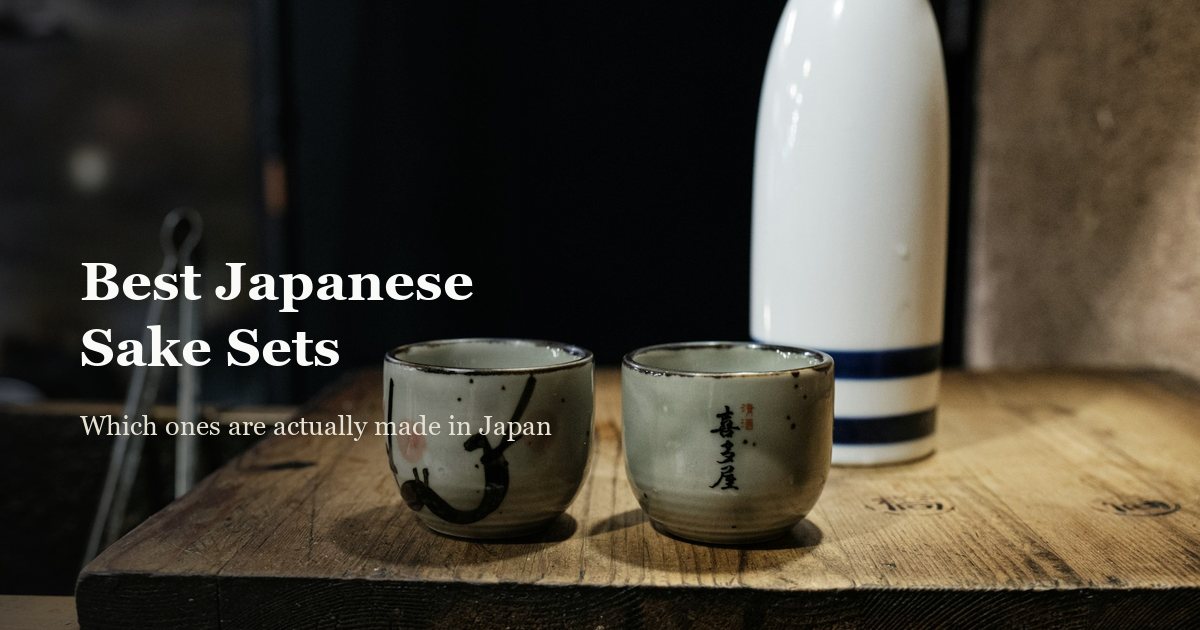
The JapanBargain 4682 Porcelain Sake Set is a five-piece set (one tokkuri, four ochoko cups) that states “Made in Japan” directly in its Amazon listing and names the specific technique: Mino-yaki, the porcelain tradition centered in Gifu Prefecture. It’s rated 4.8 stars across 72 ratings, priced around $30, and both microwave- and dishwasher-safe.
Pros:
- Named ware (Mino-yaki) and Made in Japan both stated in the listing, not just implied by the brand name
- 72 ratings is a real sample size for a sake set at this price point
- Microwave- and dishwasher-safe, no hand-wash caveat
Cons:
- JapanBargain is a general import-and-resale storefront, not a named kiln or artisan the way the Musubi Kiln picks below are
- Only 9 left in stock at the time of checking; availability on specific color variants shifts
- Decorative pattern (white-and-blue) rather than a hand-painted regional motif
Bottom line: the pick if you want one verifiably Japan-made set without spending more than a takeout dinner.

JapanBargain 4682 Mino-yaki Sake Set
5-piece set, Made in Japan, Mino-yaki porcelain. 4.8★ (72 ratings).
2. Bizan Kiln Sakura and Bird Kutani Sake Set — Best Entry-Level Named Kiln
The Sakura and Bird Sake Set from Bizan Kiln is genuine Kutani ware — porcelain from Ishikawa Prefecture, decorated with hand-applied overglaze pigment (the same gosai-family technique covered in our Kutani ware history). This set pairs a tokkuri carafe with two sakura-and-bird motif cups, priced around $91, with more than 10 units in stock as of this writing.
Pros:
- Named kiln (Bizan) and named ware (Kutani), not a generic “Japanese-style” listing
- Hand-painted overglaze, with the raised, slightly textured brushwork visible on close inspection
- In stock in quantity
Cons:
- Musubi Kiln isn’t yet a partner shop for this site, so this is a plain (non-tracked) link
- The product page’s own description calls the texture “stoneware” in one line despite listing the piece as porcelain elsewhere — a copy inconsistency worth knowing about, not a material problem with the piece itself
- No metallic decoration, so it’s dishwasher-friendly, but Musubi Kiln doesn’t state that explicitly on this listing — hand-wash to be safe
Bottom line: the easiest way to own a real, named-kiln Kutani sake set without paying for hand-applied metal leaf.
3. Ginsai Camellia Sake Set — Best Mid-Range Pick
The Ginsai Camellia Sake Set is also Kutani ware, but decorated using ginsai — silver leaf applied under a five-color glaze, which oxidizes slowly over time into a subdued, gradient tone rather than staying shiny. It’s priced around $142, with more than 10 units in stock.
Pros:
- Named technique (ginsai) with a documented process, not just “silver-look” glaze
- The gradual oxidation is a known, expected part of how the piece ages, not a defect
- In stock in quantity
Cons:
- Metallic leaf decoration means this should be hand-washed, following the same caution we apply to gold- and silver-decorated Kutani pieces in our Kutani ware guide — Musubi Kiln’s listing doesn’t spell this out, so treat it as a default rather than something confirmed on the product page
- Same plain-link, pending-approval caveat as the other Musubi Kiln picks
- Meaningfully pricier than the entry-level Kutani pick above for what is still a two-cup set
Bottom line: the pick if you want a Kutani set with real metal-leaf decoration and don’t mind hand-washing it.
4. Hidasuki Gourd-shaped Sake Set — The Stoneware Pick
The Hidasuki Gourd-shaped Sake Set is the one piece on this list that isn’t porcelain at all — it’s Bizen ware, an unglazed stoneware tradition fired directly against straw wrapping to produce the hidasuki pattern (light brown clay with scarlet streaks where the straw touched it). Because it’s unglazed, the clay is genuinely porous, and Bizen ware has a long-standing reputation, repeated by multiple independent tea and sake retailers, for mellowing the flavor of sake stored in it. It’s priced around $197, with 7 units left in stock.
Pros:
- A real material difference from every porcelain pick on this list, not just a different glaze color
- Each piece is fired individually and comes out with a unique pattern — no two are identical
- The porosity that makes it feel rustic is also the reason retailers claim it affects flavor, which is at least a function-driven claim rather than a purely decorative one
Cons:
- Being unglazed and porous, it needs more careful drying than a glazed porcelain piece to avoid retaining moisture or odor
- Only 7 units left in stock at the time of checking
- The gourd shape is more novelty than practical if you’re planning to pour one-handed
Bottom line: the pick if you want to feel the porcelain-vs-stoneware difference in your hand, not just read about it. For more on that distinction generally, see our porcelain vs. stoneware guide.
5. Yazaemon Old Imari Sakura Sake Set — Best Premium Pick
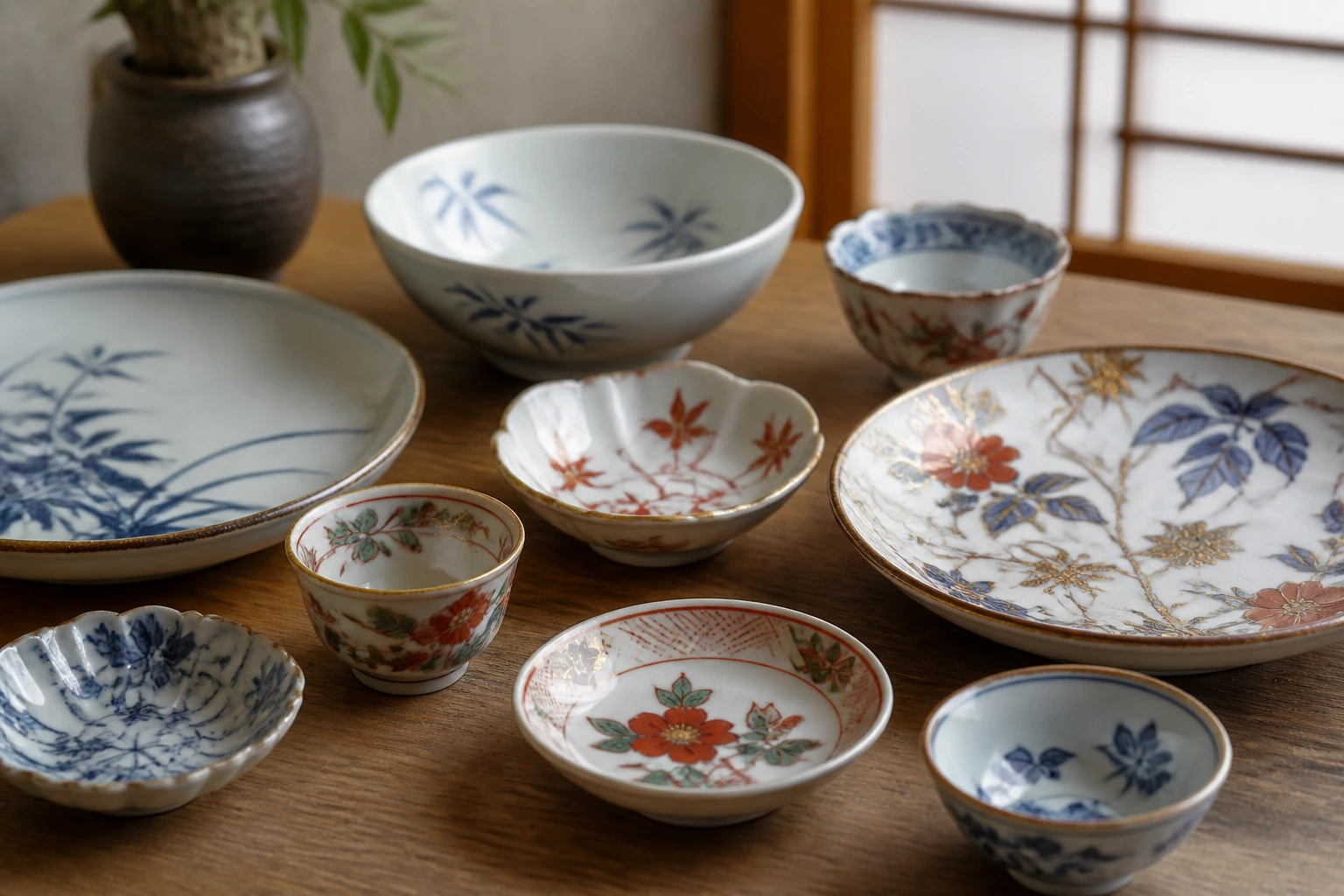
The Yazaemon Old Imari Sakura Sake Set comes from Arita Porcelain Lab and is genuine Arita ware — porcelain from Saga Prefecture, a different regional tradition from Kutani, going back to Japan’s earliest porcelain production. This set uses sometsuke (hand-painted cobalt-blue underglaze) topped with gold-outlined sakura patterns, priced around $329, with only 5 units left in stock.
Pros:
- Named lab (Arita Porcelain Lab) and named regional ware, distinct from the Kutani pieces above
- Two decoration techniques in one piece: underglaze sometsuke plus overglaze gold outlining
- Thin, smooth porcelain body specifically noted for how it affects the sake’s flavor on the palate, per the product description
Cons:
- Gold outlining means hand-wash only, the same caution as the Ginsai pick
- Only 5 units left — the most limited-stock item on this list
- By far the most expensive pick here; not the set to buy if you just want something functional
Bottom line: the pick if you want a second named porcelain tradition (Arita, not Kutani) at the top of this list’s price range.
Where the Amazon Sake Set Search Results Get Vague
Beyond the JapanBargain pick above, a search for “Japanese sake set” on Amazon turns up dozens of ceramic and porcelain sets with genuinely large review counts (several hundred to a thousand-plus ratings on some listings) that describe themselves only as “Ceramic,” “Porcelain,” or “Japanese Style” without naming a country, maker, or ware tradition anywhere in the structured details. That’s not automatically a problem — a $20 microwave-safe sake set with a warmer pot is a real, useful product for a lot of buyers, and reviewers seem to like plenty of them. It just means the phrase “Japanese Sake Set” in a title is describing the type of product, the same way “French press” describes a coffee maker regardless of where it’s manufactured. If the country of origin is the actual reason you’re paying more for a set, check the listing’s own Country of Origin field, not the title.
Which One Should You Buy?
- You want one Made-in-Japan set and don’t want to spend much: the JapanBargain Mino-yaki set.
- You want your first real, named-kiln Kutani piece: the Bizan Kiln Sakura and Bird set.
- You want Kutani with hand-applied metal leaf and don’t mind hand-washing: the Ginsai Camellia set.
- You want an unglazed stoneware piece to compare against the porcelain picks: the Hidasuki Gourd-shaped Bizen set.
- You want a second named porcelain tradition at a higher price point: the Yazaemon Old Imari Arita set.
FAQ
Is “sake set” a protected term like Kutani ware or Wakasa-nuri lacquerware? No. It’s a functional description of a tokkuri-and-cups combination, not a place-name craft designation. That’s why checking the listing’s own stated maker, ware, and country of origin matters more here than trusting the title alone.
Do I need a specific sake cup shape, or does any small cup work? Guinomi (slightly larger, meant to be poured into directly from the bottle) and ochoko (smaller, traditionally used with a carafe) are the two common shapes, but neither is required — any small cup will hold sake. The shape mostly affects how much you pour per round and the ritual of the pour.
Does the material (porcelain vs. stoneware) actually change how sake tastes? Retailers and specialty sake sites commonly claim it does, particularly for unglazed stoneware like Bizen ware, where porosity is said to soften the flavor. We treat this as a widely repeated retailer and enthusiast claim rather than an independently lab-verified one — see our porcelain vs. stoneware guide for more on the material distinction itself.
Can I put a hand-painted or gold-decorated sake cup in the microwave? Not if it has any metallic (gold or silver) decoration — hand-wash those pieces instead. Plain glazed porcelain without metallic leaf, like the JapanBargain and Bizan Kiln picks above, is generally microwave- and dishwasher-safe, but always check the individual listing.
Is Musubi Kiln a good source for sake sets specifically, or mainly tableware? Musubi Kiln’s sake and barware collection is large and spans multiple named kilns and ware traditions (Kutani, Arita, Bizen, and others), similar in depth to their dinnerware and tea sets covered elsewhere on this site. Musubi Kiln isn’t yet a partner shop for this site, so links to their site here are plain, untracked links.
Final Thoughts
The one check worth doing before buying any “Japanese sake set”: does the listing actually name a country, a maker, or a regional ware tradition, or does it just use the word “Japanese” as a style descriptor? Past that, the JapanBargain set is the easiest verified pick if budget is the priority, and the four Musubi Kiln pieces above span two porcelain traditions (Kutani, Arita) and one unglazed stoneware tradition (Bizen) if you want to see — and feel — the material differences this site covers in more depth in our porcelain vs. stoneware guide. For the general framework behind all of this, see our buyer’s checklist for real vs. knockoff Japanese craft.