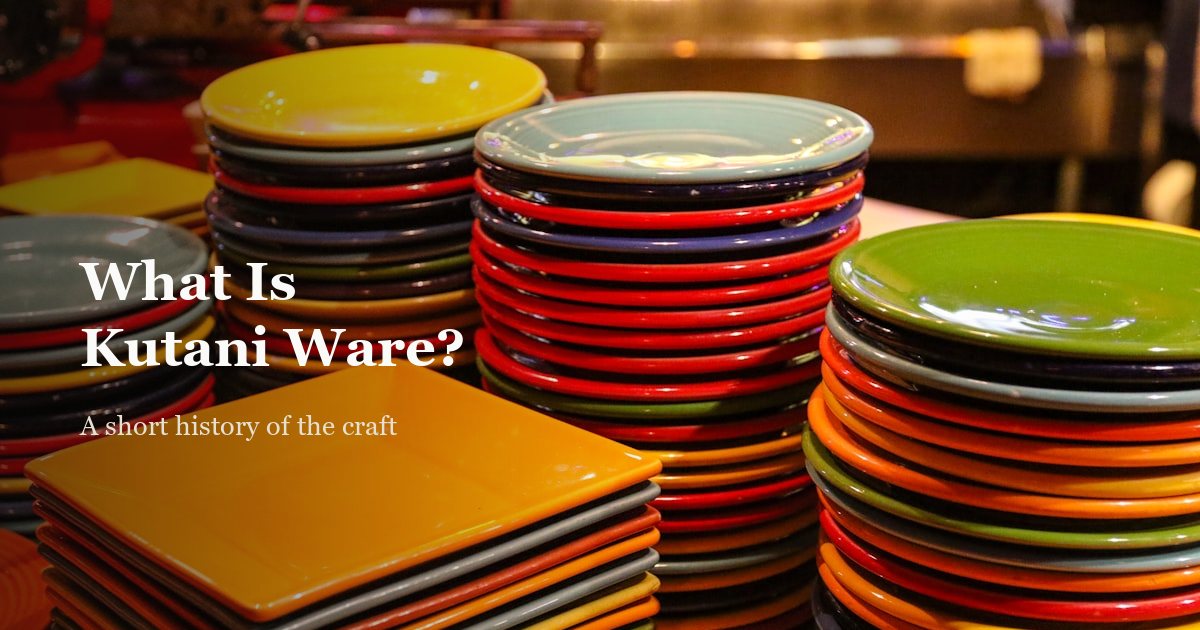
Kutani ware (九谷焼, Kutani-yaki) is a style of Japanese porcelain from Ishikawa Prefecture, best known for gosai (五彩), a bold five-color overglaze enameling technique. It’s one of the styles most often named on a “Japanese pottery” product listing, but it’s also one of the easiest names to misuse, since it describes a specific regional tradition, not a generic look. If a piece is genuinely Kutani ware, the seller can typically point to the region or the specific style within it; if a listing only says “Kutani-inspired” or shows a similar color palette without naming the region, that’s a different, weaker claim.
Where Kutani Ware Actually Comes From
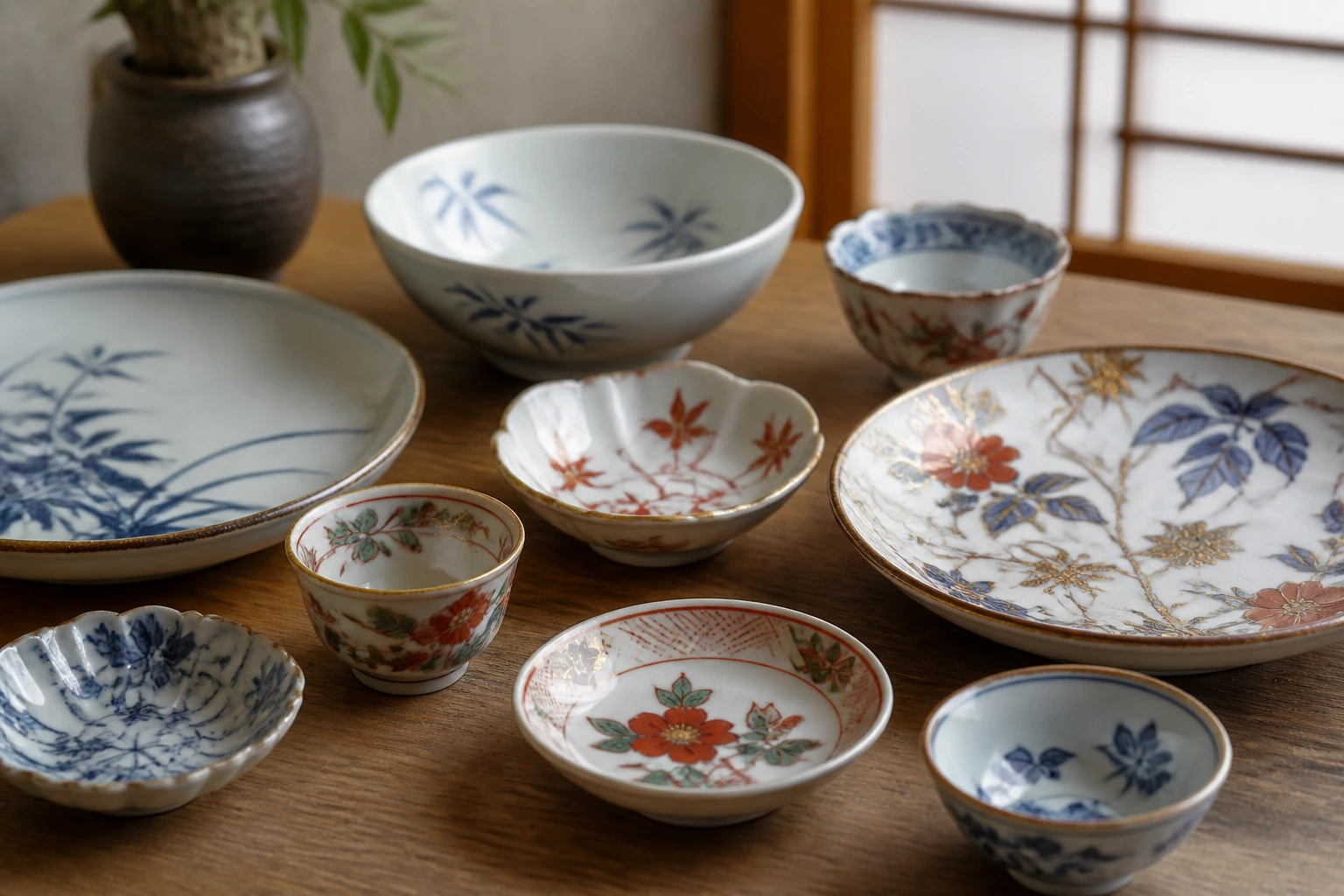
Kutani ware takes its name from the Kutani area of what is now Ishikawa Prefecture, on Japan’s western coast, where porcelain production began in the mid-1600s under the patronage of the local domain. What makes Kutani distinct from other Japanese porcelain regions, like Arita-yaki or Imari-yaki from Saga Prefecture, or Mino-yaki from Gifu Prefecture, is less about the clay body itself and more about the decoration: the gosai palette layers thick, saturated overglaze enamels, often in deep green, yellow, purple, dark blue, and red, over a white porcelain base.
The Historical Wrinkle Even Kutani Specialists Acknowledge
Here’s a detail that a lot of casual write-ups skip past: some of the earliest pieces attributed to “Ko-Kutani” (old Kutani, the first production period) are now believed by researchers to have actually been fired at kilns in Arita, not in the Kutani region itself, and only decorated or attributed locally. This isn’t a controversial fringe claim, it’s a genuinely open question in the scholarship on early Kutani ware, and it’s worth knowing if you’re buying an antique or reproduction piece described as “Ko-Kutani,” since the label refers to a decorative style and historical period as much as a single production site.
The Yoshidaya Revival: A Deliberately Narrower Palette
After the original Kutani kilns fell out of production, the style saw a notable revival in 1824 under Yoshidaya Denemon, who reopened production specifically to recover the old Ko-Kutani aesthetic. The Yoshidaya style is often described as deliberately excluding red from the palette, working instead in yellow, green, deep blue, and purple. The Yoshidaya kiln itself only operated for a few years before closing, but pieces from that short window are still highly regarded within Kutani ware today. (Some of the more specific claims about the Yoshidaya period circulate mainly through retailer product descriptions rather than independent academic sources, so treat the exact details as a well-established retail account rather than a fully footnoted history.)
Gold and Silver Overglaze: A Practical Note, Not Just a Style Note
A meaningful share of decorative Kutani ware, especially aka-e (red-and-gold) styles, uses real gold or silver leaf as part of the overglaze decoration. That has a practical consequence: even when a piece is otherwise labeled microwave- or dishwasher-safe, metallic overglaze decoration generally shouldn’t go in either, since microwaving metal risks sparking and dishwasher detergent can dull or damage gold and silver leaf over repeated washes. If a piece has visible gold or silver decoration, hand-washing is the safer default regardless of what the general care label says about the base material.
What “Japanese-Style” Kutani Listings Tend to Leave Out
The pattern to watch for is the same one that shows up across Japanese tableware generally: a listing that shows Kutani-style coloring and calls itself “traditional” or “Japanese-style” without naming Ishikawa, Kutani, or a specific Kutani workshop or artist. That absence doesn’t automatically mean the piece is dishonest or poorly made, but it does mean the listing isn’t making a checkable claim about being genuine Kutani ware, only about resembling it.
FAQ
Is all Japanese porcelain with colorful overglaze “Kutani ware”? No. Similar-looking overglaze enamel techniques exist in other Japanese porcelain traditions, and colorful decoration alone doesn’t make a piece Kutani. The name refers specifically to production associated with the Kutani region of Ishikawa Prefecture.
What’s the difference between Kutani ware and Arita/Imari ware? Both are Japanese porcelain traditions with overglaze enamel decoration, but they come from different regions (Ishikawa for Kutani, Saga for Arita/Imari) and have historically distinct palettes and motifs, even though the early history of the two traditions is genuinely intertwined, as the Ko-Kutani firing-location question shows.
Why do some Kutani pieces avoid red? That’s specifically a feature of the Yoshidaya style from the 1824 revival, which favored a narrower yellow, green, blue, and purple palette rather than the fuller original gosai range. Not all Kutani ware avoids red; it’s one recognizable style within the broader tradition, not the whole tradition.
Can I put gold-decorated Kutani ware in the microwave or dishwasher? Hand-wash it instead, even if the base ceramic is otherwise labeled safe for both. Metallic overglaze can spark in a microwave and degrade under repeated dishwasher cycles.
Where to See Kutani Ware in Practice
Our Kutani ware dinnerware guide covers real pieces at a range of price points, including gold-decorated designs where the hand-wash guidance above actually applies. If you’re buying for an occasion, our Japanese pottery anniversary gift guide, Japanese tea set gift guide, and Japanese sake sets guide all draw on genuine Kutani pieces as well. Kutani ware is porcelain specifically, not stoneware, a distinction we cover in more depth (including a case where a retailer’s own spec sheet gets it wrong) in Porcelain vs Stoneware: How to Tell Real Japanese Ceramics Apart. And if you want the general framework for checking whether any piece of Japanese tableware is what it claims to be, our buyer’s guide to spotting Japanese-style knockoffs covers six checks that apply just as well to porcelain as to knives or lacquerware.