Some of the shops we link to are partners who may pay us when you buy through them. This doesn't change which pieces we recommend. How this works.
Quick answer: a Japanese hand plane (kanna) is a wooden-bodied plane pulled toward you on the cutting stroke, with the blade wedged into a hand-fitted mortice and no handle at all. A Western plane is pushed away from you, usually cast in iron, with a separate handle and a mechanical adjustment screw. Neither is strictly better — the kanna’s pulling motion and thinner cut can leave a more finished surface straight off the blade, while a Western plane’s mechanical adjusters and iron body are more forgiving to set up and maintain. Two verified Made-in-Japan picks below.
The Core Differences
| Japanese Plane (Kanna) | Western Plane | |
|---|---|---|
| Cutting stroke | Pull (toward the body) | Push (away from the body) |
| Body material | Hardwood (typically white or red oak) | Cast iron or steel |
| Blade fit | Hand-fitted into a wooden mortice, doubles as its own wedge | Held by a separate cap iron and screw |
| Handle | None (bare wooden body) | Molded or turned handle (tote) at the rear |
| Adjustment | Tapped by hand with a small hammer | Mechanical depth and lateral adjustment screws |
| Blade position | Set back toward the heel of the body | Centered, further forward |
Sources: The Art of Hand Tools, Japan Woodcraft Association — figures broadly consistent across both.
Why the Pulling Motion Actually Matters
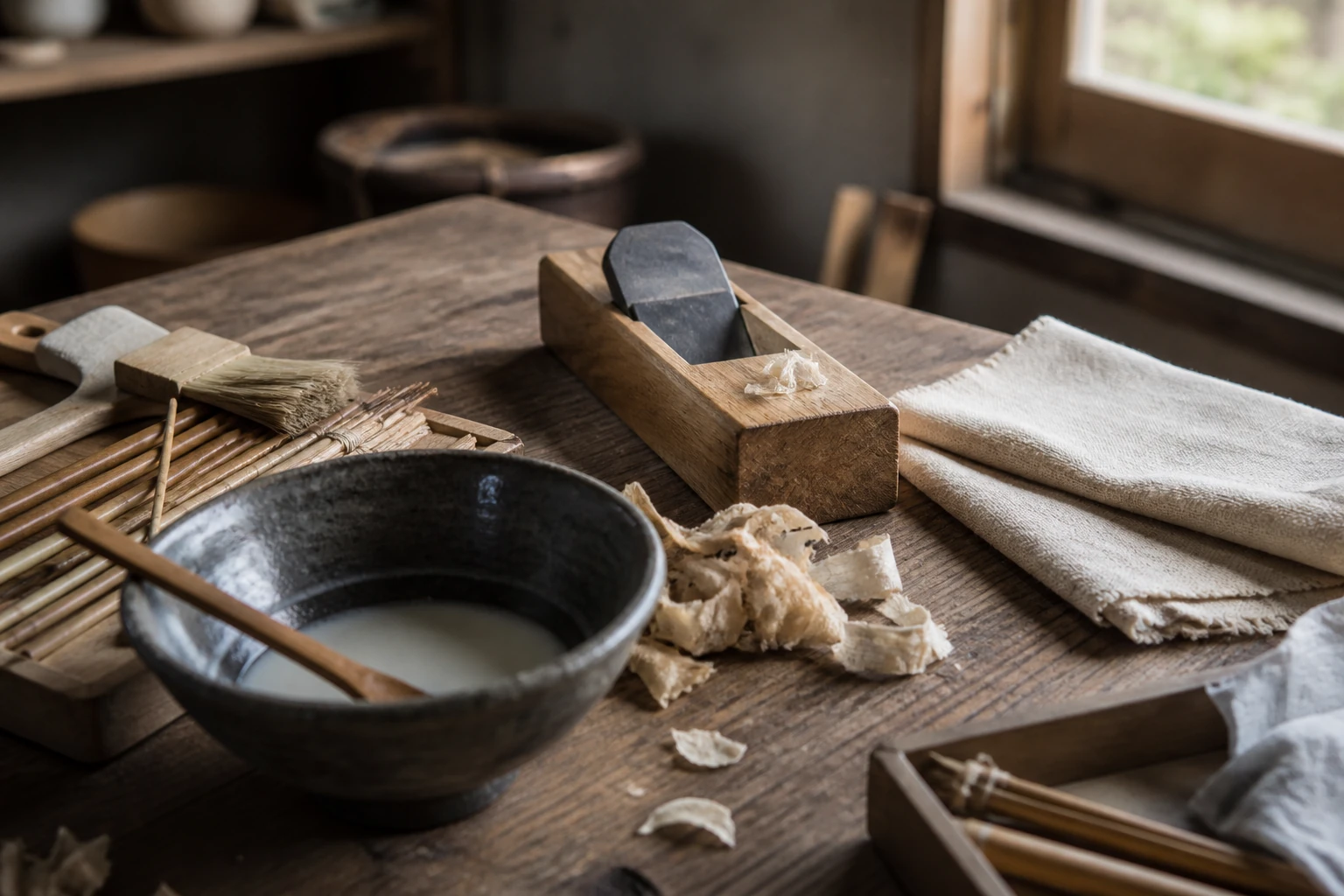
Pulling a blade toward you puts it under tension rather than compression, the same principle behind why a Japanese pull saw cuts with a thinner blade than a Western push saw. A kanna takes advantage of this by using the pulling stroke to engage the back and biceps rather than the shoulders, and skilled users can take an extremely thin, even shaving that leaves a polished surface without any follow-up sanding. That’s a real, documented advantage for finish work, not just a stylistic difference. The tradeoff is setup: a kanna’s blade is tapped into place by hand with a small hammer, and getting the depth and angle right takes more practice than turning a Western plane’s adjustment screw.
Why the Body and Blade Fit Differ
A Western plane’s cast-iron body and mechanical adjusters were built for consistency across mass production, which is exactly why they became the standard after the mid-19th century: any two Western planes of the same model behave almost identically out of the box. A kanna’s wooden body and hand-fitted blade mortice mean each plane is essentially custom-fit by the maker (or the user, after some practice); no handle exists because the wooden body itself is gripped directly, which keeps the tool low and close to the wood for the pulling stroke.
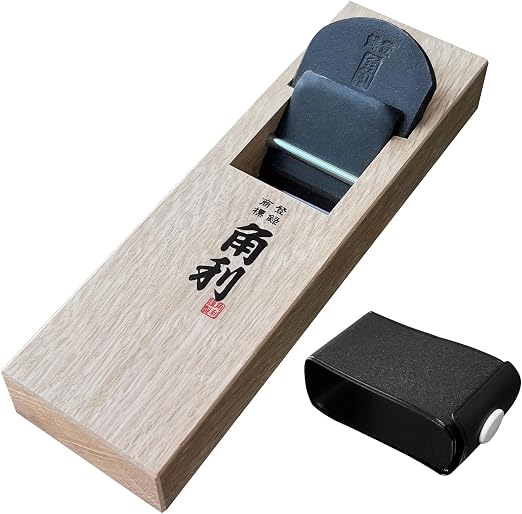
KAKURI Japanese Hand Plane, 42mm
KAKURI has made Japanese woodworking tools since 1946, and this block-sized kanna is the size most woodworkers reach for first: small enough to control easily, with a laminated Japanese steel blade set in a white oak body.
Pros:
- Compact size is genuinely easier to learn on than a larger smoothing plane
- Laminated steel blade construction stated directly, not just “Japanese steel”
- By far the largest review base of any pick here, which makes the rating easy to trust
Cons:
- Small size limits it to chamfering and light smoothing, not large flat surfaces
- New blade needs to be tapped into final position and sharpened before first real use
- No handle, which takes some adjustment if you’re used to a Western plane’s grip
Bottom line: the one to start with if you don’t already own a kanna.
KAKURI Japanese Hand Plane, 42mm
Laminated Japanese steel blade, white oak body. 4.4★ (560 ratings).
KAKURI Professional Japanese Hand Plane, 58mm (Blue Paper Steel)
This larger, professional-tier kanna steps up to a blue paper steel (aogami) No. 2 blade, a named, well-regarded Japanese steel grade known for holding a fine edge, set in an oil-finished red oak body.
Pros:
- Blue paper steel (aogami) is a specific, named steel grade, not a generic marketing term
- Larger 58mm body suits full smoothing passes on wider boards
- Oil-finished red oak body is a step up in build quality from the eco-oak starter tier
Cons:
- Meaningfully more expensive than the 42mm starter pick
- Very small review sample; treat the rating as encouraging rather than conclusive
- Larger plane is less forgiving to learn the pulling stroke on than a small block plane
Bottom line: the pick once you’re doing real smoothing work and want a named steel grade behind the blade.

KAKURI Professional Hand Plane, 58mm
Blue paper steel (aogami) No. 2 blade, oil-finished red oak body. 4.7★ (4 ratings).
Which One Should You Buy?
- You’ve never used a kanna before: the KAKURI 42mm, small enough to build the pulling-stroke technique on without fighting a larger tool.
- You already know the basics and want a real smoothing plane: the KAKURI 58mm Blue Paper Steel.
- You want a Western-style plane instead: that’s a legitimate choice too, especially if mechanical depth adjustment matters more to you than the kanna’s thinner shaving; this comparison is about the tradeoffs, not a verdict that one is universally better.
FAQ
Is a Japanese hand plane better than a Western hand plane? Neither is strictly better. A kanna’s pulling stroke and hand-fitted blade can produce a thinner, more finished shaving, but it takes more practice to set up than a Western plane’s mechanical adjusters. A Western plane is more forgiving to maintain and more consistent out of the box.
Why doesn’t a kanna have a handle? The wooden body is gripped directly, which keeps the tool low and close to the wood surface for the pulling motion. Adding a handle isn’t standard, though some woodworkers do fit one.
How do you adjust the blade on a kanna? By tapping the body and blade with a small hammer, rather than turning a screw. Tapping the blade forward extends the cut; tapping the body near the mouth or the back of the blade retracts it. This takes more practice than a Western plane’s mechanical adjustment but becomes fast with repetition.
What does “blue paper steel” (aogami) mean? It’s a named Japanese carbon tool steel grade, commonly used in premium plane and knife blades for its ability to hold a fine edge. It’s a specific alloy, not a marketing term like “Japanese steel.”
Final Thoughts
The pulling-versus-pushing distinction runs through nearly every hand tool comparison between Japanese and Western design, and it shows up here in the same way it does with saws: a tool built around tension rather than compression, with a body designed to be gripped and read by hand rather than adjusted by screw. Start with a small kanna if you’re new to the tool, or step up to a named-steel professional plane once you know the technique. If you’re building out a full Japanese hand-tool kit, see our Japanese saw vs Western saw and Japanese chisels vs Western chisels comparisons next, and our buyer’s checklist for real vs. knockoff Japanese craft for how to spot an import with no stated maker or origin.