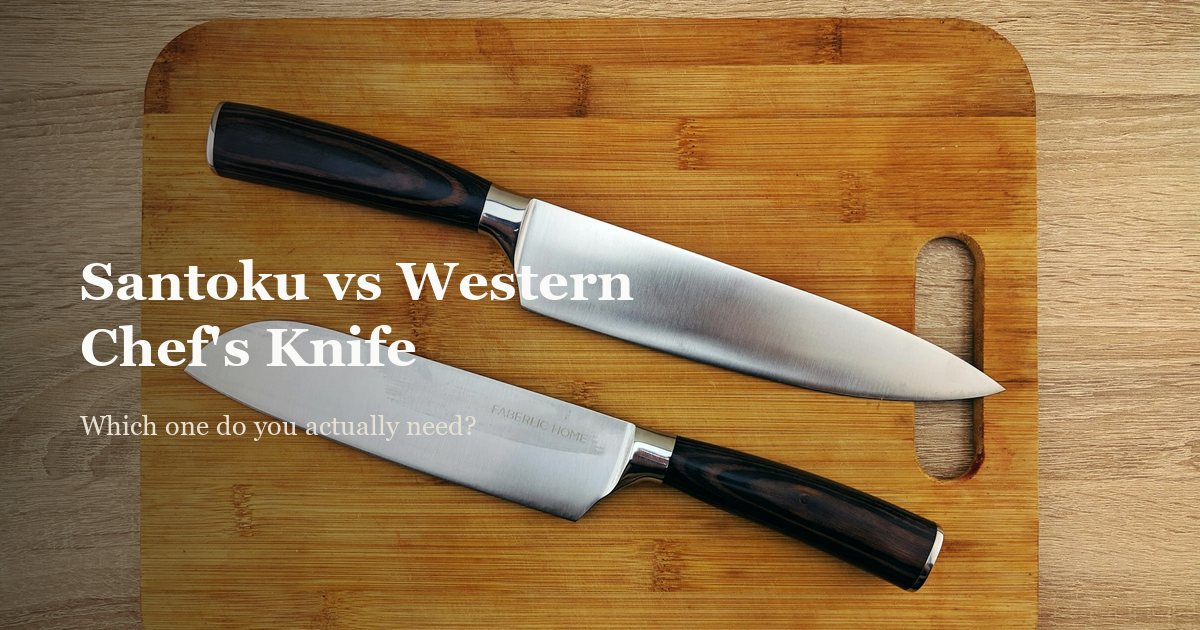
Quick answer: a santoku is lighter, thinner-edged, and better suited to precise slicing of vegetables, fish, and boneless meat; a Western chef’s knife is heavier, more obtuse-edged, and better suited to rocking-motion chopping, tougher ingredients, and bigger cuts. Most home cooks who buy one santoku end up using it for 80–90% of their prep and keep a chef’s knife around for the rest. Details below.
Some of the shops we link to are partners who may pay us when you buy through them. This doesn't change which pieces we recommend. How this works.
The Core Differences
| Santoku | Western Chef’s Knife | |
|---|---|---|
| Typical blade length | 5–7 in (13–18 cm) | 8–10 in (20–25 cm) |
| Edge angle | ~12–15° per side | ~20–25° per side |
| Typical weight | 100–170 g | 150–250 g |
| Blade profile | Flatter edge, sheep’s-foot tip | More curved belly, pointed tip |
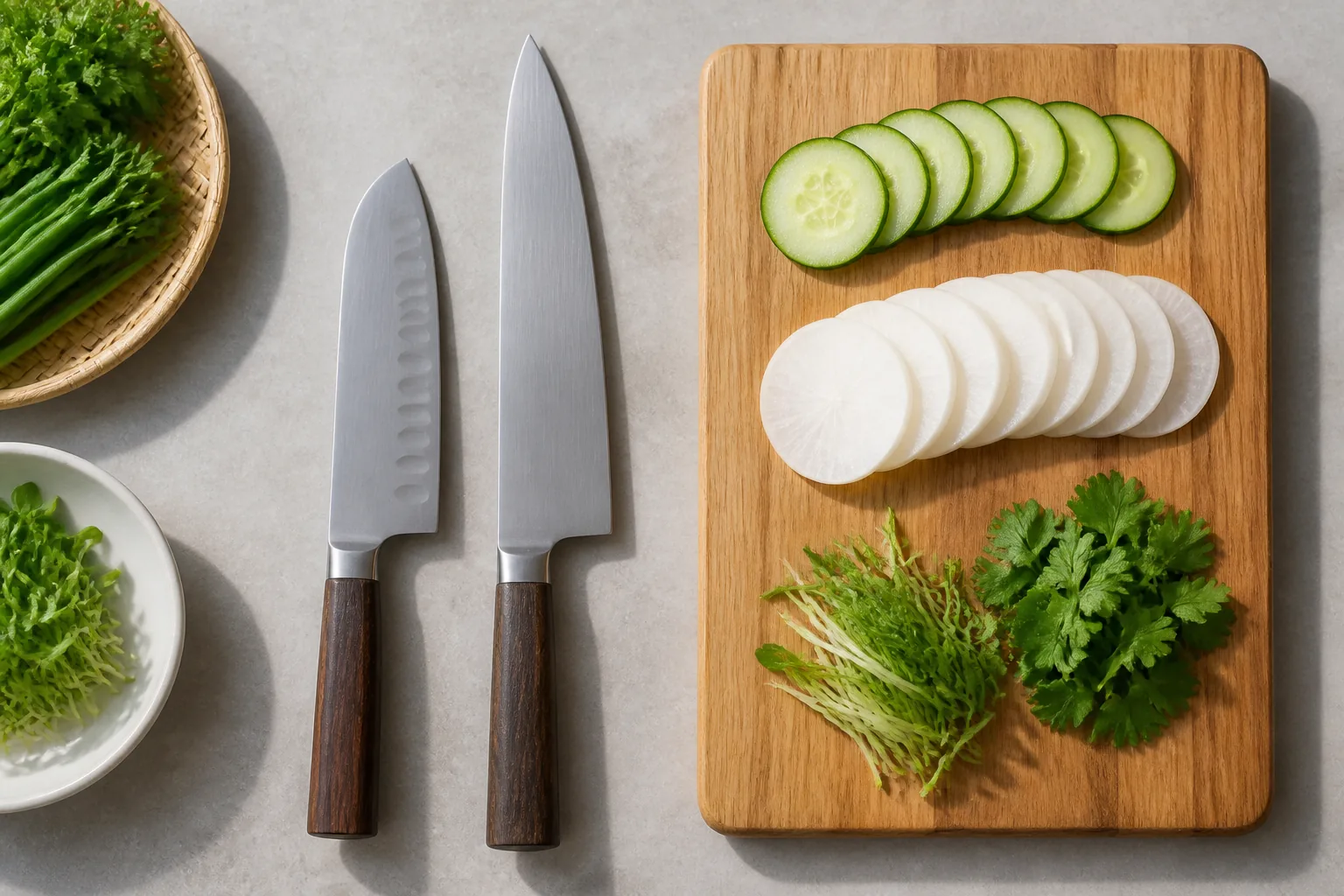
| Granton edge (scalloped dimples) | Common above entry tier | Less common |
| Best cutting motion | Straight up-and-down chop | Rocking motion |
Sources: Knife Depot, HexClad, Chef Approved Tools — figures are broadly consistent across all three.
Why the Edge Angle Actually Matters
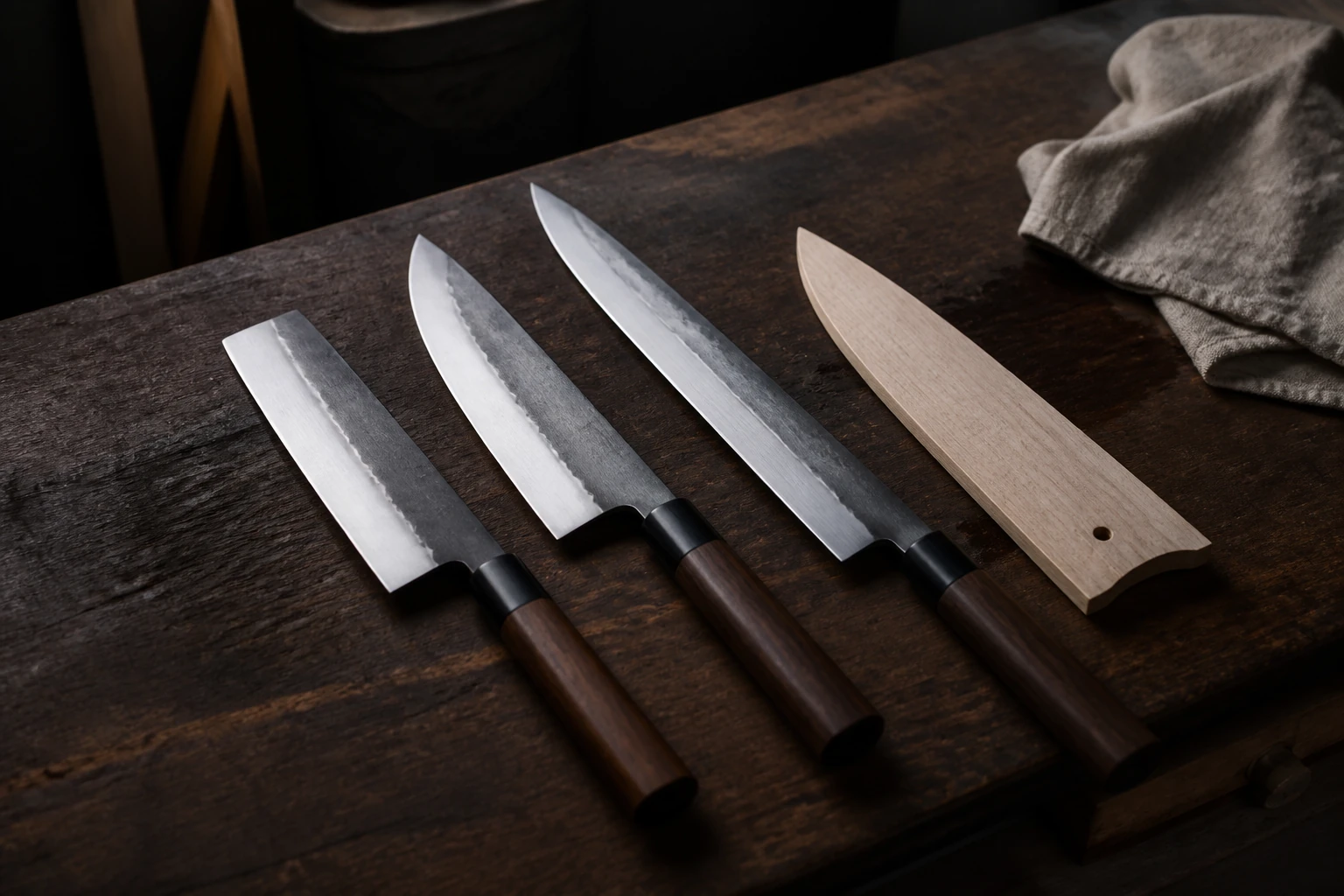
A santoku’s ~12–15° edge is geometrically thinner than a chef’s knife’s ~20–25° edge, which is the real reason it feels “sharper” on thin slices of vegetables or fish — less material has to push through the food. The tradeoff is durability: that thinner edge is more prone to chipping on hard, dense ingredients like winter squash or frozen food, and it holds up less well to twisting or prying motions a chef’s knife can shrug off.
Why the Weight and Motion Differ
A Western chef’s knife’s curved belly is built for a rocking motion — the tip stays roughly anchored while the heel rocks up and down, which is efficient for mincing herbs or garlic in volume. A santoku’s flatter edge is built for a straight up-and-down chop, which suits its lighter weight and is generally considered easier to learn for someone without years of chef’s-knife muscle memory.
The Granton edge — the scalloped dimples along the blade face found on most mid-tier-and-up santoku knives — creates small air pockets that help sliced food release from the blade instead of sticking, which matters most on starchy vegetables like potato.
Which One Should You Buy?
- Get a santoku first if most of your cooking is vegetables, fish, and boneless proteins, and you want a lighter knife that’s easier to control. This covers most home cooking.
- Add a Western chef’s knife if you regularly break down bone-in meat, cut hard squash, or do high-volume mincing where the rocking motion saves real time.
- You don’t need both to start. A single well-chosen santoku genuinely covers most home kitchens — see our santoku knife comparison for six verified Made-in-Japan picks from $38 to $199, or our guide to three more verified picks if you want to make sure what you’re buying is genuinely Japanese-made.
- Deciding between two Japanese knife shapes instead? A gyuto is Japan’s own take on an all-purpose chef’s knife, not the Western original — see our santoku vs gyuto comparison if a pointed tip for trimming and filleting matters more to you than a Western chef’s knife’s extra weight.
If you want one verified santoku to start with, this one names its maker, its city, and its steel, and it’s sold by a dedicated Japanese knife retailer rather than only on Amazon:

Sakai Takayuki TUS Steel Santoku 180mm
Made by Aoki Hamono in Sakai City, Japan. TUS high-carbon stainless. 5.0★ (3 ratings).
FAQ
Can a santoku replace a chef’s knife entirely? For most home cooking, yes — vegetables, fish, boneless meat, and general prep are all well within a santoku’s range. Where it struggles is bone-in cuts, very hard produce, and high-volume rock-chopping, which is where a chef’s knife’s weight and curved belly earn their keep.
Is a santoku easier for a beginner than a chef’s knife? Generally, yes. The lighter weight and flatter edge make the straight chopping motion more forgiving to learn than the rocking motion a chef’s knife rewards, which takes more practice to do efficiently.
Does “Damascus” or a hammered finish change this comparison? No — those are surface treatments, not blade geometry. A Damascus-clad or tsuchime (hammered) santoku still has the same short, flat-edged profile as a plain one; the finish affects looks and, in the case of a hammered finish, food release, not the fundamental santoku-vs-chef’s-knife tradeoffs above.
Final Thoughts
If you’re deciding between the two styles rather than which specific knife to buy, the honest answer is that a santoku covers more of what a home cook actually does day to day. Start there, and only add a Western chef’s knife later if you find yourself specifically missing its rocking motion or extra reach.
Whichever profile you land on, make sure what you’re buying is actually the real thing before you check out — our buyer’s guide to spotting Japanese-style knockoffs covers the same six checks across knives, ceramics, and lacquerware.