Some of the shops we link to are partners who may pay us when you buy through them. This doesn't change which pieces we recommend. How this works.
Quick answer: the traditionally correct Japanese wedding gift is actually cash, presented in a decorated envelope called a shugi-bukuro, not a physical object at all. If you’re shopping for a lasting gift instead, either because the couple already received their shugi-bukuro from other guests or because you want something they’ll keep, a genuine meoto yunomi tea cup pair is the closest thing to an actual Japanese couple’s-gift tradition in physical form.
What Japanese Couples Actually Receive at Weddings
Before recommending tableware, it’s worth being direct about something most gift-guide articles skip: the real Japanese wedding custom isn’t a physical present. Guests bring cash, wrapped in a formal envelope called a shugi-bukuro, with the amount scaled to the closeness of the relationship. It’s a practical custom (the couple is often paying for the wedding itself, and cash covers that directly) and it’s the one a Japanese guest would actually follow.
Physical gifts do have a place, though, particularly for pair-format objects, items deliberately made or sold as two matched pieces for a married couple. The best-known example is meoto items, “husband and wife” pairs where the two pieces share a pattern but differ slightly in size: yunomi tea cups, rice bowls (meoto jawan), and sake cups (guinomi) are the three you’ll most often see sold this way. If you want a gift that reflects an actual Japanese custom rather than a generic “Japan-themed” object, a meoto pair is the honest choice.
Comparison at a Glance
| Gift | Price | Best For |
|---|---|---|
| Meoto Yunomi Tea Cup Pair (Rabbit Design) | ~$23 | The clearest match to an actual pairing custom |
| Mino Ware Sake Decanter with 2 Guinomi Cups | ~$119 (before shipping) | A couple who drinks sake together |
| MUJI Hasami Ware Rice Bowl | £9.95 | A practical, everyday gift that’s still genuinely Japanese-made |
Prices vary by retailer and change often; treat this as a starting point, not a quote.
1. Meoto Yunomi Tea Cup Pair — Best Match to the Actual Custom
Yunomi are handleless Japanese tea cups, and a meoto pair sells them as two intentionally different sizes, traditionally the larger cup for the husband and the smaller for the wife, sharing the same glaze and pattern. This rabbit-design set is Mino ware, a ceramics tradition from Gifu prefecture, and it’s a real, functional pair rather than a themed knick-knack.
Pros:
- Genuinely reflects the meoto (paired, differently-sized) gift tradition, not just “two matching cups”
- Functional daily object, so it gets used rather than displayed once and forgotten
- Affordable at around $23
Cons:
- Small and low-cost enough that it may read as a minor gift rather than a primary present on its own
Bottom line: the pick if you want a gift that’s an actual Japanese pairing custom in miniature, not just Japan-adjacent decor.

Mino Ware Yunomi Tea Cup Pair, Rabbit Design
Handmade set of 2, made in Japan. 4.6★ (80 ratings).
2. Mino Ware Sake Decanter with 2 Guinomi Cups — Best for a Couple Who Drinks Sake
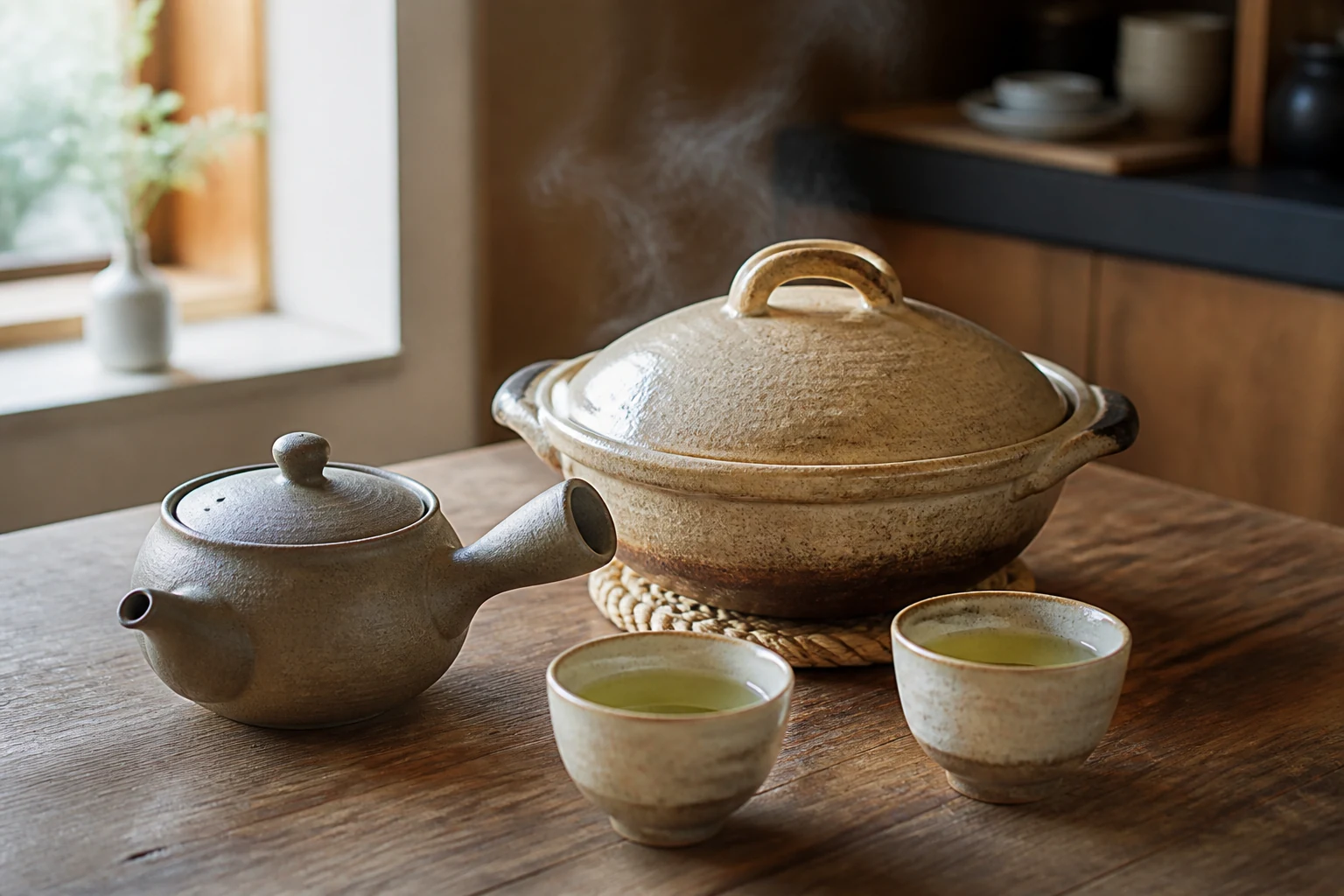
This set pairs a tokkuri-style decanter with two guinomi cups, sized differently the same way a meoto set is, and finished in Mino ware’s Oribe green glaze. It’s a more substantial gift than the tea cup pair, and one that turns into a small shared ritual rather than a purely decorative object: pouring for each other is part of how sake is traditionally served between two people.
Pros:
- The decanter-plus-two-cups format is built around sharing, not individual use
- Handcrafted Mino ware, genuinely made in Japan, with a real gift-box presentation
- More substantial as a standalone present than a single accessory item
Cons:
- Priced meaningfully higher than the other picks here, and cross-border Amazon pricing on this specific listing adds import charges on top
- Not useful for a couple who doesn’t drink alcohol
Bottom line: the pick for a couple you know drinks sake together, where the gift doubles as an occasion to use it.
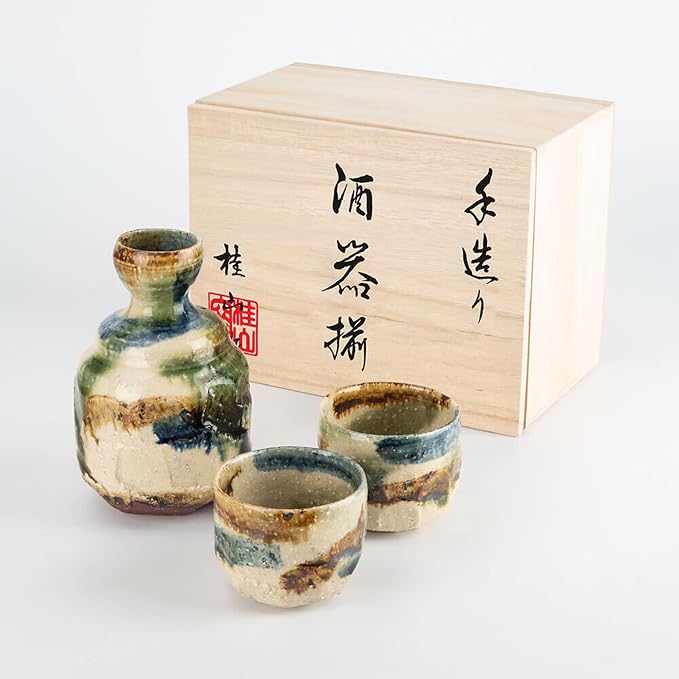
Mino Ware Sake Decanter Set, Oribe Green
Decanter and 2 cups, handcrafted, made in Japan. 5.0★ (7 ratings).
3. MUJI Hasami Ware Rice Bowl — Best Practical, Low-Key Gift
Not every gift needs to lean into wedding symbolism. MUJI’s Hasami ware rice bowl is a genuinely Japanese-made piece (Hasami, in Nagasaki prefecture, is one of Japan’s major porcelain-producing regions) sold at a design-forward but unpretentious retailer, making it a low-pressure gift for a couple who’d rather have something they’ll actually put in daily rotation than a symbolic pair set.
Pros:
- Genuinely made in Hasami, a real Japanese porcelain region, not just Japanese-style design
- Inexpensive enough to pair with a card or a larger gift rather than standing alone
- MUJI’s plain, functional aesthetic fits most kitchens without clashing
Cons:
- Sold individually, so buying a pair for both partners means ordering two
- Carries none of the explicit couple’s-gift symbolism the meoto pairs do
Bottom line: the pick for a couple whose taste runs practical rather than ceremonial, or as an add-on to a larger gift.
MUJI Hasami Ware Porcelain Rice Bowl, Fan Stripe
Made in Hasami, Nagasaki. In stock.
Which One Should You Buy?
- If you want a gift that reflects an actual Japanese pairing custom: get the Meoto Yunomi Tea Cup Pair.
- If the couple drinks sake together and you want something more substantial: get the Mino Ware Sake Decanter Set.
- If you’d rather give something practical and low-key: get the MUJI Hasami Ware Rice Bowl.
- If you’re attending a wedding in Japan or with Japanese family involved, a cash gift in a shugi-bukuro is still the more traditionally correct choice; treat any of the above as a supplementary gift, not a replacement.
FAQ
Is it rude to give a physical gift instead of cash at a Japanese wedding? Not rude, but it’s worth knowing that cash in a shugi-bukuro is the actual expected gift in Japan. A physical gift works well as a supplementary present, especially from guests who aren’t attending the ceremony itself, but it isn’t a substitute for the cash gift if you are attending.
What does “meoto” mean on a product listing? Meoto (夫婦) means “husband and wife.” On tableware, it specifically refers to a pair sold as two intentionally different sizes, one larger and one smaller, meant for two people rather than two identical items.
Are meoto sets only for weddings? No. They’re also common for anniversaries; our guide to Japanese pottery for a 9th wedding anniversary covers meoto rice bowl pairs specifically for that occasion, with different bowls than the ones featured here.
What if the couple already has plenty of tableware? Consider our Japanese tea set gift guide for a different category, or our Japanese housewarming gift guide if they’re also moving in together, which covers a wider range of household items beyond tableware.
Do I need to worry about gift taboos, the way knife gifts have superstitions attached? Tableware doesn’t carry the same cutting/severing taboo that knives and other blades do in Japanese gift-giving. Our guide to Japanese knife gift superstitions covers that specific case if you’re considering a knife instead.
How do I know a “Japanese-style” tableware gift is actually made in Japan? Look for the same things our buyer’s checklist for real Japanese craft covers across every category on this site: a named region or kiln, a named maker, and an explicit country-of-origin field rather than “Japanese-style” standing in for all three.
Final Thoughts
The honest starting point for this topic is that Japan’s actual wedding gift custom is cash, not tableware, so any physical gift here is a supplement to that tradition rather than a replacement for it. Within that framing, a genuine meoto pair, whether tea cups, sake cups, or rice bowls, is the physical object that most directly reflects an actual Japanese custom rather than a generic “Japan-themed” gift. Start with the Meoto Yunomi Tea Cup Pair if you want that authenticity at a low price point, and look at our anniversary meoto jawan guide if the couple is celebrating a later milestone instead.