Some of the shops we link to are partners who may pay us when you buy through them. This doesn't change which pieces we recommend. How this works.
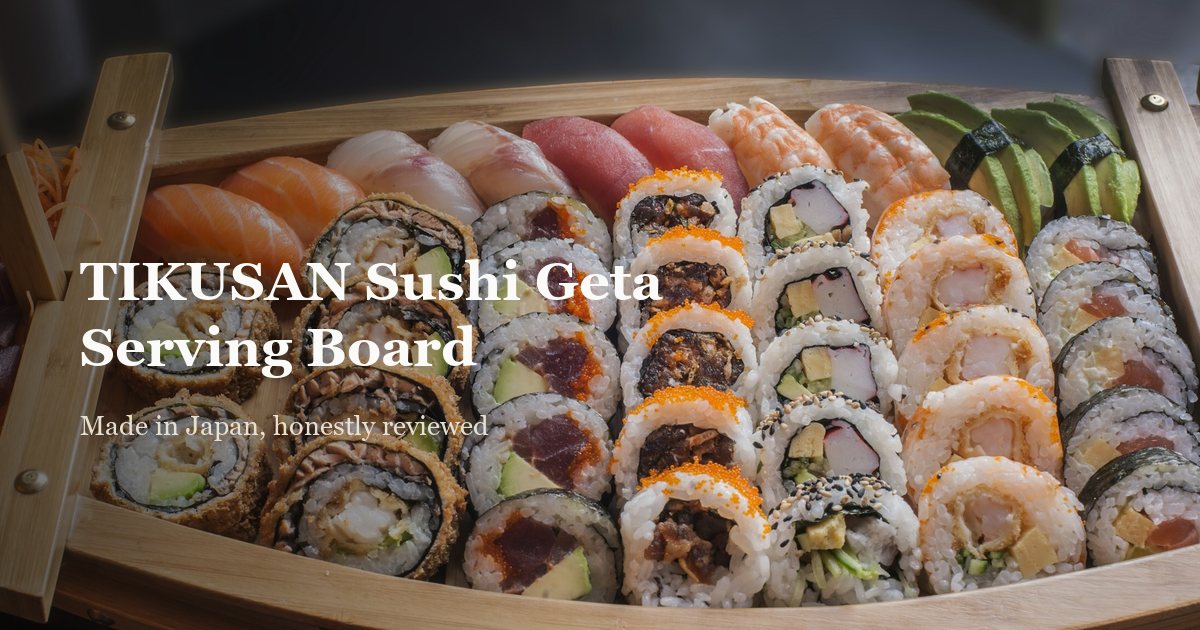
The TIKUSAN Sushi Hinoki Serving Geta Plate states "Country of Origin: Japan" directly in its structured product details, not just the title, the same check we've applied to every hinoki product on this site. It's a real footed hinoki platter, not a flat board, styled after the raised wooden geta sandal it's named for. Worth knowing before you buy: it only has 5 total ratings on Amazon, and they're mixed, not uniformly glowing. We're not hiding that, and it's the reason this review runs longer than a typical two-pick comparison.
What a Sushi Geta Actually Is
A geta is a traditional raised wooden sandal, and a sushi geta borrows its shape directly: a rectangular wood platform on two short raised feet, originally used in restaurants to present sushi at a slight lift off the table, the way a cutting board sits flatter and a plated dish sits higher still. It’s a serving piece, not a cutting surface, distinct from the hinoki cutting boards we’ve covered separately, and it shows up in the same hinoki cypress wood we verified there.
TIKUSAN is a brand this site has already checked out twice: it makes the Banko-yaki donabe pots in our clay pot guide and is one of three makers in our kitchen tools directory. That prior track record is part of why we’re covering this listing instead of skipping it, but it doesn’t excuse skipping a fresh check on this specific product, which is what turned up the review situation below.
Comparison at a Glance
Checked against current Amazon.com listings on September 20, 2026. Prices vary by retailer and change often.
TIKUSAN Sushi Hinoki Serving Geta Plate
Both sizes come from the same listing family, sold by “Tikusan Japan Store” and shipped by Amazon, with a country-of-origin field that says Japan on every size variant rather than just the title (there’s also a mid-size 8.3” x 5.9” and a larger 11.8” x 8.3” option in between and above the two we’re covering). The product details are also specific about something a lot of “hinoki” listings leave vague: the surface has a polyurethane coating applied over the wood, stated plainly rather than buried. That’s not a red flag by itself, plenty of wood serving pieces are coated for food-safety and durability reasons, and it’s the same kind of direct disclosure we’d want to see rather than a vague “special finish” claim.
As of this writing, the listing carries a total of 5 ratings, averaging 2.4 out of 5, and the individual reviews don’t agree with each other. A verified U.S. buyer wrote that it’s “very obvious that this is the real deal and not a Chinese knockoff,” pointing to the same texture-and-weight tells we’ve referenced in other hinoki reviews. Another called it “beautiful,” “well built,” and “really love it.” But a one-star review from a buyer in Germany, who says they lived and studied in Japan, describes “very rough edges which have been unevenly varnished over” and calls the coating itself out of character for hinoki, which is normally prized enough on its own that makers don’t varnish over it.
Five ratings is not a large enough sample to draw a firm conclusion from, in either direction. It’s genuinely possible both reviews are accurate: hinoki is a natural material with knots and grain variation piece to piece (the listing itself notes “each piece has different natural wood features, so no two pieces are the same”), and a batch of handcrafted platters can plausibly range from a well-finished piece to one with rougher edge work. What we can verify is the country-of-origin field and the coating disclosure; what we can’t verify, at this review count, is how consistent the finish quality is from unit to unit.
Pros:
- Country of origin field explicitly says Japan on every size, not just the title
- Genuine hinoki cypress wood with the raised, footed geta shape, not a flat imitation board
- Wood coating is disclosed plainly rather than left vague
Cons:
- Only 5 total ratings at the time of writing, too few to treat as a reliable quality signal
- One specific complaint about rough, unevenly finished edges on a larger unit
- More expensive than the bamboo geta-style plates sold alongside it (see below)

TIKUSAN Sushi Hinoki Serving Geta Plate
Footed hinoki platter, Made in Japan stated in product details. 2.4★ (5 ratings).

TIKUSAN Sushi Hinoki Serving Geta Plate
Larger footed hinoki platter for sharing. Same 2.4★ (5 ratings) aggregate.
Where “Sushi Geta” Listings Get Murky
Search “sushi geta serving plate” and next to the hinoki version above, you’ll find a cluster of bamboo geta-shaped plates at roughly a third of the price, several with far more reviews (one bamboo listing we checked had 166 ratings at 4.5 stars). These aren’t the same product wearing a cheaper label; bamboo and hinoki cypress are different woods with different properties, and a listing being bamboo instead of hinoki isn’t a defect by itself if bamboo is what you’re after.
The language is worth a closer look. One bamboo listing we checked, from the brand JapanBargain, describes itself as having an “authentic Japanese design” and “Japanese-inspired Geta shape” in its bullet copy, but has no country-of-origin field filled in anywhere in its structured product details. “Japanese-inspired” is a design description, not a manufacturing claim, and the listing doesn’t fill in the blank either way. That’s the same gap we flagged with an unbranded hinoki cutting board in our hinoki cutting board review: it isn’t proof the item is made elsewhere, it just means the listing doesn’t back up a Japan-made claim the way TIKUSAN’s does.
If the reason you want a hinoki geta specifically is the wood and the country of origin, that structured field is the thing to check, the same knockoffs checklist we’d apply to any other category on this site. If you just want an inexpensive geta-shaped serving plate for a sushi night and don’t care about the wood species, a cheaper bamboo option isn’t a compromise; it’s a different, honestly-described product.
Caring for a Hinoki Serving Board
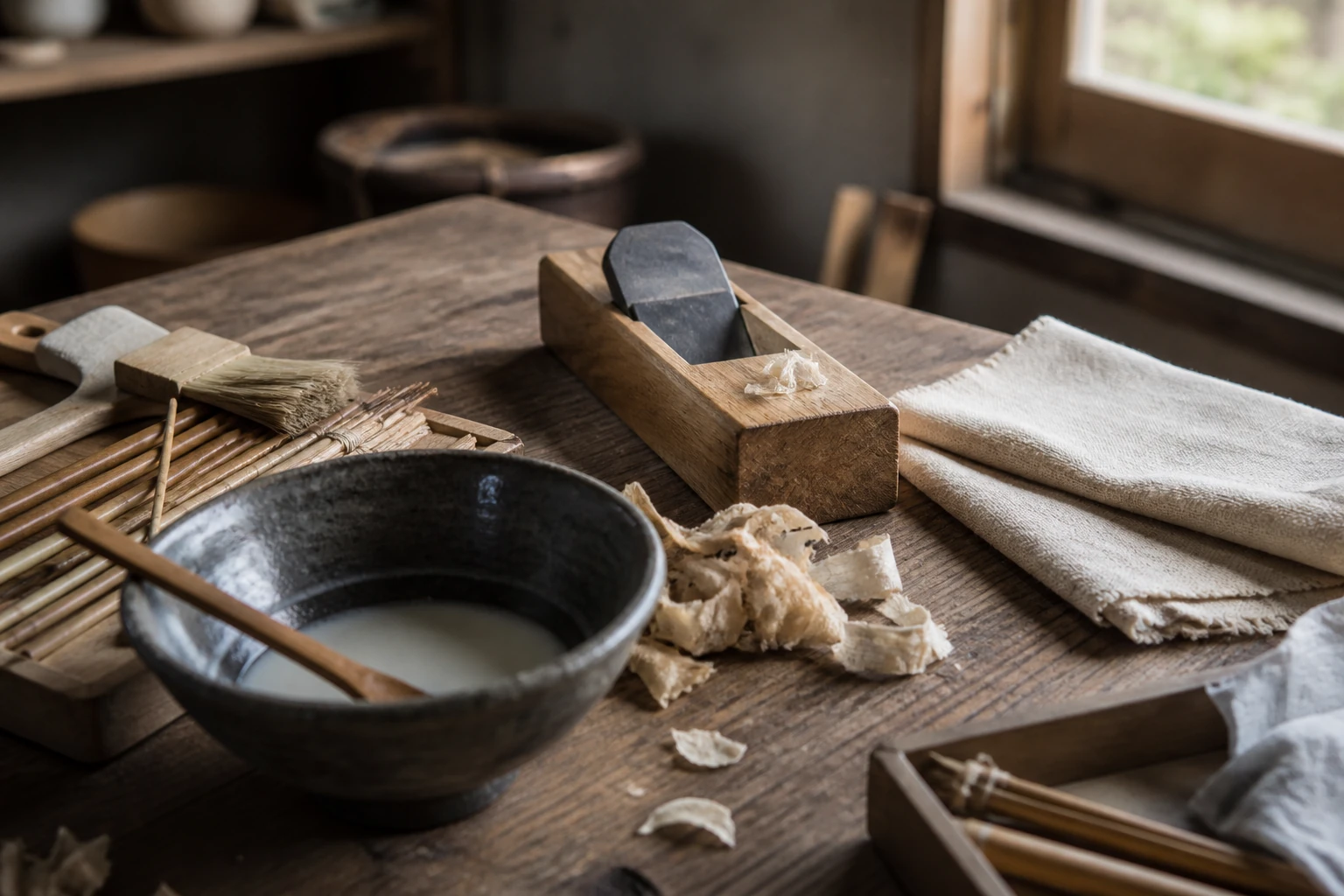
The listing states this piece isn’t for dishwashers or microwaves, which lines up with how we’ve covered hinoki elsewhere on this site: hand wash, and let it dry rather than leaving it wet. Because this one carries a stated polyurethane coating rather than being bare wood, it doesn’t need the mineral-oil routine some other wood pieces get, but it still shouldn’t be soaked for extended periods, since standing water is hard on any wood joinery over time, coated or not.
Which Size Should You Buy?
- For individual plating, a couple of pieces of nigiri, or a single-serving presentation, get the small (8.3” x 4.7”).
- For a shared plate at a dinner for two to four, get the large (10.6” x 7.1”).
- If the rough-edges complaint above gives you pause and you’d rather have a larger review base to go on, the bamboo geta-style plates covered above are a legitimate, less expensive alternative, just understand you’re choosing a different wood and a listing that doesn’t state a country of manufacture.
FAQ
Is TIKUSAN a real Japanese company? We can’t independently verify TIKUSAN’s corporate history the way we’ve verified some other brands on this site through official company pages, but its listings across multiple product categories (this platter, the donabe pots, the cutting boards, the suribachi mortar) consistently fill in Japan as the country of origin in structured product details, which is the same verifiable signal we use throughout this site.
Why does this listing only have 5 reviews if the brand is established elsewhere? Review counts are specific to each individual listing, not shared across a brand’s whole catalog on Amazon. TIKUSAN’s donabe pots and cutting boards, covered in our other reviews, have their own, separate review histories. A newer or lower-volume listing like this one simply hasn’t accumulated many ratings yet, which is different from an established product having a poor track record.
Should I avoid this because of the one negative review? That’s a judgment call we’d rather hand you the facts for than make for you. One detailed complaint about finish quality, against two positive verified reviews and a sample size too small to treat as statistically meaningful either way, is genuinely ambiguous. If finish consistency matters a lot to you and the small sample size bothers you, the bamboo alternatives above have a larger, more established review base, at the cost of being a different wood with an undisclosed country of manufacture.
What’s the difference between a sushi geta and a regular cutting board? A geta is a serving piece with raised feet, meant to present food at the table, not a cutting surface. Our hinoki cutting board guide covers the flat, full-size boards meant for actual knife work.
Final Thoughts
TIKUSAN’s hinoki geta plate clears the bar this site checks first: a country-of-origin field that says Japan, on every size, not just in the title. Whether it clears every other bar depends on something we can’t fully resolve from 5 reviews: consistent finish quality on a handcrafted, naturally variable material. We’d rather tell you that plainly than round it up to a five-pick “best of” list it doesn’t have the review history to support. For the wood itself, see our hinoki cutting board review, and for TIKUSAN’s other verified products, see our kitchen tools directory.