Some of the shops we link to are partners who may pay us when you buy through them. This doesn't change which pieces we recommend. How this works.
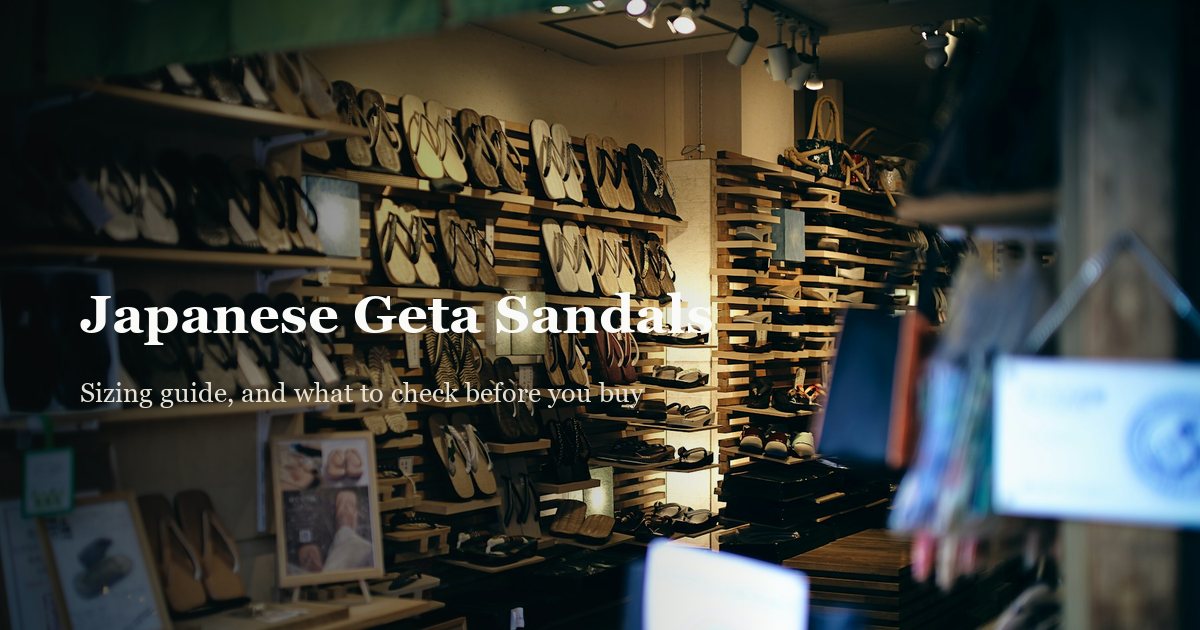
Geta are traditionally sized so the heel hangs slightly off the back edge, not flush with the sole. Most first-time buyers size down when they should be sizing to fit the ball of the foot instead. On the authenticity side, we couldn't find a single geta listing on Amazon.com, including the bestseller, that states a country of origin in its structured product details. The Azumasun Japanese Wooden Clogs with Tabi Socks is the most-reviewed option by a wide margin (4.4★, roughly 2,900 ratings) and uses real wood and cotton rather than the molded plastic construction of the costume-branded alternatives sitting next to it, but treat "Japanese" in these titles as a style claim, not a manufacturing one, unless a listing specifically names a wood type or production region.
What a Traditional Geta Actually Is
A geta is a raised wooden sandal, traditionally carved from a single block of paulownia wood (kiri in Japanese), prized for being unusually light for its strength. Per Wikipedia’s entry on geta, the sole is elevated on “teeth” (ha), usually two, sometimes three, which lift the foot above mud, rain, and snow: a practical design going back centuries, not a stylistic add-on. Archaeological examples from the Heian period (794–1185) have been excavated in Aomori. A cloth thong called the hanao passes between the big and second toe to hold the foot in place, the same split-toe fit as tabi socks.
Production is still concentrated in specific regions of Japan. According to Japan Objects, Fukuyama city in Hiroshima Prefecture alone produces over 60% of Japan’s geta today, with Shizuoka and Oita as other named centers, and traditional pieces are carved from a single piece of wood rather than assembled from parts. That’s the kind of claim (a named production region, a named material, a single-block construction) that a listing can actually back up or fail to back up, the same logic this site applies to hinoki cutting boards and every other category we’ve checked.
The Sizing Mistake Almost Everyone Makes
This is the part most buyers get wrong, and it isn’t intuitive if you’re used to sneaker sizing. Per Japan Objects, an experienced geta wearer’s heel is supposed to extend about 1cm (roughly half an inch) past the back edge of the wooden sole. That overhang isn’t a fit failure. It shifts your weight forward onto the balls of your feet and the front tooth, which is how geta are designed to be walked in. Sizing up to eliminate the overhang entirely, which is the instinct most first-time buyers have, actually makes the sandal harder to walk in, not easier.
Real buyer reviews on the Azumasun listing back this up as a genuine point of confusion: several reviewers describe going up a size for wide feet and still finding the fit loose, while at least one reported that even the largest available size ran small for a US women’s size 10 wide foot. Geta sizing, in other words, runs narrower and less forgiving than typical Western shoe sizing, and the “correct” fit intentionally looks too small by sneaker standards. If you’re between sizes, sizing up is the safer default, but expect the fit logic to feel unfamiliar regardless of which size you land on.
Comparison at a Glance
| Azumasun (Amazon bestseller) | Typical “cosplay”-branded geta | |
|---|---|---|
| Reviews | 4.4★, ~2,900 ratings | Often under 300, several under 50 |
| Material stated | Wood and pure cotton cloth | Often unspecified, frequently plastic-look |
| Country of origin field | Not stated | Not stated |
| Marketed for | Everyday wear, kimono/yukata | Costume, cosplay, Halloween |
| Includes tabi socks | Yes | Sometimes |
Checked against current Amazon.com listings on September 15, 2026. Prices vary by retailer and change often.
The Honest Origin Picture
We searched Amazon for “geta sandals made in Japan” and checked the structured product details on the top results, including the Azumasun bestseller directly. None of the actual geta listings (as opposed to setta or zori, a different, flat-soled sandal style) state a country of origin field. Azumasun’s own listing describes the material as “Wood and pure cotton cloth” and repeats “Japanese” and “Japan” several times in its marketing bullet points, but doesn’t fill in an origin field the way, for example, the hinoki cutting boards or Silky pruning saws we’ve checked in other categories do.
That’s not the same as evidence the sandals are mislabeled. A real wood-and-cotton geta at this price point is a plausible product regardless of exactly where it was assembled, and Azumasun’s construction (solid wood sole, cotton hanao, included tabi socks) is a real step up from the plastic, flip-flop-soled “cosplay” and “ninja” branded alternatives that share the same search results. It just means the “Japanese” in the title is functioning as a style and category descriptor here, the same way it does across most of what we’ve checked on this site, rather than as a verified manufacturing claim.
The Azumasun Pick

Azumasun Wooden Clogs with Tabi Socks
Real wood sole, cotton hanao, includes a pair of tabi socks. 4.4★ (~2,900 ratings).
Pros:
- By far the most-reviewed geta listing on Amazon.com, with a real track record rather than a handful of ratings
- Real wood sole and cotton hanao thong, not a molded plastic imitation
- Comes with a pair of split-toe tabi socks, which most competing listings sell separately
- Sized in a proper geta range (not disguised sneaker sizing)
Cons:
- No country-of-origin field in the listing, so treat “Japanese” as a style descriptor rather than a verified claim
- Sizing runs narrower than Western shoe sizing and takes some getting used to
- Several reviewers with wide feet reported needing to size up, and at least one found even the largest size ran small
Bottom line: the practical pick if you want real wood-and-cotton geta with an actual review history, as long as you don’t need a verified country-of-origin claim to go with it.

What the Costume-Branded Versions Get You Instead
Search results for geta on Amazon are mixed in with a separate category of “cosplay,” “ninja,” and “anime” branded wooden clog look-alikes, some with review counts in the single digits. These aren’t necessarily lower quality for their intended purpose (a Halloween costume doesn’t need the same durability as daily wear), but several use a thinner, flip-flop-style rubber sole rather than the elevated wooden teeth that define an actual geta, which is a real structural difference, not just a branding one. If the reason you’re buying geta is the traditional silhouette, teeth and all, check the product photos for the raised wooden sole specifically rather than trusting “geta” in the title alone.
FAQ
How much should my heel overhang the back of a geta? About 1cm (roughly half an inch) for an experienced wearer, according to Japan Objects. It’s intentional: it shifts weight onto the balls of your feet and the front tooth, which is how geta are meant to be walked in, not a sign you ordered the wrong size.
Do I need tabi socks to wear geta? Traditionally geta are worn barefoot in summer, but tabi socks (split at the big toe) are common in cooler weather or formal settings, and they help prevent blisters from the hanao thong. The Azumasun pick above includes a pair.
Why doesn’t any geta listing on Amazon say where it’s made? We checked directly and couldn’t find one that fills in a country-of-origin field, including the bestseller. That’s consistent with what this site has found across most categories: “Japanese” in a product title is usually a style or category word, not a verified manufacturing claim, unless the listing separately names a maker, wood type, or production region.
What’s the difference between geta and zori or setta? Geta are raised on wooden teeth. Zori and setta are flatter, thong-style sandals without the elevated wooden sole: zori are typically straw or fabric-covered, and setta usually add a leather or rubber sole to a zori-style base. They’re related but distinct footwear categories, and some Amazon search results mix all three together.
Final Thoughts
Geta sizing runs against most people’s instincts, on purpose, and that’s worth knowing before you order regardless of which pair you buy. On origin, this is a more mixed picture than most categories on this site: even the clear market leader doesn’t put a country of origin in its spec sheet, so we’re recommending Azumasun on real wood-and-cotton construction and an actual review history, not on a verified Made in Japan claim. For the general method behind checks like this, see our buyer’s checklist for real Japanese craft.
Keep Reading
- Adding a summer accessory? See Kyoto-made sensu folding fans.
- Looking for other traditional pieces? Read which daruma dolls are actually made in Japan and our guide to made-in-Japan calligraphy sets.