Some of the shops we link to are partners who may pay us when you buy through them. This doesn't change which pieces we recommend. How this works.
Quick answer: the KING KW65 1000/6000 Combination Whetstone gets you two grits, a sharpening face and a finishing face, in one $29 stone, but it needs a 10-15 minute soak before every session. The Shapton Kuromaku #1000 skips the soak entirely (a quick splash of water and it’s ready) but it’s a single 1000-grit stone, so you’d need a second Shapton stone for a finishing grit. Neither is “better” outright; they trade convenience for coverage in opposite directions.
Comparison at a Glance
| KING KW65 | Shapton Kuromaku #1000 | |
|---|---|---|
| Grit(s) | 1000 (sharpening) / 6000 (finishing), one stone | 1000 only |
| Prep | Soak 10-15 min before use | Splash of water, ready immediately |
| Construction | Traditional bonded waterstone | Glass-backed ceramic |
| Price | ~$29.00 | ~$44.95 |
| Base included | Yes, doubles as soaking dish | No, sold as the stone only |
| Made in | Japan | Japan |
Prices vary by retailer and change often; treat this as a starting point, not a quote.
KING KW65 1000/6000 Combination — Best for One Stone That Does Two Jobs
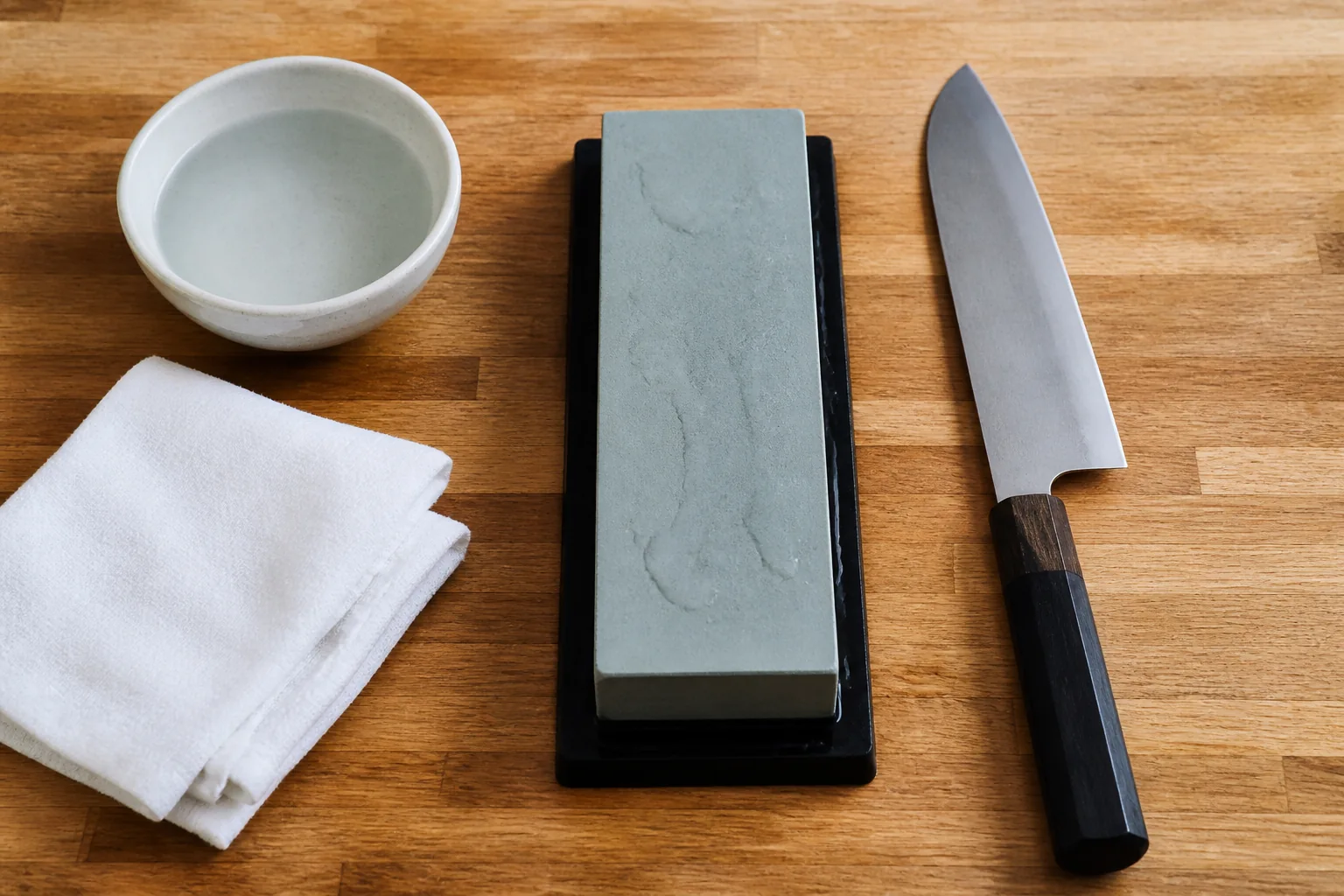
KING is an established Japanese whetstone maker, and the KW65 pairs a 1000-grit sharpening face with a 6000-grit finishing face on opposite sides of the same block. For a home cook who wants one purchase that covers routine sharpening and a reasonably refined finish, that’s the appeal: no second stone to buy, no second thing to store. The tradeoff is prep time. This is a traditional bonded waterstone, not a splash-and-go ceramic, so it needs a proper 10-15 minute soak before each sharpening session, and the included plastic base doubles as that soaking dish.
Pros:
- Two usable grits (1000 and 6000) in a single stone and a single purchase
- Comes with a base, so there’s nothing extra to buy before the first use
- 4.6★ across 7,499 ratings, the more established of the two products here
Cons:
- Needs a real soak before every session, not a quick splash
- The 6000-grit side is a light finishing touch, not the mirror polish a dedicated finer stone gives

KING KW65 1000/6000 Combination Whetstone
Sharpening and finishing faces in one soak-first stone. 4.6★ (7,499 ratings).
Bottom line: the pick if you want one stone, one purchase, and don’t mind planning a sharpening session 15 minutes ahead.
Shapton Kuromaku #1000 — Best for No-Soak Convenience
Shapton built its reputation on glass-backed ceramic stones that skip the soaking step entirely: splash some water on the surface and it’s ready. For anyone who’s put off sharpening because setting up felt like a chore, that difference is real, not marketing. What you’re not getting is a second grit on the same stone. The Kuromaku #1000 is a single-grit stone, so a finishing pass at a higher grit means buying a second Shapton stone (Shapton sells 5000, 8000, and 12000-grit versions in the same line) rather than flipping the one you already own.
Pros:
- No soaking; a quick splash and it’s ready to use
- Glass backing resists the dishing (uneven wear) that softer stones develop faster
- 4.6★ across roughly 4,600 ratings on Amazon, a well-established single-grit stone
Cons:
- One grit per stone, so a full progression means buying more than one Shapton
- Sold as the stone only; no base or soaking dish included

Shapton Kuromaku #1000
Ceramic stone, no soak needed, single 1000 grit. 4.6★ (~4,600 ratings).
Bottom line: the pick if the soaking step is genuinely what’s keeping you from sharpening regularly, and you’re fine building out a multi-stone set over time rather than in one purchase.
The Real Difference Isn’t Sharpness, It’s How Each One Fits Into Your Routine
Both stones will put a genuinely sharp edge on a knife; that part isn’t in question, and it’s not really what the “King vs. Shapton” question is actually asking once you look at what people debate on knife forums and Reddit threads about it. The real difference is logistical. KING’s combination format means one stone covers two grits, but only if you’re willing to soak it ahead of time, which pushes a lot of people toward sharpening in planned sessions rather than spontaneously when a knife feels dull. Shapton’s splash-and-go format removes that friction entirely, but because each stone is a single grit, building a full progression (say, 1000 for sharpening and 5000 or 8000 for finishing) costs more and takes up more shelf space than KING’s one-stone approach.
If you already own one of the knives from our santoku knife guide, either stone will maintain it well. The choice comes down to whether you’d rather plan ahead for a soak or pay a bit more per grit for the convenience of skipping it.
Which One Should You Buy?
- If you want one stone, one purchase, and don’t mind a 10-15 minute soak: get the KING KW65.
- If the soaking step is the actual reason you’ve been putting off sharpening: get the Shapton Kuromaku #1000, and plan to add a second Shapton grit later.
- If you want the full Shapton experience across four grits in one purchase instead of buying them one at a time, see the Shapton Kuromaku 4-stone set in our full whetstone roundup.
FAQ
Is Shapton actually sharper than King? No. Grit for grit, both put a comparable edge on a knife. The difference is preparation (soak vs. splash) and format (one combination stone vs. one grit per stone), not sharpening quality.
Can I mix brands, like a King 1000 with a Shapton finishing stone? Yes. Grit number is what matters for the progression, not the brand. Plenty of people run a KING for sharpening and add a Shapton or Naniwa finishing stone later.
Do I need both a 1000 and a 6000+ grit stone? Not necessarily. A 1000-grit stone alone will keep a knife working-sharp. The finer grit is for a more refined, longer-lasting edge, which matters more to people who sharpen often than to someone doing basic maintenance a few times a year.
How is this different from Shapton vs. Naniwa? Naniwa’s ceramic combination stones, like the one in our whetstone roundup, also use a quick-splash construction similar to Shapton’s, but Naniwa sells them as combination stones (two grits, one stone) the way KING does, rather than one grit per stone. So a Naniwa vs. Shapton comparison is closer to a construction-material question (ceramic type, feel, wear pattern) than the soak-vs-splash and one-stone-vs-many-stones tradeoff that actually separates King from Shapton.
Final Thoughts
Neither stone is objectively better; they’re built around different assumptions about how you’ll actually sharpen. KING’s combination format rewards planning a session ahead of time in exchange for two grits in one purchase. Shapton’s splash-and-go format rewards spontaneity in exchange for buying grits separately. If you’re still deciding between a first whetstone at all, our full roundup of Japanese whetstones covers five picks from repair grit through mirror finish, including both of these, and our whetstone grit guide explains what each grit number actually does. Both KING and Shapton pass the country-of-origin check our buyer’s checklist for real Japanese craft walks through, which is worth running any unfamiliar “Japanese whetstone” listing through before you buy.