Some of the shops we link to are partners who may pay us when you buy through them. This doesn't change which pieces we recommend. How this works.
Quick answer: if you want one stone that covers most sharpening needs, get the KING KW65 1000/6000 Combination Whetstone — a genuinely Japanese-made stone that handles both routine sharpening and finishing. Five real, currently listed picks below, from a 400-grit repair stone to a full progression set.
Comparison at a Glance
| Whetstone | Grit | Made In | Best For |
|---|---|---|---|
| KING KW65 Combination | 1000/6000 | Japan | Best overall / first stone |
| Naniwa COMBI Ceramic | 1000/3000 | Japan | Least soaking hassle |
| Naniwa Chosera SS-400 | 400 | Japan | Repairing chips and damage |
| Suehiro Cerax 8080 | 8000 | Japan | Standalone finishing stone |
| Shapton Kuromaku Set | 1000/5000/8000/12000 | Japan | Going all-in on sharpening |
Prices vary by retailer and change often — treat this as a starting point, not a quote.
Grit Numbers, Briefly
Grit number is the abrasive’s coarseness, and it’s the whole game with whetstones: lower numbers cut faster and remove more metal, higher numbers polish and refine. As a rough map — 400 grit and below repairs chips and reprofiles a damaged edge; 1000 grit is the everyday sharpening stone most people reach for; 3000–6000 grit refines that edge further; 8000 grit and above is a finishing/polishing stone that won’t sharpen a dull knife on its own but will take an already-sharp edge to a mirror finish. Most home cooks only need a 1000/6000 combination stone — the finer finishing stones and coarse repair stones are for people who sharpen often enough to want the extra steps.
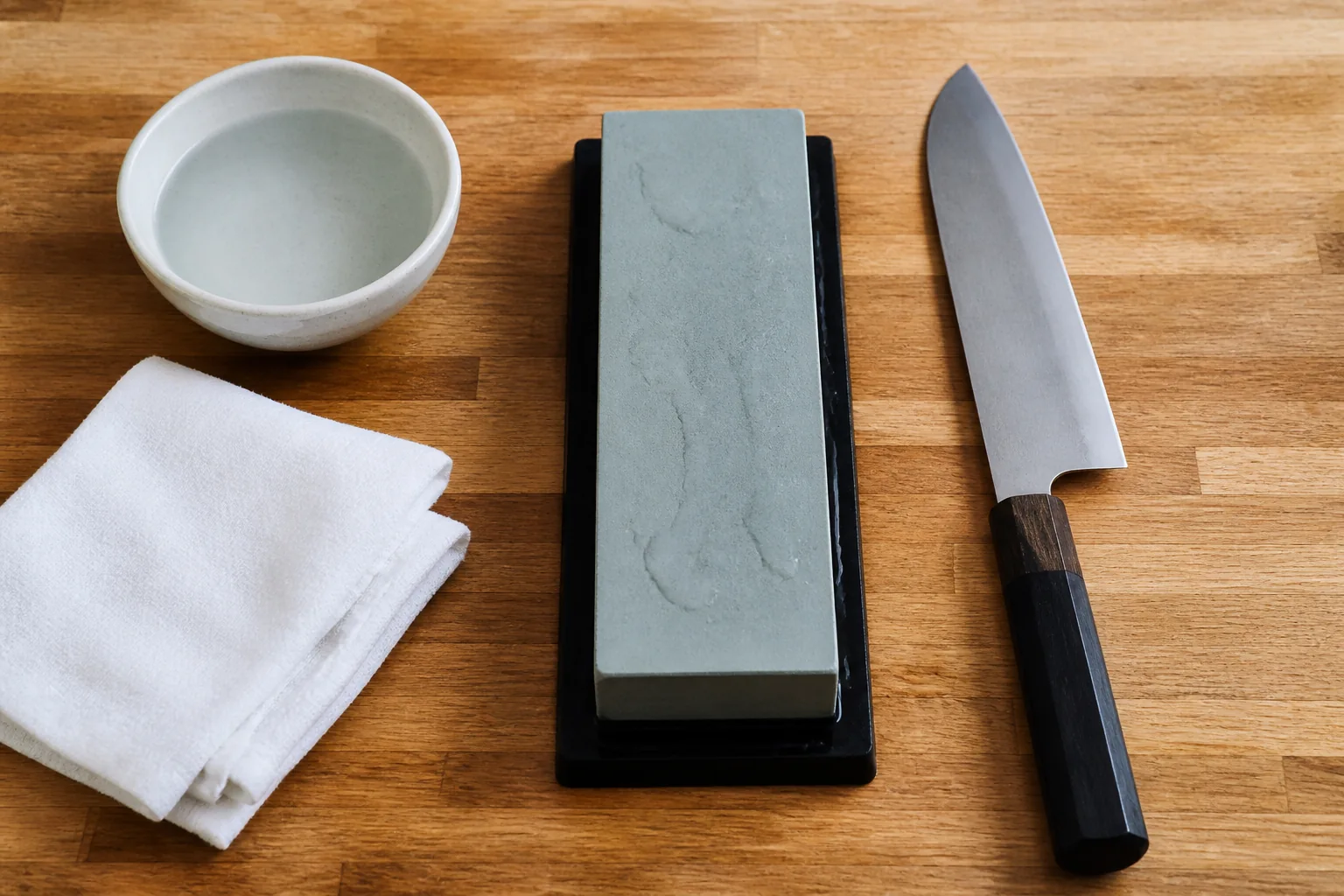
One more term worth knowing: some stones need soaking in water for 10–15 minutes before use, while ceramic-bonded “splash-and-go” stones only need a quick splash. Which category a given stone falls into isn’t always obvious from the name, so check the specific product’s instructions rather than assuming.
1. KING KW65 1000/6000 Combination Whetstone — Best Overall
KING is an established Japanese whetstone maker, and this two-sided stone pairs a 1000-grit sharpening face with a 6000-grit finishing face in one block — the combination that covers what most home cooks actually need without buying two separate stones. It comes with a plastic base that doubles as a soaking container, so there’s nothing extra to source before your first sharpening session.
Pros:
- Genuinely Japan-made, not a Chinese stone marketed with Japanese branding
- One stone covers both sharpening and light finishing
- Plastic base included, so no separate holder or soaking dish needed
Cons:
- 1000/6000 won’t repair a badly chipped edge — you’d want a coarser stone for that
- Traditional stone (not splash-and-go), so it needs a proper soak before use
Bottom line: the one to buy first if you don’t already own a whetstone.

KING KW65 1000/6000 Combination Whetstone
Covers routine sharpening and finishing in one stone. 4.6★ (7,499 ratings).
2. Naniwa COMBI Ceramic Whetstone #1000/3000 — Best for Less Soaking Hassle
Naniwa is a well-known Japanese stone manufacturer, and this combination stone uses a ceramic-bonded construction that generally needs only a short splash of water rather than a long soak — worth confirming against the specific listing’s instructions, but a real convenience difference from traditional stones like the KING above. The 1000/3000 pairing sits a step below the KW65’s finishing grit, aimed more at routine maintenance than a polished edge.
Pros:
- Ceramic construction is faster to get sharpening on, without the wait for a full soak
- Genuinely Japanese-made from an established stone manufacturer
- Compact size stores easily
Cons:
- 3000 grit tops out lower than the KING’s 6000-grit finishing face, so the edge won’t be quite as refined
- No base included — you’ll want a separate holder
Bottom line: the pick if the 10–15 minute soak on traditional stones is what’s been keeping you from sharpening regularly.

NANIWA COMBI Ceramic Whetstone #1000/3000
Ceramic stone, no long soak needed, from Japan. 3.8★ (435 ratings).
3. Naniwa Chosera SS-400 — Best for Repairing Chips and Damage
At 400 grit, this is a dedicated repair stone, not something you’d reach for on a knife that’s just gone a little dull. Naniwa’s Chosera line is a professional-grade stone, and 400 grit is coarse enough to actually reprofile an edge or grind out a small chip — a job a 1000-grit stone will struggle with and take far longer to finish.
Pros:
- Coarse enough to fix real damage, not just touch up a dull edge
- Professional-grade line from an established Japanese maker
- Cuts fast, so repair jobs don’t take as long as attempting them on a finer stone
Cons:
- Too coarse for routine sharpening — you’ll still need a 1000-grit-or-finer stone afterward
- Single-purpose stone, so it’s an add-on rather than a first purchase
Bottom line: the one to add once you’ve actually chipped a blade and a combination stone isn’t cutting it.

Naniwa Chosera Whetstone, 400 Grit
For chip repair, made in Japan. 4.8★ (474 ratings).
4. Suehiro Cerax 8000 — Best Standalone Finishing Stone
Suehiro is a Japanese whetstone brand, and the Cerax 8000-grit line is a single-purpose finishing stone — it won’t sharpen a dull edge, but it’ll take an edge that’s already sharpened on a coarser stone to a noticeably smoother, more refined finish. This is the stone for someone who already owns a 1000-grit stone and wants to add a genuine finishing step rather than buy another combination stone. (The original Cerax 8080 model this section referenced has since been discontinued; the current CR-8003-W is Suehiro’s replacement at the same grit.)
Pros:
- Dedicated finishing grit does a more thorough job than a combination stone’s finer side
- Established Japanese whetstone brand
- A single stone rather than a set, if you only want the one finishing grit
Cons:
- Does nothing for a dull or damaged edge on its own — it’s a finishing step, not a full sharpening solution
- Only useful if you already own a coarser stone to sharpen with first
Bottom line: the pick for adding a genuine finishing step once you already have a 1000-grit stone.

Suehiro Cerax CR-8003-W, 8000 Grit
Built-in nagura stone, non-slip base, made in Japan. 5.0★ (4 ratings).
5. Shapton Kuromaku 4-Stone Set (1000/5000/8000/12000) — Best for Going All-In
Shapton is a Japanese whetstone manufacturer known for glass-backed “splash-and-go” ceramic stones that skip the soaking step entirely. This set bundles four grits — 1000, 5000, 8000, and 12000 — covering routine sharpening through a genuinely mirror-polished edge, which is a different proposition from buying single stones one at a time: it’s the full progression in one purchase for someone who’s decided sharpening is a hobby, not just a chore.
Pros:
- Four grits in one purchase instead of buying stones individually over time
- Splash-and-go ceramic construction across the whole set, no soaking required
- 12000 grit goes well beyond what the other picks here offer
Cons:
- The most expensive option on this list by a wide margin
- Overkill if you just want a knife that’s reliably sharp, not a mirror edge
Bottom line: the pick if you’ve decided sharpening is worth doing properly, not just adequately.

SHAPTON Kuromaku F-Set (#1000/5000/8000/12000)
Four-stone progression, made in Japan. 4.7★ (218 ratings).
Genuinely Japanese-Made vs. “Japanese-Style”
Search results for Japanese whetstones turn up plenty of budget combination stones marketed with Japanese-sounding names and imagery, manufactured in China rather than Japan. That’s not automatically a reason to avoid them — a well-made stone can sharpen a knife regardless of where it’s produced, and country of manufacture isn’t the only thing that matters. But if the reason you’re specifically shopping for a Japanese whetstone is the country of origin itself, check the listing for an actual maker name and stated country of manufacture rather than relying on the product name or packaging design. All five picks above are from named Japanese stone manufacturers (King, Naniwa, Suehiro, Shapton) with production in Japan, which is the same maker-and-origin check we’d apply to a Japanese knife listing.
Which One Should You Buy?
- If this is your first whetstone, get the KING KW65 1000/6000 Combination.
- If soaking time is what’s stopping you from sharpening regularly, get the Naniwa COMBI Ceramic.
- If you’ve actually chipped a blade, add the Naniwa Chosera SS-400.
- If you already sharpen on a 1000-grit stone and want a real finishing step, add the Suehiro Cerax 8080.
- If you want the full progression in one purchase, get the Shapton Kuromaku Set.
FAQ
Do I need a whetstone if my knife came from Japan? Not immediately, but any knife dulls with use, and a pull-through sharpener or honing rod can’t refine an edge the way a whetstone can. If you own one of the knives from our santoku knife guide, a 1000/6000 combination stone is the natural next purchase.
How often do I need to true (flatten) a whetstone? Stones wear unevenly with use and develop a slight dip in the middle, which is normal rather than a sign of a bad stone. A flattening (truing) stone or a sheet of wet-dry sandpaper on a flat surface handles this — how often depends on how much you sharpen, but checking every few uses with a straightedge is a reasonable habit.
Can I use a Japanese whetstone on a Western (German-style) knife? Yes. Grit progression works the same regardless of where the knife was made — the main difference is that Japanese knives are often ground to a more acute edge angle, so you’d hold the blade at a shallower angle against the stone than you would for a typical Western chef’s knife.
Final Thoughts
A combination stone like the KING KW65 covers real sharpening needs for most people; the coarser repair stone and finer finishing options are worth adding only once you know you’ll actually use them. If you’re not sure which grit numbers you need in the first place, our whetstone grit guide explains what each range actually does. And if you’re shopping for a whetstone (or a knife) specifically because it’s Japanese-made, our buyer’s checklist for spotting Japanese-style knockoffs covers the same named-maker, named-origin checks that separated the picks above from the Chinese-made stones sold alongside them. The same steel-spec-vs-country-of-origin gap shows up in Japanese pruning saws too.
Keep Reading
- Deciding between two of the brands above? Read King vs Shapton and Shapton vs Naniwa.
- Sharpening a single-bevel knife? See deba knife vs fillet knife for how the two blades differ.
- Sharpening woodworking tools too? Read Japanese chisels vs Western chisels and the kanna hand plane vs a Western plane.
- Cutting as well as planing? See Japanese pull saws vs Western saws.