Some of the shops we link to are partners who may pay us when you buy through them. This doesn't change which pieces we recommend. How this works.
Grit number measures how coarse or fine a whetstone's abrasive is: lower numbers cut faster and remove more metal, higher numbers refine and polish. Most home cooks only ever need one stone in the 1000-grit range for routine sharpening, plus optionally a finer stone for a better finish. This guide breaks down what each grit range is actually for, then points to the specific stones we've reviewed at each stage.
The Grit Ranges, and What Each One Is Actually For
Grit numbers on a whetstone work the same way sandpaper grit does: the number is roughly proportional to how fine the abrasive particles are, so a low number is coarse and fast-cutting, and a high number is fine and slow-cutting. Where people get tripped up is assuming a single stone should cover the whole range. In practice, whetstones are split into a few functional bands, and most of them solve a different problem, not the same problem to different degrees.
| Grit range | What it does | Who actually needs it |
|---|---|---|
| 220–400 | Repairs chips, reshapes a damaged or badly rolled edge | Only if a blade is actually damaged, not for routine touch-ups |
| 700–1200 | Everyday sharpening, restores a working edge | Almost everyone; this is the stone to own first |
| 3000–6000 | Refines the edge past what a 1000-grit stone leaves | Useful, not essential, for a noticeably cleaner cut |
| 8000+ | Polishes an edge that’s already sharp | Only useful once you already own a coarser stone |
A coarse stone alone will leave a knife technically sharp but rough at a microscopic level, and a fine stone alone can’t fix a dull or damaged edge because it doesn’t remove enough metal to reshape anything. The two ends of the range aren’t competing options; they’re sequential steps, and most people only need the middle of the sequence.
Soaking Stones vs. Splash-and-Go Stones
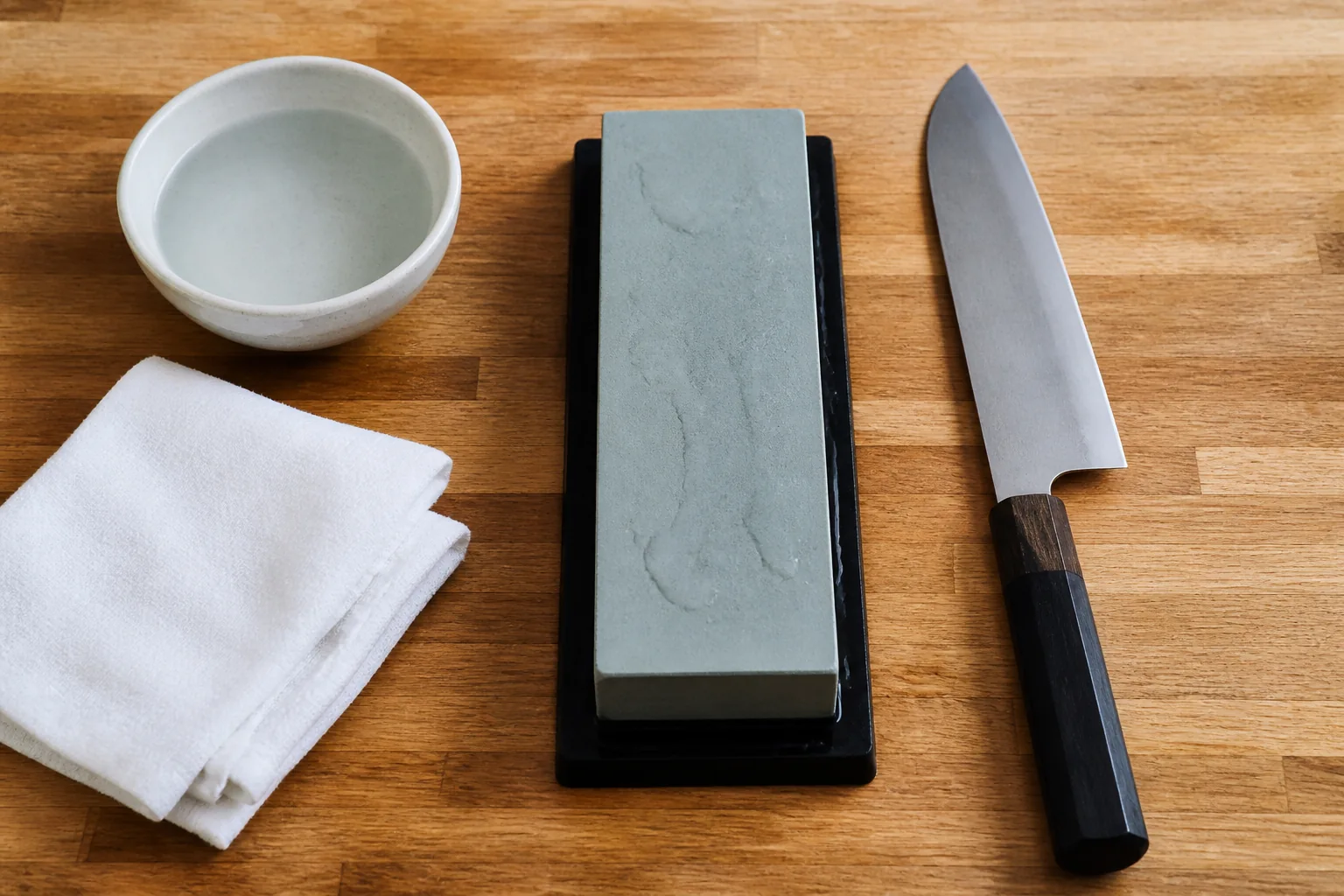
Grit number is one axis. How the stone is bonded is a separate one, and it affects how much setup a sharpening session takes. Traditional bonded waterstones, the kind King and Naniwa’s Chosera line are built from, need a real soak, typically 10 to 15 minutes, before the stone is ready to cut properly. Ceramic-bonded stones, the construction Shapton’s Kuromaku line and some Naniwa combination stones use, only need a quick splash of water and are ready immediately.
Neither construction sharpens better than the other at the same grit; a Shapton #1000 and a King #1000-grit face put a comparably sharp edge on a knife, as we found when we compared them directly. The real tradeoff is prep time against durability: splash-and-go ceramic stones tend to be harder and resist dishing (wearing into an uneven, concave surface) longer, while traditional soaking stones are often thicker, meaning more usable material over the stone’s lifetime, as we found comparing a Shapton against a Naniwa at the same grit. Which one to buy comes down to whether the soak time bothers you, not which one sharpens better.
Building a Progression, Without Overbuying
If this is your first stone: get a single 1000-grit stone, or a 1000/6000 combination stone if you want a light finishing option without a second purchase. This one stone handles routine sharpening for the vast majority of home cooks, and it’s the stone we’d point most readers to first in our full whetstone roundup.
If you’ve chipped a blade or let an edge get genuinely dull: a coarse stone in the 400-grit range is worth adding. It won’t replace your 1000-grit stone; it’s a repair tool you reach for occasionally, not a daily sharpener.
If you already sharpen regularly and want a cleaner cut: a finishing stone at 6000 grit or above is the next reasonable purchase, not the first one. It refines an edge that’s already sharp; it does nothing for a dull knife on its own.
If you’ve decided sharpening is a hobby, not a chore: a full progression set, several grits bundled together, covers the whole range in one purchase instead of buying stones individually over time. That’s the kind of set-and-forget option we cover in the “going all-in” pick of our whetstone roundup.
Buying every grit range at once, before you know how often you’ll actually sharpen, is the most common way to overspend on this category. Start with the middle of the range and add from there only once you’ve run into an actual reason to.
A Note on “Japanese” Grit Numbers Specifically
Grit numbering conventions vary by country and by the standards body behind them (JIS in Japan, ANSI/CAMI in the U.S., FEPA in Europe), and the numbers aren’t always directly comparable across systems even when they look similar. The grit figures in this guide and in our other whetstone reviews follow how each product itself is labeled and marketed to U.S. buyers, rather than converting between standards, since that’s the number you’ll actually see on the listing when you’re shopping.
Grit numbering doesn’t tell you anything about where a stone was manufactured, either. As with Japanese knives, some whetstones marketed with Japanese-sounding names and packaging are made in China rather than Japan. That’s not automatically a reason to avoid a given stone, but if country of origin specifically is why you’re shopping for a Japanese whetstone, check the listing for a named maker and a stated country of manufacture rather than the product name alone. Every stone in our whetstone roundup is from a named Japanese manufacturer (King, Naniwa, Suehiro, or Shapton) with production in Japan.
Where to Go From Here
- Choosing your first stone, or building a full 5-stone lineup: our best Japanese whetstones roundup covers picks from 400 to 12000 grit.
- Deciding between a soaking combination stone and a splash-and-go single-grit stone: King vs. Shapton breaks down that specific tradeoff.
- Deciding between two splash-and-go-adjacent brands at the same grit: Shapton vs. Naniwa compares hardness, wear pattern, and thickness head to head.
- Already own a stone and want to know if your knife needs one: if you own something from our santoku knife guide or nakiri knife guide, a 1000-grit stone is the natural next purchase once a pull-through sharpener stops cutting it.
FAQ
Do I need to buy stones in every grit range to sharpen properly? No. A single stone in the 1000-grit range handles routine sharpening for most home cooks. The coarser and finer ranges solve specific problems (repairing damage, adding polish) that not everyone runs into.
How do I know what grit my knife actually needs? If the edge won’t cut cleanly but isn’t visibly chipped, a 1000-grit stone is the right starting point. If you can see or feel a chip or a rolled section of the edge, you need a coarser stone first, in the 400-grit range, before a 1000-grit stone will do much good. If the knife already cuts well and you just want it to feel more refined, that’s when a finer stone (3000 and up) comes in, not before.
Is a higher grit number always “better”? No, in the same way finer sandpaper isn’t “better” than coarse sandpaper, just suited to a different stage of the job. An 8000-grit stone can’t sharpen a dull knife; it can only polish an edge that’s already been sharpened on something coarser.
Can I use the same whetstone progression on a Western (non-Japanese) knife? Yes. Grit progression works the same regardless of where the knife itself was made. The main practical difference is edge angle: Japanese knives are typically ground to a more acute angle, so you’d hold the blade shallower against the stone than you would for a typical Western chef’s knife.
Final Thoughts
Grit number is a simple idea that gets overcomplicated by product pages trying to sell a full set. Low numbers repair, mid numbers sharpen, high numbers polish, and the construction (soaking vs. splash-and-go) is a separate, unrelated choice about convenience rather than sharpness. Start with one 1000-grit stone from our whetstone roundup, and only add a coarser or finer stone once you’ve actually run into the specific problem it solves.