Some of the shops we link to are partners who may pay us when you buy through them. This doesn't change which pieces we recommend. How this works.
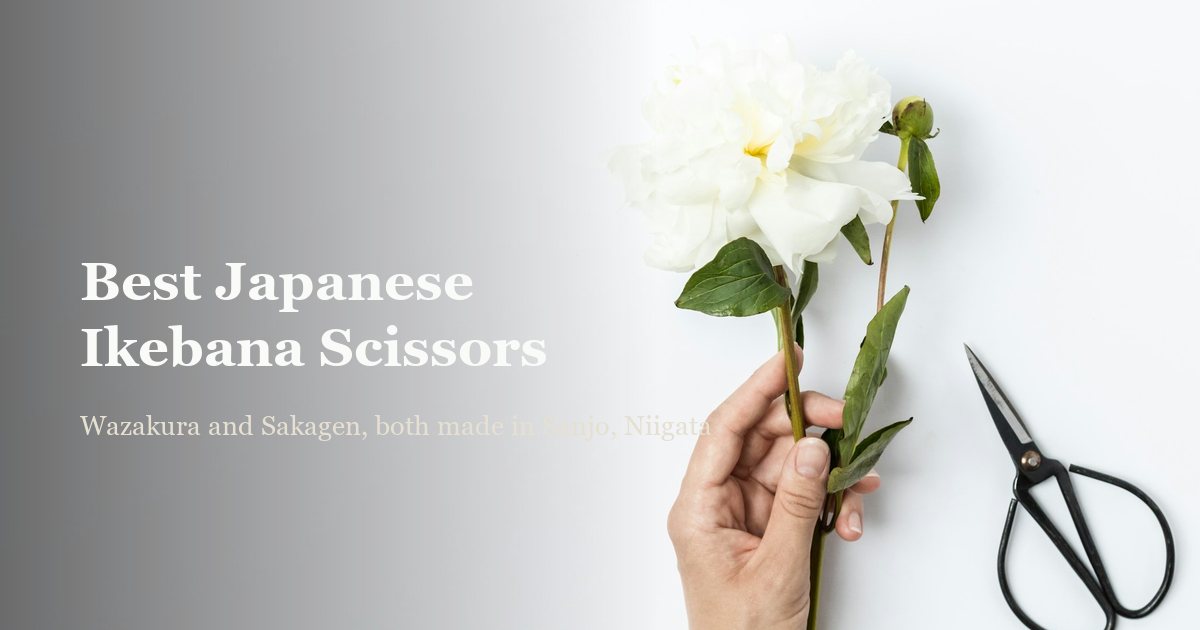
For a curled, "warabi-te" handle built for the Ikenobo style of flower arranging, get the Wazakura Hanafubuki Ikenobo Scissors, sold directly by Wazakura, with "Made in Japan (Niigata prefecture)" stated in the listing. For a looped-handle "Koryu" style that doubles as a general florist tool, get the Sakagen Hand Creation F-170, made by a company with a documented 1903 founding in the same Niigata district. Both name a real manufacturing city. Most other "ikebana scissors" listings on Amazon are perfectly usable tools that simply never say where they're made, which matters if a Japan-made pair is specifically what you're paying for.
A Tool Category This Site Hasn’t Covered Yet
Ikebana, the practice of formal Japanese flower arranging also called kado (華道, “the way of flowers”), is a category this site hasn’t touched before. The question is the same one we keep asking about pruning shears, hori-hori knives, and bonsai scissors: does “Japanese” in the title describe where a pair of scissors was forged, or just the shape it’s copying? Search “ikebana scissors” on Amazon and the results lean more legitimate than most categories on this site. A lot of the top listings do say “Made in Japan.” But the claim still isn’t automatic, and a wide field of unbranded “flower arranging scissors” sets share shelf space with them, at a fraction of the price, with no origin statement anywhere.
Comparison at a Glance
Checked against current Amazon.com listings on September 19, 2026. Prices vary by retailer, color, and change often.
Sanjo, Niigata: A Recurring Name, Not a Coincidence
Both picks below trace back to Sanjo City, in Niigata Prefecture, the same Tsubame-Sanjo metalworking district this site has already independently verified behind Wazakura’s own bonsai scissors and Nisaku’s hori-hori knives. Wazakura’s ikebana listing repeats the same “Made in Japan (Niigata prefecture) handmade / traditional craftsmanship” line it uses on its bonsai tools. Sakagen, a company with a documented history dating to 1903, is headquartered in the same city and states on its own site that its Hand Creation F-170 line is “ALL MADE IN JAPAN,” with a Good Design Award listed among its credentials. Both the award and the founding date exist independently of Amazon: they’re checkable on the company’s own site rather than taken from a product listing.
That’s now four separate brands, across three different tool categories (garden shears, bonsai scissors, hori-hori knives, and now ikebana scissors), all tracing back to the same historically documented cutlery district. A single brand claiming “Made in Japan” is a claim. Four unrelated brands in the same city, each independently checkable, starts to look like a pattern.
One wrinkle: the Sakagen listing on Amazon is sold through a reseller (“Japan Pacific trading”), and the brand field on that listing reads “京都 花明かり” (Kyoto Hana Akari), an export storefront name rather than the manufacturer. That’s a common setup for Japanese manufacturers who don’t run their own Amazon.com storefront, the same pattern this site has already seen with Itchu-do’s tetsubin kettles. It doesn’t change what Sakagen itself says about its own product on its own site, but it’s a real example of why checking the maker’s own site, not just the Amazon brand field, matters.
1. Wazakura Hanafubuki Ikenobo Scissors
Wazakura’s listing states the origin directly: “Made in Japan (Niigata prefecture) handmade / traditional craftsmanship,” forged from S58C black carbon steel, a specific JIS steel grade, the same one this site verified on Wazakura’s bonsai scissors, not a vague “Japanese steel” claim. This pair is built in the Ikenobo style, identifiable by its curled “warabi-te” handle end, named for its resemblance to a young bracken (warabi) frond. That curl isn’t decorative: it’s used to crush the ends of hard stems and woody branches to help them take up water, a detail specific to how Ikenobo-school arranging actually works. It’s also the most-reviewed ikebana scissors we found in this category, with over 50 units bought in the past month at the time we checked.
Pros:
- Origin stated directly: “Made in Japan (Niigata prefecture)”
- Named steel grade (S58C), not a generic “Japanese steel” claim
- Sold directly by Wazakura Japan Inc. on Amazon, not through an unrelated third-party reseller
- Widest review base of any ikebana-specific scissors we found in this category
Cons:
- Black carbon steel needs the same dry-and-oil routine as any high-carbon blade to avoid rust
- The curled Ikenobo handle is a specific-school design choice, not a universal “better” shape; a Koryu-style buyer may prefer a different grip
- Wazakura’s own company history only goes back to 2019, a much shorter track record than the district it forges in
Bottom line: the pick for Ikenobo-style arranging, and the more heavily reviewed of the two.

Wazakura Hanafubuki Ikenobo Ikebana Scissors, 6.5"
Made in Japan (Niigata), S58C carbon steel, Ikenobo-style curled handle. 4.6★ (100 ratings).
2. Sakagen Hand Creation F-170
Sakagen has been making scissors in Sanjo since 1903 according to its own company history, and its Hand Creation line, the F-170 shown here, is the version the company itself describes as “ALL MADE IN JAPAN,” with steel construction running the full length into the handle rather than a plastic grip bonded onto a separate blade. The handle is a looped, Koryu-type design: a large closed loop rather than the Ikenobo curl, built for a firm grip and clean cuts on both flower stems and thin branches. Amazon’s own listing markets this line for both ikebana and general gardening use, which tracks with how the company positions it: a florist scissor with enough bite to double as a light pruner.
Pros:
- Manufacturer with an independently documented 1903 founding, verifiable on the company’s own site, not just the Amazon listing
- Fluorine-coated blade resists rust and stays easier to clean than uncoated carbon steel
- Dual-purpose: rated for both floral work and light garden pruning, useful if you don’t want a second tool
- Good Design Award credential, also documented on the company’s own site
Cons:
- Fewer Amazon.com ratings than the Wazakura pick (51 vs. 100) at the time we checked
- Sold through a reseller rather than a Sakagen-branded storefront, so the Amazon brand field itself doesn’t name the manufacturer, meaning you have to cross-check the company’s own site
- The Koryu loop handle is a firmer, less specialized grip than the Ikenobo curl, which won’t matter unless you’re specifically training in the Ikenobo school
Bottom line: the pick if you want a scissors with a longer-documented maker history, or one that pulls double duty in the garden.

Sakagen Hand Creation F-170 Floral Scissors
Made in Japan, Sanjo, Niigata since 1903. Koryu-style loop handle, fluorine-coated blade. 4.6★ (51 ratings).
Ikenobo vs. Koryu: The Question That Actually Matters Here
Unlike most categories on this site, the biggest practical choice with ikebana scissors isn’t carbon vs. stainless steel. It’s handle shape, and it maps to which style of arranging you’re learning. Japanese flower-arranging scissors come in two broad handle families, and the names describe technique, not origin:
- Ikenobo style (“warabi-te,” curled handle): named for Ikenobo, generally regarded as the oldest ikebana school. The handle end curls back on itself like a young fern frond. That curl is a tool in its own right: arrangers use it to crush the cut end of a woody stem, which helps the flower draw up water and last longer in the arrangement.
- Koryu-type style (looped handle): a large, closed loop grip used by several of the other major schools, including Sogetsu and Ohara. It trades the crushing curl for a firmer, more general-purpose grip and a shorter, thicker blade built for clean cuts on branches as well as stems.
If you already study with a specific school, that answers the question for you. If you don’t, the Koryu-type loop handle (our Sakagen pick) is the more general-purpose choice, since it also holds up to occasional garden use; the Ikenobo curl (our Wazakura pick) is worth choosing specifically if you’re arranging woody stems that benefit from the crushing technique, or if you’re studying Ikenobo style directly.
Where “Ikebana Scissors” Listings Get Murky
Search “flower arranging scissors” instead of “ikebana scissors” specifically, and the field changes fast. Multi-piece floral kits from brands like Leize and similar generic imports sell for a third of what Wazakura or Sakagen charge, with no country of manufacture stated anywhere in the listing. That’s not a false claim, just no claim at all. It’s a different situation from a listing that says “Japanese steel” and means something else: this site has already verified, in its pruning shears guide, that Gardeness markets SK5 “Japanese steel” garden snips while disclosing Taiwan as the actual country of manufacture on its own site. The same brand turns up in ikebana-adjacent searches. None of this makes an unlabeled pair of floral scissors a bad tool for casual cut-flower use. It means that if Japan-made specifically is what you’re paying for, the listing needs to name a company, a city, or a country directly, the same country-of-origin check this site applies everywhere else.
Which One Should You Buy?
- For the Ikenobo school’s curled handle and the largest review base in this category, get the Wazakura Hanafubuki Ikenobo Scissors.
- For a longer-documented manufacturer history and a dual-purpose floral/garden tool, get the Sakagen Hand Creation F-170.
- If a listing only says “ikebana” or “Japanese” in the title and never names a company, a city, or a country of manufacture in the actual description, treat it as a style claim, not a manufacturing one.
FAQ
What’s the difference between Ikenobo and Koryu style ikebana scissors? It’s the handle shape, and it corresponds to technique. Ikenobo-style scissors have a curled “warabi-te” handle end used to crush hard stems for better water uptake; Koryu-type scissors (used by Sogetsu, Ohara, and other schools) have a large looped handle built for a firmer grip and general cutting.
Are these scissors also usable for regular gardening? Yes, within reason. Sakagen markets the F-170 for both floral and light garden work, and the blade is sturdy enough for thin stems and small branches. For actual pruning of woody branches, this site’s dedicated pruning shears guide covers tools built specifically for that job.
Why does the Sakagen Amazon listing not show “Sakagen” as the brand? It’s sold through a reseller, with an export storefront name in the Amazon brand field instead of the manufacturer’s name. That’s a common setup for Japanese manufacturers without a direct Amazon.com storefront. The origin claim itself is still checkable independently on the manufacturer’s own site.
Do I need carbon steel or is coated/alloy steel fine? Wazakura’s S58C carbon steel holds an edge longer but needs to be dried and oiled after use to prevent rust. Sakagen’s fluorine-coated blade is more rust-resistant and lower-maintenance, at some cost to long-term edge retention. Neither is objectively better; it’s a maintenance tradeoff.
Why do so many “ikebana scissors” listings not say where they’re made? The same reason it happens with knives, whetstones, and garden tools on this site: an absent origin claim isn’t necessarily dishonest, but it isn’t verifiable either. A listing that names a real company and city gives you something to check; one that only says “ikebana” or “Japanese” in the title doesn’t.
Final Thoughts
Wazakura and Sakagen both name the same historically documented district (Sanjo, Niigata), and Sakagen’s 1903 founding and Good Design Award are checkable independently of the Amazon listing itself. That’s a higher bar than most of the generic “flower arranging scissors” sold alongside them, which simply don’t make a country claim either way. For the underlying six-point method behind picks like these, applied across every category on this site, see our buyer’s checklist for real vs. knockoff Japanese craft.
For the rest of the same Niigata cutlery district’s output, see our Best Japanese Bonsai Tools and Best Japanese Hori-Hori Garden Knives guides. For the pin frog that holds stems in place once they’re cut, see our kenzan flower frog guide, which covers Wazakura’s Sanjo-made kenzan.