Some of the shops we link to are partners who may pay us when you buy through them. This doesn't change which pieces we recommend. How this works.
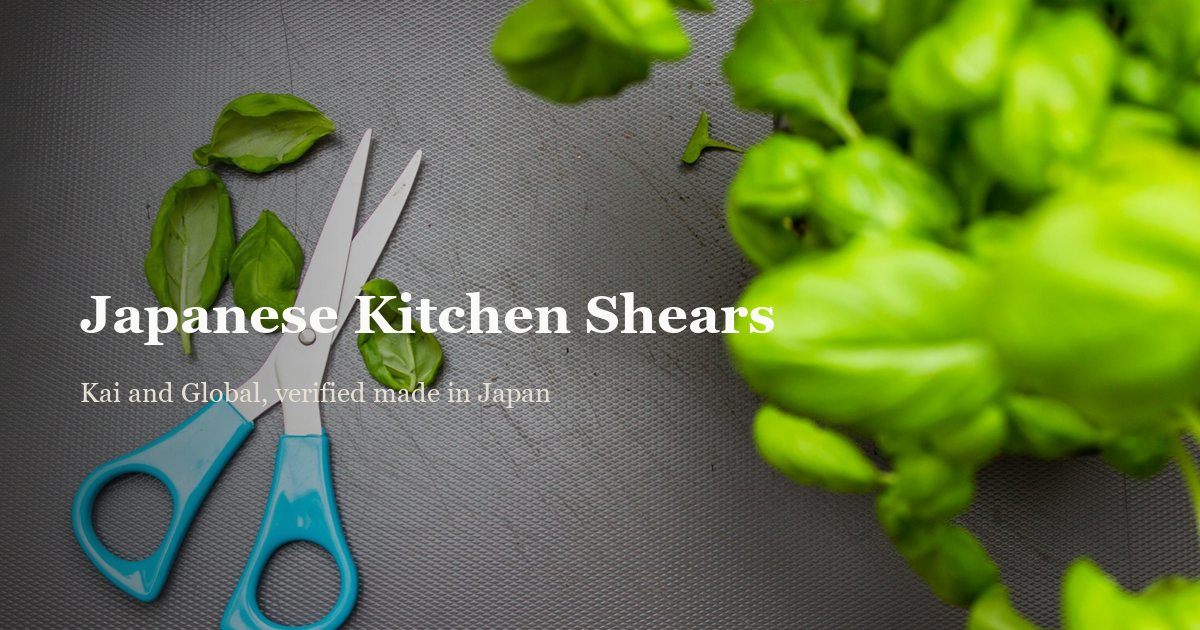
For an everyday pair, get the Kai Corporation Seki Magoroku DH3345 — forged in Seki City, with "Country of Manufacture: Japan" stated directly on the listing. For a premium pick, the Global GKS-210 is made by Yoshida Metal Industry in Tsubame City. Both are genuinely Japan-made; several brands sold right alongside them on Amazon are not, including ones we've already flagged in our knife research.
Why Kitchen Shears Are an Easy Category to Fake
Search “Japanese kitchen shears” and you’ll notice something that doesn’t happen as often in the knife category: steel specs that sound technical but aren’t Japanese at all. Terms like “3Cr13MoV” and “5Cr15MoV” are real steel designations, just not Japanese ones — they’re a Chinese steel numbering convention, unrelated to the Japanese steel types (VG-10, aogami, shirogami) we cover in our knife guides. A listing can pair one of these steel codes with the word “Japanese” in the title and a stock photo of a Japanese-style handle, and most shoppers won’t know enough about steel numbering to catch it.
We ran into this same pattern researching fake Japanese knife brands earlier this year, and while checking shears for this article, we found some of the exact same brands showing up again — see the “Brands to Skip” section below.
Comparison at a Glance
| Shears | Maker | Made In | Roughly |
|---|---|---|---|
| Kai Seki Magoroku DH3345 | Kai Corporation | Seki City, Japan | $30-32 |
| Global GKS-210 | Yoshida Metal Industry | Tsubame City, Japan | $115-120 |
Prices vary by retailer and change often — treat this as a starting point, not a quote.
1. Kai Corporation Seki Magoroku DH3345 — Best Everyday Pick
Kai Corporation is the same company behind the Seki Magoroku Damascus santoku in our santoku knife guide, and this listing states “Country of Manufacture: Japan” in the structured product details, not just the title — the more reliable of the two places to check, per our general knockoffs checklist. The shears are forged stainless steel, one-piece construction that separates into two halves for cleaning, with a serrated edge built to grip food rather than let it slide.
Pros:
- Country of Manufacture field explicitly says Japan, not just implied by the title
- Named maker (Kai) with a manufacturing city (Seki) we’ve already verified in other categories
- Takes apart fully for washing
Cons:
- Painted or coated handles on forged shears in this price range can show wear at the pivot over time — hand wash and dry rather than leaving them wet
- No bottle-opener or nutcracker notch built into the handle, unlike some of the multi-tool shears sold nearby
Bottom line: the pick for most kitchens.

Kai Seki Magoroku Kitchen Scissors
Disassembles for cleaning, forged stainless steel, made in Japan. 4.6★ (590 ratings).
2. Global GKS-210 — Best Premium Pick
Global is the knife brand made by Yoshida Metal Industry (Yoshikin) in Tsubame City, Niigata — a company that’s been making stainless steel cutlery there since 1954, and the maker behind the distinctive dimpled-handle Global knives found in a lot of professional kitchens. The listing names “Yoshida Metal Industry” directly and states the blade material as Cromova 18, Global’s own stainless steel alloy, rather than a vague “premium steel” claim.
Pros:
- Named maker with a well-documented, independent history going back to 1954
- Cromova 18 is a specific, named alloy, not a generic marketing term
- Comfortable dimpled grip matches Global’s knife handles, if you already own the knives
Cons:
- Roughly three to four times the price of the Kai pick above for the same basic job
- Overkill if you just need something to cut open a bag of chips
Bottom line: the pick if you already own Global knives and want the shears to match, or you just want the nicest pair available.

Global Stainless Cutlery Shears
Matches Global's knife lineup, all-stainless construction. 4.6★ (503 ratings).
Brands to Skip
Three brands turned up repeatedly in kitchen shears search results and “customers also viewed” panels while we researched this article, and all three are ones we’d recommend skipping — not because we’re speculating, but because of what’s publicly documented about each:
- Huusk — already flagged in our fake knife brands guide for operating out of Yiwu, China, while marketing itself as based in Yokohama. Its kitchen shears listings use the same “Japanese Steel” language as its knives.
- Mitsumoto Sakari — also flagged in the same guide, based in Shenzhen while claiming a Yokohama headquarters. Its kitchen shears carry a “3CR13MOV” steel designation, the Chinese steel code mentioned above, not a Japanese one.
- Shan Zu — a Chinese cutlery brand that names its own manufacturing location as Yangjiang, Guangdong, on its own “About Us” page. Yangjiang is a real, historic Chinese knife-making city — just not a Japanese one, despite Shan Zu’s Japanese-style branding and product photography.
None of this means these companies are committing fraud — a product can legitimately be “Japanese-style” without being Japanese-made, and that’s a real, sellable aesthetic. It just means the country-of-origin claim implied by their marketing doesn’t hold up against what each company discloses about itself, which is exactly the gap our knockoffs checklist is built to catch.
A Note on Tojiro
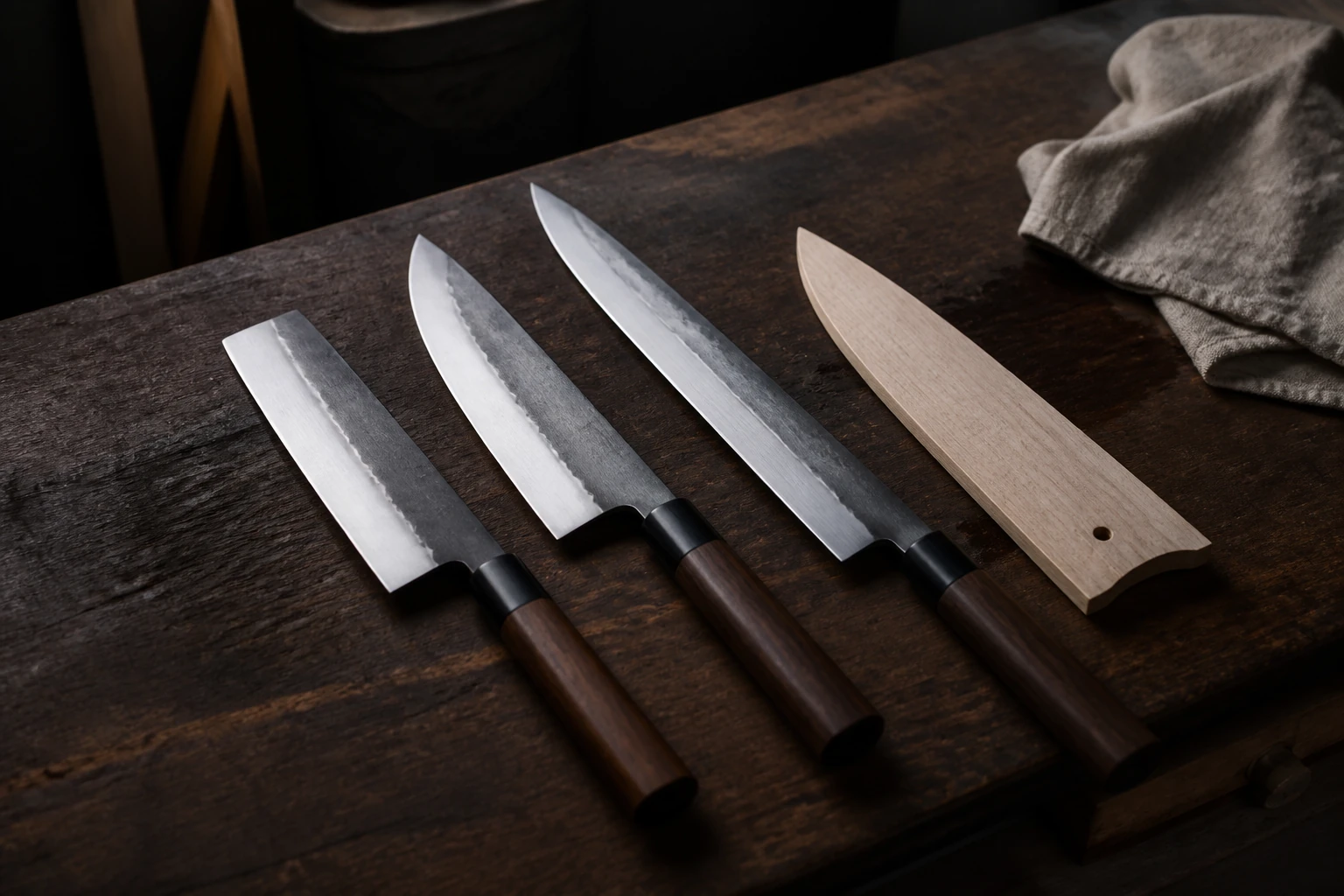
Tojiro, a Niigata-based cutlery maker covered in our guide to spotting fake Japanese knife brands, also makes kitchen shears, and they’re genuinely Japan-made. We’re not recommending a specific listing here because both Tojiro shears models we found on Amazon.com (the FK-843 and the all-metal forged version) were listed as currently unavailable when we checked. If you see a Tojiro-branded pair back in stock, the same country-of-origin check applies: look for it stated in the product details, not just the brand name.
Which One Should You Buy?
- For daily kitchen use, get the Kai Seki Magoroku DH3345.
- If you want the shears to match a set of Global knives, or you just want the nicest option, get the Global GKS-210.
- Skip anything from Huusk, Mitsumoto Sakari, or Shan Zu if the reason you’re buying is specifically that it’s Japanese-made.
FAQ
Is “Japanese steel” on a shears listing the same as a Japanese steel type like VG-10? Not necessarily. “Japanese steel” is marketing language, while VG-10, aogami, and shirogami are specific, named steel types used in actual Japanese-made blades. A listing that names a Chinese steel code like 3Cr13MoV or 5Cr15MoV while using the word “Japanese” is combining a real steel spec with an inaccurate origin claim.
Do forged, one-piece kitchen shears need any special care? Hand wash and dry them rather than leaving them in a wet sink or running them through a dishwasher repeatedly — the pivot screw and any painted handle coating are the parts most likely to show wear first, the same issue we noted with the Tojiro forged shears in customer reviews.
Are cheaper “Japanese-style” shears from brands like Shan Zu actually bad? Not necessarily on functional grounds — a well-ground blade can cut well regardless of where it’s made. The issue is specifically the origin claim: if the reason you’re paying for “Japanese” shears is the country of manufacture, a brand that discloses Chinese manufacturing on its own site isn’t delivering what the marketing implies.
Final Thoughts
Two genuinely Japan-made picks here, at very different price points, plus three brands worth skipping if country of origin is the point of the purchase. If you want the full six-point method behind this — the checks that apply across knives, whetstones, and now shears — our buyer’s checklist for Japanese craft covers it in one place, and our Japanese kitchen tools directory rounds up the categories we’ve verified so far. Outside the kitchen, the same SK5-steel-vs-country-of-origin gap shows up in our Japanese pruning saws roundup.
Keep Reading
- Need shears for the garden instead? See Japanese pruning shears that are actually made in Japan, or compare Okatsune vs Felco.
- Trimming bonsai or arranging flowers? Read our guides to Sanjo-forged bonsai tools and ikebana scissors.
- Digging and weeding? See Niigata-made hori-hori knives.